

Meet the Fire-Bellied Toad Up Close
Fire-bellied toads are often described as “toads,” but they don’t always match the classic image of a dry, warty, desert-hopping toad. They are semi-aquatic amphibians with flattened bodies, a fondness for water, and skin that can look pebbly rather than heavily warty. Their eyes sit high on their head, which helps them watch for danger while floating with much of their body submerged. Their legs are strong enough for quick swimming and short hops, but they aren’t built for giant leaps across open ground. Instead, they move like wetland specialists, weaving through plants and slipping into water as their first line of defense.
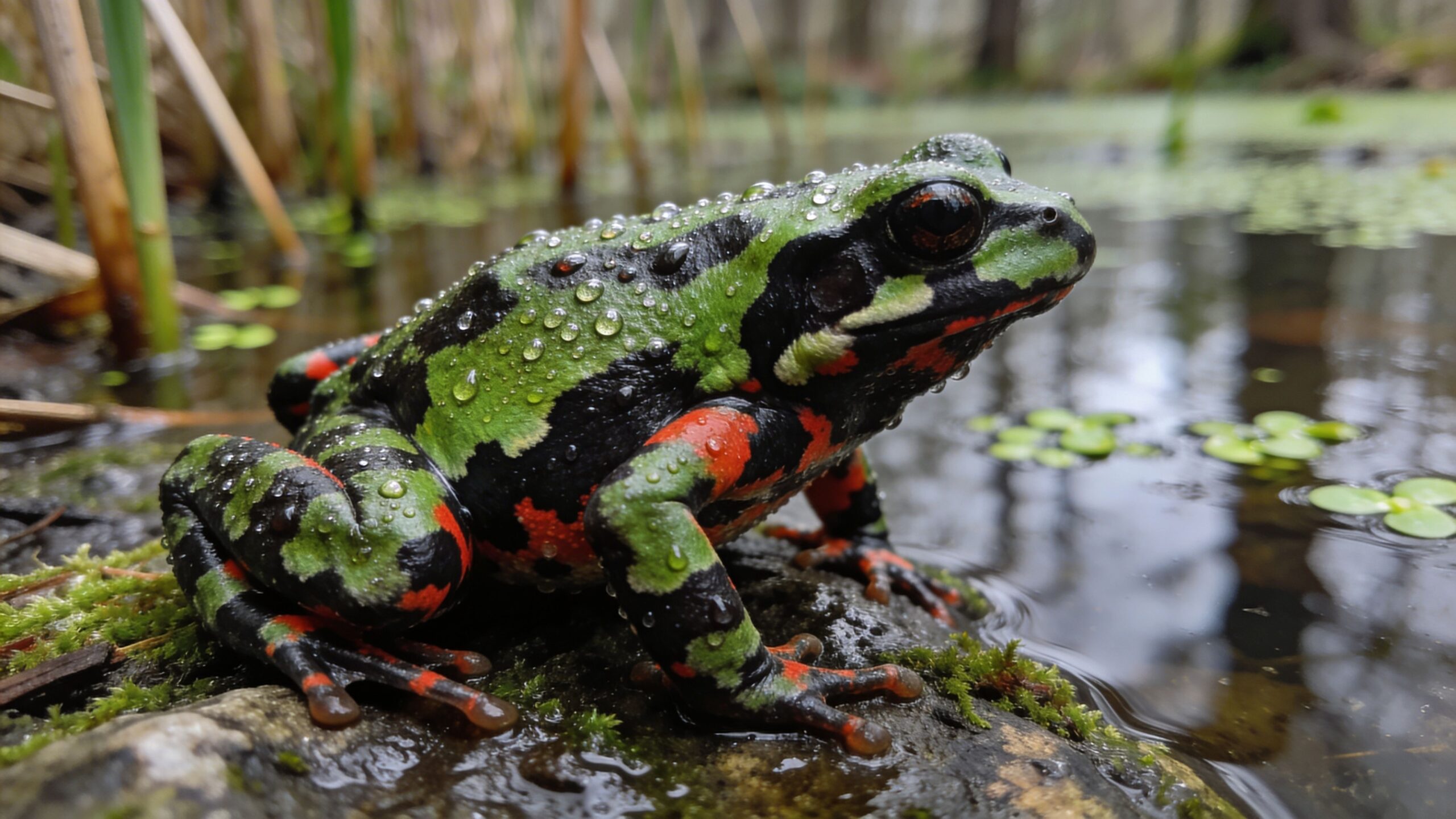
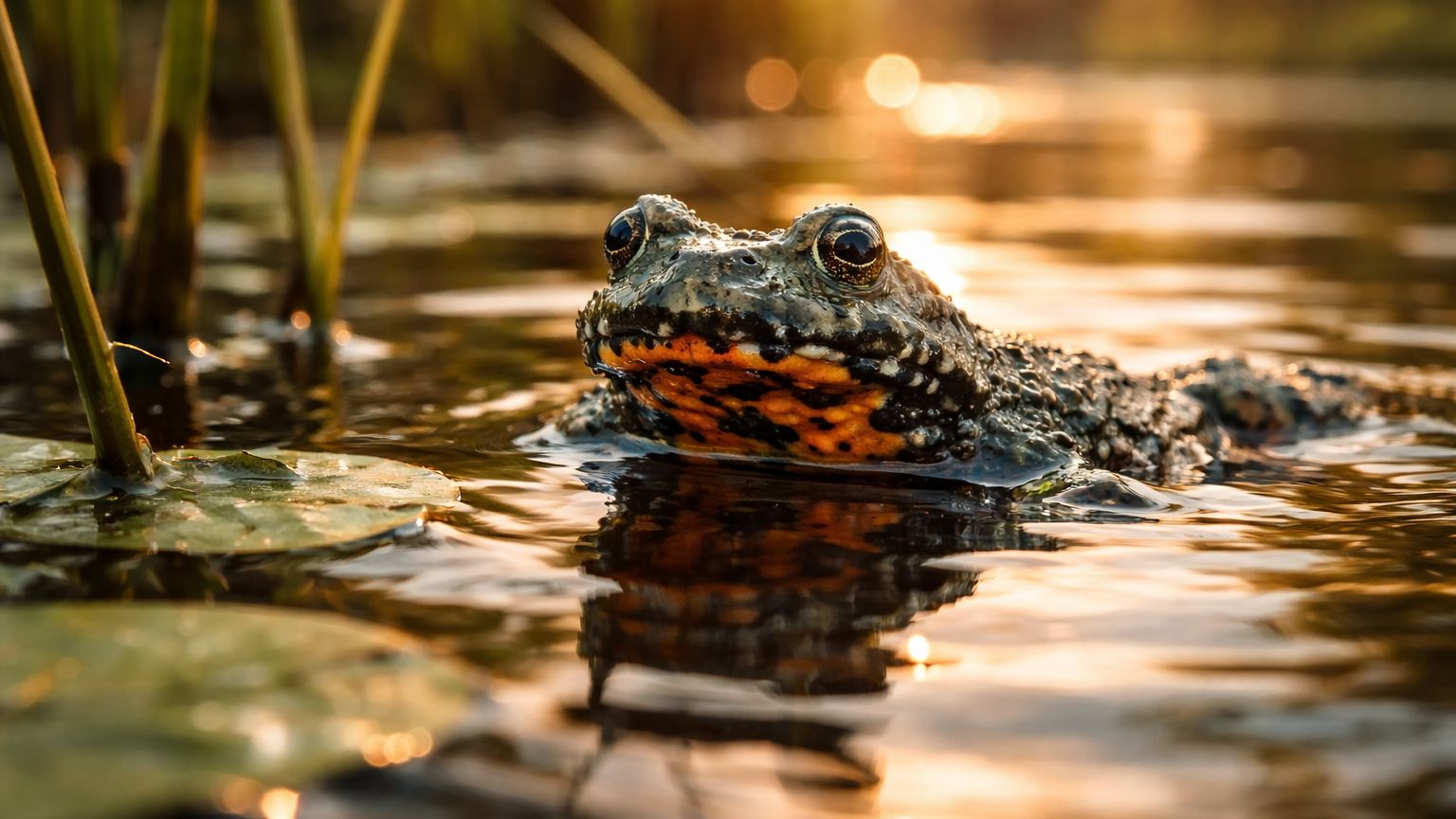
The most famous feature, of course, is the belly coloration. Depending on the species and individual, the underside can be orange, red, or yellow with dark blotches, like molten lava splashed with ink. This is not decoration; it’s communication. Bright colors in nature often function as a warning, and fire-bellied toads back up that warning with skin secretions that taste bad and may irritate the mouths of predators. The top side remains more camouflaged so the animal can blend in while it hunts and rests. That two-sided strategy—hidden above, blazing below—is one of the reasons these amphibians feel so dramatic.
Where They Live and Why Wet Places Matter
In the wild, fire-bellied toads are tied to shallow, plant-rich waters. They favor ponds, marshes, rice paddies, ditches, and slow-moving streams with plenty of cover, because cover is safety and cover is also a hunting ground. Aquatic plants, grasses, and floating vegetation create hiding places and platforms to rest on. A fire-bellied toad may float quietly with only its eyes above water, drifting like a living leaf until an insect comes within reach. These habitats are also ideal for breeding, since eggs and tadpoles need stable water long enough to develop. Temperature and moisture shape their daily routine. In warm months, they may be active much of the day, especially if the weather is humid and the shoreline stays damp. During cooler or drier periods, they can become more secretive, tucking into mud, plant tangles, or damp crevices. Because amphibian skin loses water easily, a fire-bellied toad’s world is a constant balance between finding food and staying hydrated. That’s why these toads are so often found where the edge is messy—muddy margins, flooded grasses, leaf litter, and shallow pools. A perfectly manicured shore is less useful to them than a tangled one full of hiding spots.
The Famous “Unken Reflex” Defense Display
If there’s one behavior that defines the fire-bellied toad in the public imagination, it’s the defensive posture often called the unken reflex. When threatened, the toad can arch its back and lift its limbs in a way that reveals the bright underside. It’s a bold move, like flipping a warning sign toward a predator’s face. The display says, in the clearest possible visual language, that this animal is not a pleasant snack. Predators that learn this lesson once may avoid similarly colored amphibians in the future, which is exactly the point.
The unken reflex is not the only defense, but it’s the most theatrical. Fire-bellied toads can also secrete mild toxins from glands in their skin, making them taste bitter or causing irritation. If grabbed, some may wriggle free with surprising strength for their size, and they often head straight for water. Their camouflage helps them avoid being noticed, but if that fails, the belly flash is like a second stage in a carefully designed safety system. It’s a great example of how behavior, color, and chemistry can work together as a single survival strategy.
Daily Life: Hunting, Resting, and Moving Through the Marsh
Fire-bellied toads are active, alert, and opportunistic. They hunt mostly small invertebrates such as insects, larvae, small worms, and other tiny creatures that thrive near water. Their feeding style is classic amphibian: stillness followed by sudden movement, with a quick snap of the mouth. Because they spend so much time around shallow water, they can hunt both on land and at the water’s edge. A single day may include floating, stalking along mud, and sitting on a plant stem like a miniature lookout. They rest frequently, especially during the hottest part of the day if conditions become drying. You might find them tucked under leaves, nestled in plant roots, or half buried in soft mud with only their head visible. When they move, they tend to travel in short bursts rather than long journeys, because their bodies are built for a close-range lifestyle. Water is not just a place to breed; it’s their highway, their hiding spot, and their comfort zone. If you imagine a fire-bellied toad’s world as a neighborhood, the pond edge is the main street, and every lily stem is a safe house.
Calls and Courtship: The Sound of Breeding Season
Fire-bellied toads don’t always sound like what people expect a “toad” to sound like. Their calls can be softer, sometimes described as gentle honks, chirps, or bell-like tones, depending on the species and the listener’s imagination. Males typically call during breeding season, often from shallow water where they can float while vocalizing. The call is a signal to females and also a message to other males that says, “This spot is taken.” In wetlands with multiple calling species, these sounds blend into a layered chorus that can make nighttime feel alive.
Courtship in many amphibians includes an embrace called amplexus, where the male clasps the female to fertilize eggs as they are laid. Fire-bellied toads often breed in calm, shallow water with plants that can support egg attachment. The eggs are typically laid in small clusters rather than a single massive mass, and they adhere to vegetation below the surface. This strategy helps spread risk; if one cluster is eaten or damaged, others may survive. Breeding is often triggered by seasonal warmth and rainfall patterns, which is why some years can be noticeably louder than others in the same habitat.
From Egg to Tadpole to Toad: A Wetland Transformation
Like most amphibians, fire-bellied toads begin life as aquatic larvae. After eggs hatch, tadpoles feed and grow in the water, gradually developing the features that will carry them onto land. Tadpoles are often grazers and scavengers, feeding on algae, organic debris, and tiny food sources in their watery environment. As they grow, their bodies shift dramatically. Hind legs appear first, then front legs, and finally the tail is absorbed as lungs and adult skin become more functional. Metamorphosis is not just a costume change; it’s a complete retooling of the animal’s lifestyle. A tadpole’s body is designed for swimming and feeding in water, while an adult’s body is designed for breathing air, hunting moving prey, and surviving outside water while still staying moist. Young fire-bellied toads often remain close to water after metamorphosis, because their small size makes them vulnerable to drying out. Over time, they learn the routines of the shoreline, the safe hiding places, and the best feeding spots. In a healthy habitat, this cycle repeats season after season, adding new voices to the wetland chorus.
What They Eat and Who Eats Them
Fire-bellied toads are important insect predators, which is one reason wetlands with amphibians often have balanced insect populations. Their diet can include flies, mosquitoes, beetles, small crickets, and a range of larvae found near water. They are not picky, but they are limited by what they can catch and swallow, so most meals are small and frequent rather than large and occasional. Their hunting helps move energy up the food chain, turning swarms of tiny invertebrates into nourishment for larger predators that may eat amphibians.
And yes, plenty of animals would love to eat a fire-bellied toad if they can get away with it. Snakes, birds, fish, and small mammals may all attempt to prey on them, especially juveniles. The bright belly and skin secretions act as a deterrent, but defenses are rarely perfect. Some predators learn to avoid them, while others may be less sensitive or may attack in ways that reduce exposure to toxins. This push and pull—predators learning, prey adapting—helps shape the toad’s behavior and makes its warning colors more than just a visual gimmick.
How They Survive Winter and Tough Weather
In regions with cold seasons, fire-bellied toads reduce activity and enter a period of dormancy. Depending on the local climate, they may overwinter in mud, under leaf litter, in soft soil, or in protected spaces near water that remain moist and stable. During this time, their metabolism slows down and they conserve energy. Overwintering success depends on avoiding freezing and dehydration, which is why they choose sheltered microhabitats. When spring warmth returns, they reemerge and return to the water-focused routines of feeding and breeding. Even outside of winter, weather challenges matter. A sudden dry spell can push them to hide more, while prolonged rain can expand their habitat and allow them to roam. Because they rely on skin moisture, they are sensitive to heat and dry air, and they generally prefer conditions that keep their bodies hydrated. The wetland edge provides that stability, acting like a moisture bank even when nearby ground dries out. Their ability to shift between land and water is a key survival advantage, especially in landscapes where the weather changes quickly.
Fire-Bellied Toads and People: Myth, Wonder, and Backyard Curiosity
Fire-bellied toads often spark curiosity because they look like they belong in a storybook. The bright underside has inspired a sense of mystery across cultures, and their habit of flashing warning colors makes them feel dramatic and expressive. In modern times, they have also become popular in education because they’re relatively easy to observe and because their behaviors illustrate big biological concepts. A single fire-bellied toad can teach about camouflage, warning coloration, chemical defense, habitat dependence, and metamorphosis. That’s a lot of science packed into a small amphibian.
In many places, the best way to appreciate them is to protect and respect wet habitats. Even small ponds and marshy edges can support amphibians if water quality stays decent and shoreline vegetation remains. People sometimes underestimate how important “messy” wetland edges are, but those tangles of plants are exactly where amphibians hide, feed, and breed. Observing from a respectful distance can be surprisingly rewarding, especially during breeding season when calls reveal who is present even if you never see them. The more you learn, the more you realize these animals are not background creatures at all—they are central characters in wetland life.
A Balanced Look at Conservation Without the Doom
It’s reasonable to talk about conservation when discussing amphibians, because many species worldwide face pressure from habitat loss, pollution, disease, and climate shifts. Fire-bellied toads, depending on the species and region, can be affected when wetlands are drained, shorelines are hardened, or waterways become contaminated. Because they interact with their environment through their skin, changes in water chemistry can matter quickly. Even small shifts can influence breeding success, tadpole development, and overall survival rates. The good news is that many practical habitat choices can make a positive difference. Conservation doesn’t always have to feel heavy or hopeless. Wetland restoration projects, cleaner waterways, and thoughtful land management often benefit amphibians alongside birds, insects, and plants. In some regions, protected wetlands and improved environmental practices help stabilize local populations. For curious readers, the takeaway is simple: the best future for fire-bellied toads usually looks like healthy, plant-rich shallow water, and those habitats are worth valuing for many reasons beyond amphibians alone. When wetlands thrive, they support a whole community, and fire-bellied toads are one of the most charismatic members of that community.
Why the Fire-Bellied Toad Deserves a Closer Look
The fire-bellied toad is a perfect example of how nature can combine beauty and function. Its camouflage helps it disappear when it wants to, and its bright belly makes sure it’s remembered when it needs to be. It lives on the boundary between worlds, equally at home floating among plants and roaming the damp shoreline. Its life cycle transforms it from a water-dwelling tadpole into a land-hunting adult, proving that change is built into its biology. Even its voice, softer than many people expect, adds personality to wetlands that might otherwise seem quiet.
If you’re exploring frogs and toads for the first time, this is a species group that rewards attention. Watch for the stillness, listen for the gentle calls, and remember that the most impressive animals are not always the largest ones. Fire-bellied toads show how a small creature can be brilliantly equipped for survival, filled with behavior that feels purposeful and full of character. Once you understand their world, every pond edge starts to look like a stage, and every rainy night starts to sound like a story being told.