

A Harlequin Toad With a Costa Rican Signature
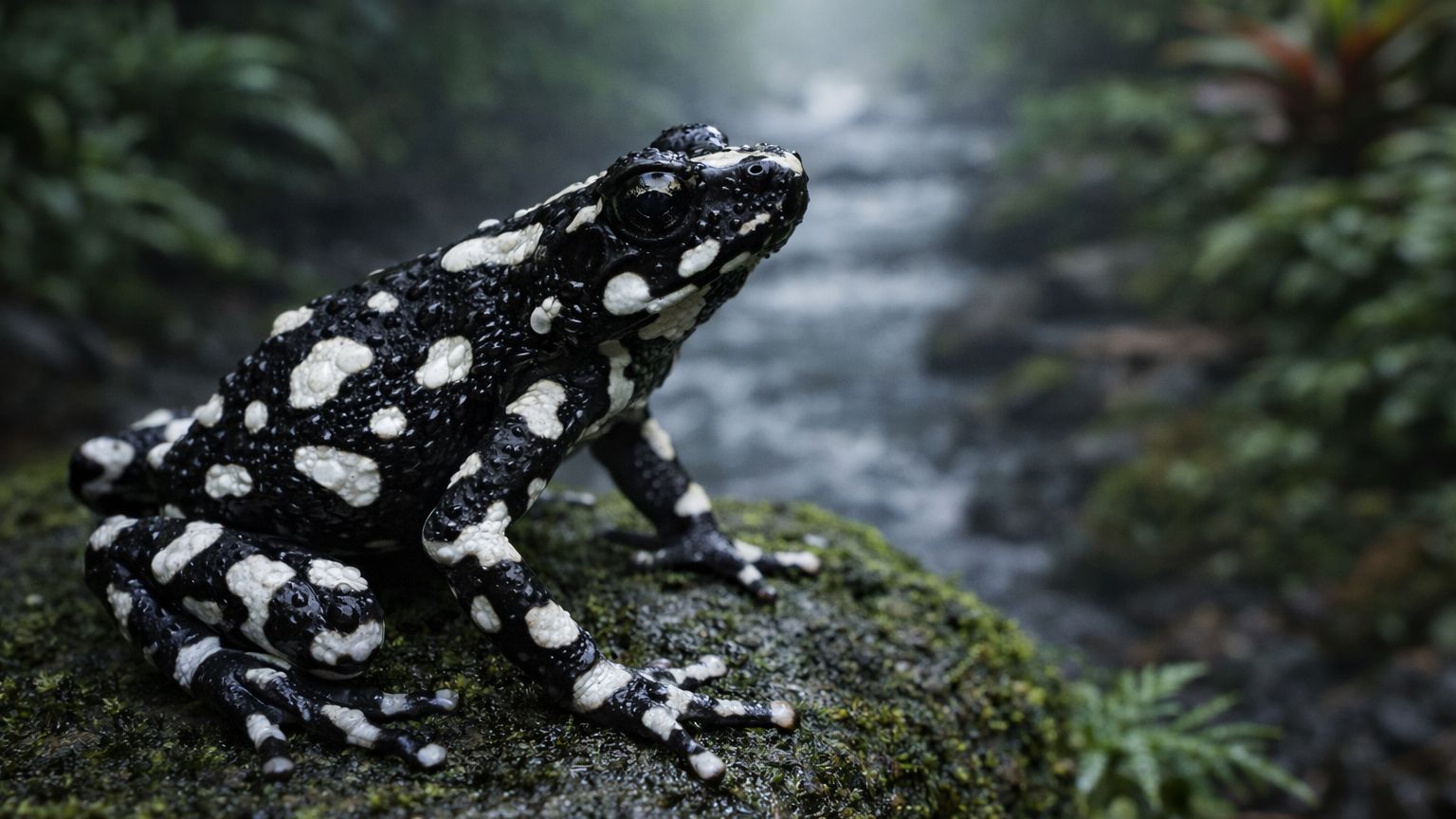
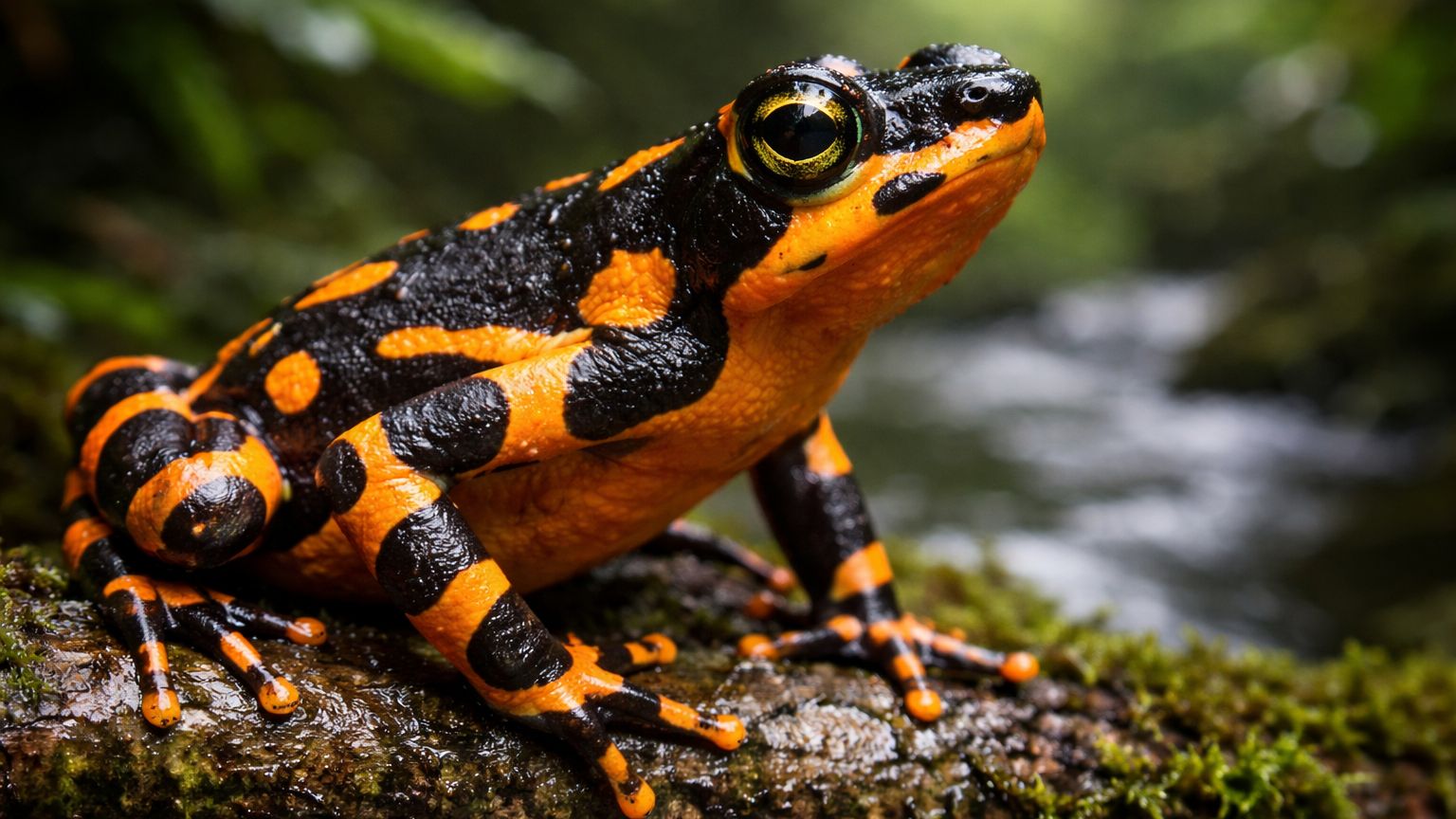
Atelopus varius belongs to a group commonly called harlequin toads, sometimes also known as stubfoot toads, famed for their vivid coloration and close ties to flowing water. The “Costa Rican” identity in its common name speaks to where it is most strongly associated, but the species’ broader historical range has included parts of Panama as well. What makes it particularly memorable is its variability, with individuals showing different combinations of dark backgrounds and bright patches or streaks that can include yellow, orange, red, green, or even bluish tones. This is not just visual flair; in many amphibians, bright coloration can function as a warning signal that says, in effect, “I am not a good snack.” The result is an animal that is both stunning and purposeful in its appearance, built for a life in wet, complex habitats.
Even within the same species, the Costa Rican Harlequin Toad can surprise you, which is part of its allure for wildlife watchers and researchers alike. Some individuals appear darker with sharply defined bright markings, while others can look more golden overall, echoing the palette that people often associate with Panama’s famous golden frog. That variability can be confusing at first, but it also hints at geography, local adaptation, and the long evolutionary history of these streamside amphibians. When you think of Atelopus varius as a “category” rather than a single fixed paint job, the toad becomes less like a postcard image and more like a living, shifting pattern shaped by place. It is a reminder that nature rarely sticks to one costume when multiple strategies can work.
Built for Wet Rocks and Fast Water
The Costa Rican Harlequin Toad is small, but it carries a specialized look that fits its streamside world. Compared to many familiar garden toads, it tends to be slimmer with a more pointed snout, giving it a sleek, almost athletic profile. Its limbs help it navigate uneven surfaces, and its overall body plan makes sense for an animal that spends time on rocks, in crevices, and along the margins of flowing water. The skin can appear smooth at a glance, but up close it reveals texture, subtle ridges, and the kind of fine detail that photographers love. That skin is also central to amphibian life, helping with water balance and respiration, which is why these toads are so tied to humid places. Color, though, is the feature most people remember, and Atelopus varius can display a remarkable mosaic of tones over a dark base. This is where the “harlequin” name truly lands, because the patterns can look like patches, streaks, or mask-like shapes that vary by individual and location. Bright coloration in amphibians is often associated with chemical defenses, and while the specifics can differ among species and populations, the general message is consistent: visibility can be protective when predators learn to avoid you. In a rainforest or cloud forest, where green dominates, a bright amphibian seems like it would be vulnerable, yet warning coloration can flip that logic on its head. It is a bold strategy that turns attention into armor.
Home Is a Stream, Not a Pond
If you imagine amphibians as pond-dwellers, the Costa Rican Harlequin Toad invites you to redraw the map. This species is strongly associated with streams, including clear, oxygen-rich waters that move over stones and through narrow channels. These habitats are dynamic; a stream that is gentle one day can swell after rain, changing flow, noise, and the shape of the shoreline. Living near such water rewards agility, good timing, and careful use of microhabitats, like mossy rock shelves or shaded gaps under roots. The toad’s world is not a still mirror of water but a constantly moving ribbon that shapes daily life.
Cloud forests add another layer to this story, because mist and cool temperatures can keep surfaces wet long after rain stops. The toads benefit from that persistent humidity, but they also have to cope with the challenges of steep terrain and the soundtrack of rushing water. Streamside environments can be rich feeding grounds, drawing insects and other small invertebrates that thrive in damp zones. They also provide breeding sites that help larvae develop in cleaner, flowing water rather than stagnant pools. For Atelopus varius, the stream is not just nearby scenery; it is the backbone of its entire life cycle.
Daily Life: Movement, Timing, and Tiny Choices
To understand a harlequin toad, it helps to picture a day measured in moisture and temperature rather than hours on a clock. In humid forests, small shifts in conditions can change where a toad chooses to sit, hunt, or hide. A Costa Rican Harlequin Toad might spend time resting in a secure spot, then become more active when the air is cooler or the forest floor is slick with recent rain. Because it is small, it also faces small-scale hazards, like drying winds in exposed areas or sudden stream surges that flood low rocks. Its survival depends on selecting the right perch at the right moment, often just a few inches away from danger. Feeding, too, is a story of opportunity and precision, centered on tiny prey that most hikers never notice. Insects and other small invertebrates gather near water and among wet leaf litter, and the toad’s quick strike can turn a fleeting movement into a meal. This style of hunting makes the toad an active participant in the forest’s micro-ecology, interacting constantly with the small creatures that recycle nutrients and pollinate plants. Even when a toad seems motionless, it is often alert, reading vibrations, movement, and scent in a dense, layered environment. Watching one closely can feel like watching patience become a superpower.
Signals in a Noisy World
Streams are loud, and that matters because many amphibians rely on sound to find mates. In places where water noise can drown out calls, some harlequin toads are known for visual signaling behaviors, including deliberate limb movements that function like a kind of body-language communication. This is one of the most charming aspects of the group, because it feels so expressive and intentional, even though it is shaped by natural selection rather than performance. Visual signals can help individuals communicate presence and intent without competing with the roar of moving water. It is an elegant solution to a very practical problem.
Breeding gatherings, when they occur, can bring additional behaviors into view, from mate searching to careful positioning along stream edges. The environment forces amphibians to be efficient, because timing is everything: eggs and larvae must enter the right water conditions, and adults must avoid being swept away or exposed. While the details of breeding can vary by population and season, the general pattern in stream-associated amphibians emphasizes placement, flow, and protection. In that sense, reproduction is less about romance and more about reading the stream like a living map. For Atelopus varius, the best breeding site is often the difference between a thriving cohort of young and a season lost to bad conditions.
The Tadpole Chapter: Life Clinging to Stone
The larval stage of many stream-dwelling amphibians is built around one question: how do you avoid being washed away? Harlequin toad tadpoles are often described as well-suited for flowing water, using specialized mouthparts that help them stay attached to rocks and graze on algae and organic films. In a fast stream, this ability is not a nice feature; it is foundational. The current delivers oxygen and food, but it also threatens to carry small bodies downstream into unsuitable habitats. Tadpoles that can hold position gain a stable feeding platform and a better chance of growing to metamorphosis. This stream-based development also ties the species tightly to water quality and flow patterns. Clear, oxygen-rich water supports healthier larval growth, while sediment-heavy or polluted conditions can disrupt feeding and attachment. Because tadpoles are in the water for extended periods, they are exposed to the full chemical and biological character of the stream. That means changes in rainfall, temperature, and stream dynamics can ripple into the next generation. When you think about Atelopus varius populations, it helps to remember that a large portion of the story unfolds underwater, clinging to rock in a world of current and cold.
Where It Fits in the Ecosystem
The Costa Rican Harlequin Toad plays multiple roles that are easy to overlook because of its size. As an insect-eater, it is part of the living net that helps keep invertebrate populations balanced along stream corridors. That balance influences everything from plant health to the abundance of other insectivores, such as birds, reptiles, and small mammals. In addition, the toad itself becomes part of the food web, even if predators learn to avoid it due to warning coloration and potential chemical defenses. Its presence adds complexity to predator-prey relationships, because it can shape behavior through learned avoidance.
Harlequin toads are also often discussed as indicators of environmental conditions because amphibians tend to respond quickly to habitat changes. Streamside amphibians, in particular, are sensitive to shifts in water quality, canopy cover, and microclimate. That does not mean every decline has a single cause, but it does mean that the well-being of these animals often reflects the stability of the habitats they occupy. In practical terms, finding Atelopus varius in a landscape can signal that at least some key ingredients remain in place: clean water, intact forest structure, and the seasonal rhythms that streams depend on. When a species is this tied to a specific set of conditions, it becomes a kind of living report on the health of its home.
A Realistic Look at Challenges and Persistence
Many harlequin toads have experienced severe declines across their ranges, and Atelopus varius is widely recognized as critically endangered. Multiple factors can interact in amphibian declines, including habitat shifts, climate-driven changes in local conditions, and disease dynamics. One frequently discussed disease is chytridiomycosis, caused by a fungus that has affected amphibians in many parts of the world. For stream-associated species in cool, moist habitats, disease pressures can become especially intense, because those conditions may support fungal persistence. It is a complex subject, but the key takeaway for general readers is that harlequin toads can be vulnerable when several stressors stack up at once. At the same time, the story is not only about loss; it is also about persistence, rediscovery, and careful science. Reports and conservation-focused efforts have documented remnant or relict populations and ongoing work to understand what helps these toads survive. Captive breeding and managed programs have played a role in preventing total disappearance for some Atelopus species, and research has explored strategies that could support future recovery or reintroductions under the right conditions. The tone here matters: the Costa Rican Harlequin Toad is not best understood as a mascot for despair, but as an example of how precise habitat needs can make an animal both extraordinary and fragile. Learning its natural history helps people appreciate not only the toad, but the stream ecosystems that quietly shape so much tropical biodiversity.
How to Think Like a Harlequin Toad Explorer
If you want to explore this topic further, it helps to approach it the way field biologists do: by thinking in habitats, seasons, and details. Instead of asking only where the species lives, ask what the stream is like, how the canopy holds moisture, and where moss grows thick enough to stay wet even when rain pauses. Picture the toad’s scale, where a small crack between stones can be a fortress and a thin dry patch can be a barrier. Consider how color might function in that world, turning brightness into a signal rather than a liability. When you do that, the Costa Rican Harlequin Toad becomes less of a single animal and more of a whole ecosystem story written in miniature.
From here, the most exciting next step is to dive into dedicated subpages that explore the species’ identification, habitat zones, life stages, and the wider harlequin toad family. One subpage might focus on stream-breeding adaptations and larval life, while another might explore how color variation shows up across regions. Another could zoom out to harlequin toads as a whole, showing how Atelopus species occupy a surprising range of elevations and ecosystems. The more you explore, the more you realize that this small amphibian is a gateway into big ideas: evolution in action, the engineering of living bodies for fast water, and the delicate choreography between forest and stream. If curiosity is a trail, Atelopus varius is one of those rare creatures that makes you want to follow it deeper into the mist.