

A Hidden Hunter of Cool Woodland Streams
The Northern Dusky Salamander, Desmognathus fuscus, is one of the most familiar yet quietly mysterious amphibians inhabiting eastern North America. This small but resilient salamander thrives in damp forests and along rocky streambanks where cool water flows through shaded valleys. Although it rarely draws attention from casual hikers, it plays a crucial role in streamside ecosystems and has fascinated naturalists for generations. Its subtle coloration, secretive behavior, and ability to navigate both land and water environments make it a remarkable example of amphibian adaptability. Unlike brightly colored amphibians that advertise themselves boldly, the Northern Dusky Salamander blends almost perfectly into its surroundings. Shades of brown, gray, and olive allow it to disappear against wet stones, fallen leaves, and mossy streambanks. This camouflage helps protect it from predators while also allowing it to ambush small prey that wander too close. Despite its quiet presence, this salamander is a skilled predator and an important part of the food web in the forests and streams where it lives.
A: It inhabits forests and stream systems across eastern North America.
A: No, it breathes through its skin.
A: Mostly insects, worms, spiders, and aquatic larvae.
A: No, it is completely harmless.
A: Most adults reach three to five inches long.
A: Juveniles are more aquatic, while adults live along stream edges.
A: They regulate insect populations and indicate stream health.
A: Mostly during cool, damp conditions.
A: Females lay eggs near water, and larvae develop in streams.
A: Yes, like many salamanders they can regrow lost tails.
A Salamander of Forest Streams and Seepage Slopes
The Northern Dusky Salamander is strongly tied to freshwater habitats, particularly cool streams, springs, and seepage areas that flow through forested landscapes. These salamanders prefer places where water trickles gently over rocks or through damp soil, creating pockets of humidity that remain stable throughout the year. In many Appalachian and northeastern forests, they are among the most common amphibians living along stream corridors.
While they depend heavily on moisture, Northern Dusky Salamanders are surprisingly flexible in how they use their environment. They may hide beneath rocks along stream edges, shelter inside rotting logs, or burrow into soft soil along damp slopes. During rainy nights they often venture farther from water in search of food, but they rarely stray far from the cool, humid environments that allow their skin to function properly. This close relationship with water and moisture defines their daily routines and seasonal movements.
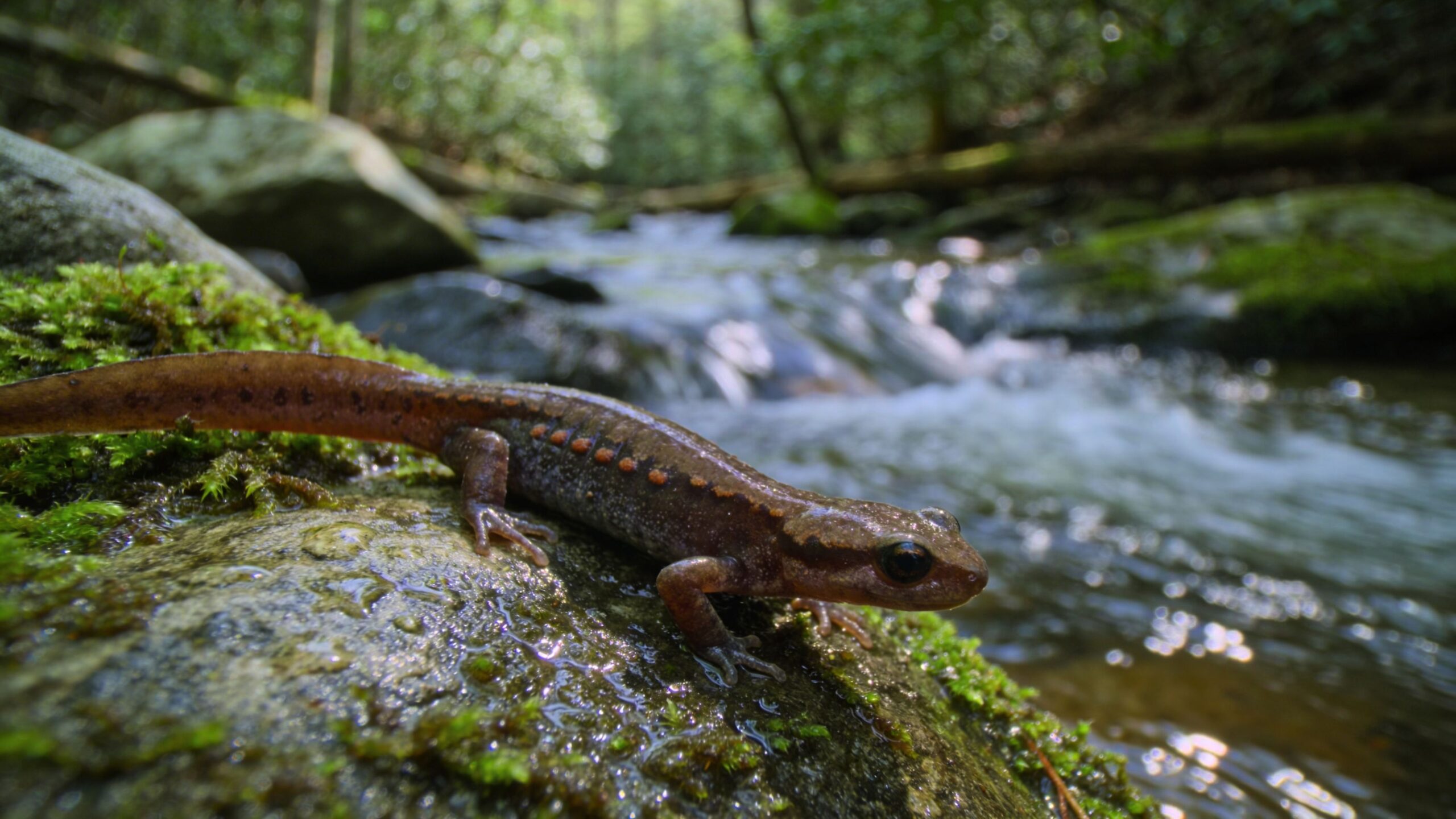
The Distinctive Look of Desmognathus fuscus
The Northern Dusky Salamander has a sturdy body compared to many other salamanders, with strong limbs and a somewhat flattened tail that aids in swimming. Its coloration is typically a mixture of brown, gray, and olive tones, often marked with darker speckles or faint stripes along the back. A subtle light line sometimes extends from the eye to the jaw, a characteristic feature that helps distinguish it from similar species. Although the colors may seem subdued, they are perfectly suited to the salamander’s environment. Wet rocks, stream gravel, and fallen leaves create a mosaic of earthy tones that mirror the salamander’s skin patterns. This natural camouflage allows it to remain nearly invisible while resting beside a stream or hiding beneath a rock. When viewed closely, however, the delicate textures and patterns of its skin reveal a surprising beauty that reflects the intricate details of the forest floor.
Life Between Land and Water
One of the most fascinating aspects of the Northern Dusky Salamander is its ability to move easily between aquatic and terrestrial habitats. Juveniles are typically more aquatic and spend much of their early life within shallow streams where they feed on aquatic insects and small invertebrates. As they grow, they gradually spend more time along streambanks and in nearby forest habitats.
Adults often live along the edges of streams rather than directly in the water. They hunt on damp ground, beneath stones, or among leaf litter where moisture remains high. This flexibility allows them to exploit a wide range of food sources and microhabitats. By bridging aquatic and terrestrial environments, the Northern Dusky Salamander connects two ecosystems that might otherwise function more independently.
A Skilled Predator of the Streamside World
Despite its small size, the Northern Dusky Salamander is an effective predator within its habitat. It feeds on a wide variety of small animals including insects, worms, spiders, and aquatic larvae. Its quick reflexes and sticky tongue allow it to capture prey with surprising speed. Hunting typically occurs during nighttime or during cool, damp conditions when invertebrates are active. The salamander may wait motionless beside a rock or within leaf litter before striking at passing prey. Over time, this feeding behavior helps regulate populations of small invertebrates that inhabit forest soils and stream edges. In this way, the salamander quietly contributes to the ecological balance of the habitats it occupies.
Reproduction Along the Water’s Edge
The reproductive habits of the Northern Dusky Salamander are closely linked to its streamside environment. Females typically lay eggs in moist locations near water, such as beneath rocks or within protected crevices along streambanks. These sheltered sites provide stable humidity and protection from predators while the eggs develop.
After several weeks the eggs hatch into aquatic larvae equipped with external gills. These young salamanders spend the early stages of their lives within the stream, feeding on tiny aquatic organisms. As they grow and undergo transformation, they gradually develop the characteristics of adults and begin exploring nearby terrestrial habitats. This life cycle reflects the salamander’s ability to thrive in both water and land environments.
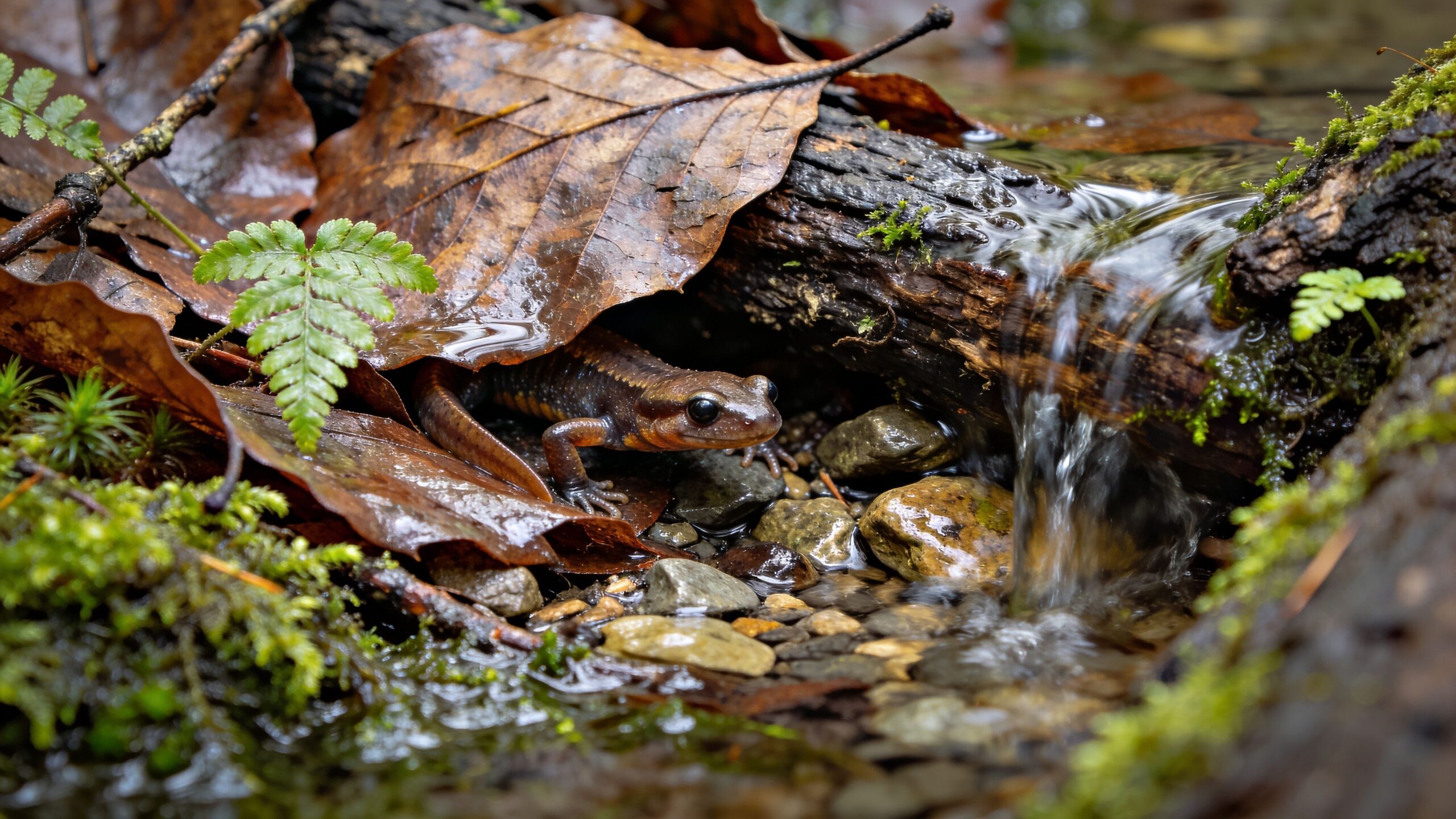
Seasonal Rhythms in a Cool Environment
Like many amphibians, Northern Dusky Salamanders adjust their behavior according to seasonal changes in temperature and moisture. During spring and autumn, when conditions are cool and humid, they may be active both day and night along streambanks. These seasons provide ideal conditions for feeding, growth, and reproduction. Summer heat often drives them deeper into shaded refuges where moisture remains high. They may retreat beneath rocks or into underground spaces to avoid drying out. Winter brings another shift in activity, with salamanders sheltering beneath the frost line or within protected crevices until temperatures rise again. These seasonal patterns help them survive in environments where conditions can change dramatically throughout the year.
Ecological Importance in Streamside Forests
The Northern Dusky Salamander plays a surprisingly significant role in forest stream ecosystems. By feeding on insects and other invertebrates, it helps regulate populations that might otherwise grow unchecked. In turn, it serves as prey for larger animals including snakes, birds, and mammals.
Because they depend on clean, cool water and moist environments, these salamanders are also valuable indicators of ecosystem health. When stream habitats remain intact and unpolluted, Northern Dusky Salamanders often thrive. Their presence can signal that a forest stream system is functioning well, supporting diverse communities of plants and animals.
A Species That Adapts Quietly to Its Environment
The Northern Dusky Salamander demonstrates how a small amphibian can adapt successfully to a challenging environment. Its ability to live along shifting streambanks, hunt in both aquatic and terrestrial settings, and survive seasonal changes allows it to persist across a wide geographic range. From rocky Appalachian streams to forested valleys farther north, this species has proven remarkably resilient. Part of its success lies in its understated approach to survival. Rather than relying on bright warning colors or elaborate displays, it depends on camouflage, patience, and careful habitat selection. These strategies allow it to avoid predators while maintaining a steady supply of food and shelter in the damp corners of forest ecosystems.
A Streamside Ambassador for the Hidden World of Salamanders
For many people exploring woodland trails, the Northern Dusky Salamander may be the first salamander they encounter beneath a rock or beside a forest stream. Its presence offers a glimpse into a hidden world of amphibians that live quietly beneath leaves, stones, and flowing water. Once noticed, it becomes easier to appreciate the intricate web of life that exists along even the smallest streams.
Learning about this salamander encourages a deeper appreciation for the subtle biodiversity of forest ecosystems. Each stream, seep, and mossy rock may shelter creatures whose lives unfold beyond casual observation. The Northern Dusky Salamander reminds us that some of the most fascinating wildlife stories happen quietly in the cool shadows of the forest.
Animal Product Reviews
Dive into Animal Streets’ Animal Product Reviews — your guide to the best gear, gifts, books, and gadgets inspired by the animal kingdom. From land-roaming lions to ocean-gliding whales, from household pets to prehistoric giants, we explore top-rated products for enthusiasts, educators, and animal lovers alike. Whether you’re shopping for toys, decor, field gear, or fun collectibles, we’ve sniffed out the best so you can discover it all in one wild place!