

A Pattern You Can Recognize: Color, Markings, and Key Features
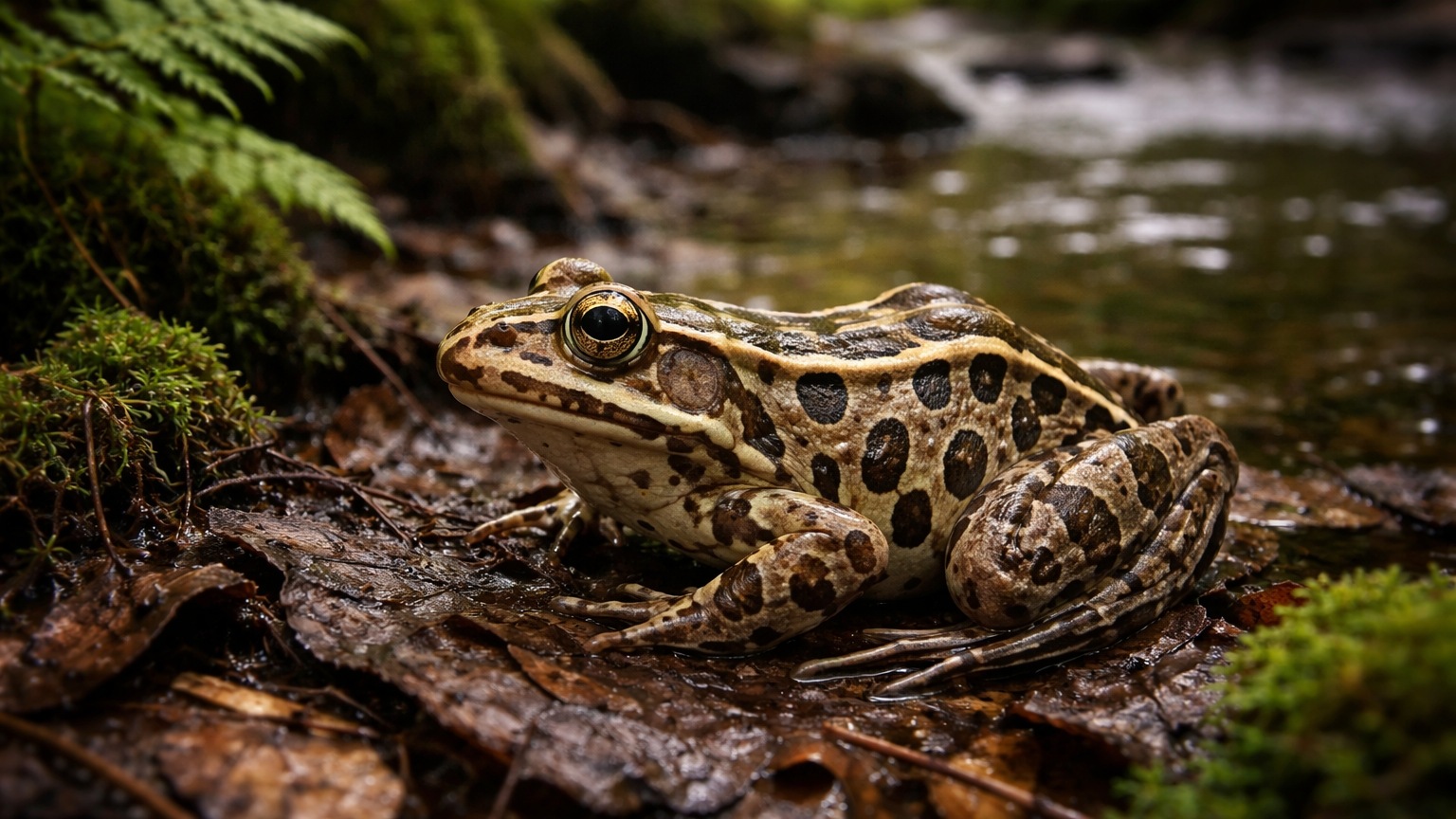
Pickerel Frogs often appear tan, brown, or olive, with two neat rows of dark rectangular or square-like spots running down the back. These spots are typically more uniform than the rounder markings seen on many leopard frogs, giving the Pickerel Frog a “tidier” look. Along each side of the back are pale ridges, sometimes described as dorsolateral ridges, that frame the spotted pattern and help define the frog’s shape. The belly is usually light, and the underside of the hind legs can show a distinctive wash of yellow or orange. In some individuals, the inner thighs can even show a muted purplish tone, which becomes noticeable when the frog jumps.
Their bodies are medium-sized, commonly around two to three inches long, with strong hind legs built for quick hops and steady swimming. The head is relatively streamlined, and the eyes sit high enough to watch for danger while the frog remains partially hidden. Skin texture is generally smooth, though it can look slightly rougher when the frog is dry or moving through leaf litter. Like other amphibians, Pickerel Frogs rely on moist skin for important parts of breathing and water balance. These features make the frog well suited to a life spent at the border of land and water, where conditions can change quickly.
Cool Water, Quiet Places: Habitat Preferences and Range
Pickerel Frogs are strongly associated with cooler freshwater habitats, especially those that stay clean and well oxygenated. They are often found near spring-fed streams, seepages, woodland ponds, and marshy edges where shade keeps temperatures moderate. Unlike some frogs that prefer open, sunny shorelines, Pickerel Frogs frequently choose areas with leaf litter, moss, and dense low vegetation. This preference gives them cover and helps keep their skin from drying out. It also places them in environments that feel more like a forest floor than a typical pond bank. If you want to find one, the best places are often the ones that look a little hidden. Their range covers much of the eastern United States and extends into parts of southern Canada, with local abundance shaped by water availability and habitat quality. In some regions they are common in protected woodlands, while in others they appear in pockets where spring-fed water remains reliable. They can use a variety of wetland types, but they tend to do best where water stays present through the seasons and where shade reduces temperature swings. Human-made habitats can sometimes work, but the frog’s preference for cooler, cleaner water often makes it more selective than other pond frogs. Because of this, seeing a Pickerel Frog can feel like a sign that you have found a particularly healthy and stable wet place.
The Art of Staying Hidden: Daily Behavior and Movement
Pickerel Frogs are often described as secretive, not because they are rare, but because they are good at avoiding attention. During the day they may rest in vegetation, under leaves, or near the waterline where they can slip into safety with a single hop. When approached, they sometimes freeze first, trusting their tan-and-spot pattern to blend into the patchwork of forest light and shadow. If the threat continues, they jump quickly and often head toward water, where they can swim or tuck themselves into submerged plants. Their movements are efficient rather than dramatic, and they tend to choose escape routes that keep them hidden. This behavior makes them fun to observe, because the challenge is noticing them before they decide you have noticed them.
They are generally most active during warm evenings, humid nights, and the mild temperatures of spring and early summer. In hot or dry conditions, they often stay closer to water or deeper shade. They may also roam short distances through damp woods, especially after rains, to feed or to move between wet spots. This ability to travel over land is important, because many wetlands exist as a network rather than a single permanent pool. Over a season, Pickerel Frogs may shift where they spend time based on water level, temperature, and breeding needs. Their daily routine is a flexible response to moisture and safety, which is exactly what you would expect from a frog built for woodland wetlands.

Small Prey, Quick Strikes: Diet and Feeding Style
Pickerel Frogs feed primarily on insects and other small invertebrates found near water and in damp forest edges. Their menu commonly includes beetles, flies, ants, caterpillars, and various crawling or hopping bugs that move through leaf litter. They also take spiders and worms when available, and they may snap up aquatic insects along the waterline. Like many frogs, they hunt by waiting, watching for motion, and then striking quickly. Their sticky tongue and fast jaw movement make the capture moment brief and efficient. If you watch a Pickerel Frog closely, you may see tiny head adjustments as it tracks movement before committing to a strike. As they grow, their prey choices broaden slightly, but their diet remains focused on small animals rather than large dramatic catches. Temperature influences feeding, because frogs are cold-blooded and rely on warmth for peak movement and digestion. On cool days, Pickerel Frogs may bask briefly in filtered light or remain still and feed less. In the right conditions, however, they can eat steadily, helping control local insect populations. Their feeding role is part of what makes them valuable in wetland ecosystems, even though their work is mostly invisible. A quiet frog in leaf litter can still be an active predator in the small-scale world of insects.
Eggs to Tadpoles to Forest Frogs: Life Cycle and Growth
The Pickerel Frog’s life begins in water, where breeding season brings adults into wetlands and slow-moving edges of streams and ponds. Females lay egg masses that are often attached to submerged vegetation, giving the developing embryos some shelter and stability. After hatching, tadpoles live entirely underwater and feed on algae, plant material, and fine organic particles. Tadpoles are shaped for grazing and steady growth, with a long tail that provides propulsion through shallow water. As they develop, they become part of a busy aquatic community, sharing space with insect larvae, small fish in some areas, and other tadpoles. Their survival depends on water conditions that remain stable long enough for development.
Metamorphosis transforms the tadpole into a froglet by building legs, developing lungs, and shrinking the tail as the body shifts toward a land-and-water lifestyle. This transition is a critical period, because the young frog must learn new ways to move and feed while avoiding predators. Froglets often stay near water initially, using shoreline vegetation as cover while they begin hunting small insects. Over time, they grow into adults that can travel through damp woods and return to breeding sites when the season arrives. The overall cycle ties together water and forest, showing how a frog’s life depends on both. In a practical sense, Pickerel Frogs need aquatic nurseries and terrestrial shelter, making them true residents of the wetland border.
Voices in the Shadows: Calls, Breeding, and Seasonal Activity
Pickerel Frogs do call, but their voices are often less familiar to casual listeners than those of bullfrogs or spring peepers. Their breeding calls are typically a low, snore-like sound, sometimes described as a short series of grunts or a gentle, repetitive note. These calls help males attract females and maintain spacing among other calling males. Because Pickerel Frogs often breed in shaded wetlands and along quieter waters, their chorus can feel subdued, blending into the background of early-season wetland sounds. Listening in spring evenings, especially near woodland ponds, is often the best way to notice them. The calling period can be brief compared with some other frog species, which adds to their reputation as easy to miss. Breeding timing varies by region, but it generally centers on spring, when water temperatures rise and seasonal wetlands become active. Adults gather at suitable sites and may remain near these areas for the duration of breeding, then disperse into surrounding habitat afterward. During this season, you may see more movement and more frog-to-frog interactions along the shoreline. Once eggs are laid, adults typically do not guard them, so the choice of breeding site matters greatly for the next generation. After breeding, the frogs shift focus toward feeding and growth, preparing for the warmer months ahead. This seasonal rhythm is an important part of how Pickerel Frogs fit into woodland wetland ecosystems year after year.
Natural Armor Without Spikes: Defenses and Skin Chemistry
One of the most distinctive traits of the Pickerel Frog is its natural chemical defense. While many frogs rely mostly on camouflage and jumping, Pickerel Frogs are known for producing skin secretions that can be irritating or toxic to some predators. This does not make them dangerous in everyday outdoor life, but it does mean predators may learn to avoid them after a bad experience. The defense can also affect other animals in close contact, which is why the Pickerel Frog has a reputation among naturalists for being “chemically protected” compared with some similar frogs. In nature, this kind of defense is a powerful tool, because it can reduce predation pressure without the frog needing to fight. It is a reminder that amphibian skin is not just a covering, but an active interface with the world.
Camouflage still plays a major role, especially in the forested habitats they prefer. The rectangular spots and earthy colors help them vanish into leaf litter, muddy banks, and dappled shade. When combined with stillness, that pattern can be remarkably effective. If camouflage fails, the frog’s leap and dive strategy provides a fast exit, and chemical defenses add an extra layer of protection. This multi-layer approach is common in wildlife, because no single strategy works all the time. For the Pickerel Frog, the combination of stealth, speed, and chemistry helps explain how it persists in habitats filled with hungry birds, snakes, and mammals.
Close Cousins and Easy Confusions: Pickerel Frog vs. Leopard Frog
Pickerel Frogs are often confused with leopard frogs because both species show dark spots and occupy wet habitats. The most practical difference for many observers is spot shape and arrangement. Pickerel Frogs tend to have more rectangular spots lined up in two neat rows, while leopard frogs often display rounder spots with a more scattered look. Pickerel Frogs also commonly show a yellowish or orange wash on the underside of the hind legs, a feature that can stand out when the frog jumps. Habitat can be a clue too, since Pickerel Frogs often prefer cooler, shaded, spring-fed areas, while leopard frogs are frequently seen in more open wetlands and grassy pond edges. No single trait is perfect, but together these clues usually point you in the right direction. Calls provide another useful distinction, especially during breeding season. Leopard frog calls vary by species but often differ noticeably from the Pickerel Frog’s lower, snore-like notes. If you learn the local sounds, you can sometimes identify frogs without seeing them. Behavior can help as well, since Pickerel Frogs often stick to shaded edges and forested wet spots. For general readers, the key is not to worry about perfection on first sight. Instead, treat identification as a set of clues that become clearer with repeated observations. Over time, the Pickerel Frog’s tidy spot rows and woodland preferences begin to feel as distinctive as a familiar face.
A Working Part of the Wetland: Ecological Role and Relationships
Pickerel Frogs are important mid-level predators in woodland wetland food webs. By eating insects and other invertebrates, they help shape the small-animal communities that thrive in damp habitats. Their tadpoles also contribute by grazing on algae and organic material, supporting nutrient cycling in ponds and slow waters. In turn, Pickerel Frogs are prey for a variety of animals, including birds, snakes, mammals, and larger fish in some environments. This role as both predator and prey makes them a key link for moving energy through the ecosystem. In many ways, they are part of the wetland’s “maintenance crew,” quietly influencing balance without drawing attention.
Because they are sensitive to moisture and often prefer clean, cool water, Pickerel Frogs can reflect the condition of certain habitats. When woodland wetlands remain intact, connected, and free from heavy disturbance, these frogs often persist and can even be locally common. Their presence also adds diversity to amphibian communities by occupying slightly different habitat niches than other frogs. That niche separation helps multiple species share the same general landscape without direct competition for every resource. For people who enjoy nature, finding a Pickerel Frog can feel like a reward for exploring quieter, less obvious wet places. It is a reminder that biodiversity often lives in the shaded corners of the map.
A Gentle Note on Conservation: What Helps Them Keep Thriving
In many parts of their range, Pickerel Frogs remain stable, especially where forests and wetlands stay connected. Like many amphibians, they can be affected by habitat loss, water pollution, and changes that disrupt the wetlands they rely on for breeding and shelter. Because they often prefer cooler, cleaner waters, heavy sediment, chemical runoff, or major changes to spring-fed systems can reduce suitable habitat. Weather patterns can also influence breeding success, especially if spring wetlands dry early or if extreme temperature swings occur during development. The overall message is not alarm, but awareness that frogs depend on the everyday health of wetlands. When wetlands remain healthy, Pickerel Frogs usually do what they have always done: breed, hunt, and persist. Practical support often looks simple, such as protecting riparian vegetation and reducing harsh chemical use near water. Maintaining natural buffers of plants along streams and ponds helps stabilize temperature, reduce erosion, and provide shelter. In community settings, thoughtful wetland management that respects seasonal water levels can keep breeding sites productive. For property owners, leaving some leaf litter, native plants, and shaded shoreline areas can create microhabitats that frogs use. The Pickerel Frog’s needs are straightforward: reliable water, cover, and connected habitat patches. When those needs are met, the frog’s quiet life continues, and the woodland wetland remains lively.
Seeing One Without Spooking It: Observation Tips for Curious Readers
Pickerel Frogs are easiest to spot when you move slowly and look for shapes rather than motion. Scan the edges of shaded ponds and slow streams, especially where leaf litter meets shallow water. Because they often freeze before fleeing, you may notice a still frog if you pause and let your eyes adjust. Early spring evenings can be productive if you listen for calls, while humid summer mornings can reveal frogs resting near the waterline. Binoculars are surprisingly helpful, letting you watch from a distance without forcing the frog to jump. The calmer you are, the more the frog behaves naturally.
If you photograph a Pickerel Frog, try to avoid chasing it for a better view. A single frightened leap can push it into deep water or into a place where it becomes more vulnerable to predators. Staying on established paths protects shoreline plants and the delicate edges of spring-fed systems. For families and classrooms, these frogs offer a chance to learn about habitat, camouflage, and life cycles without needing to handle wildlife. Quiet observation is also safer for amphibians, since their skin can be sensitive to oils and residues. In the end, the best way to meet a Pickerel Frog is to be a respectful visitor in its cool, shaded world.