
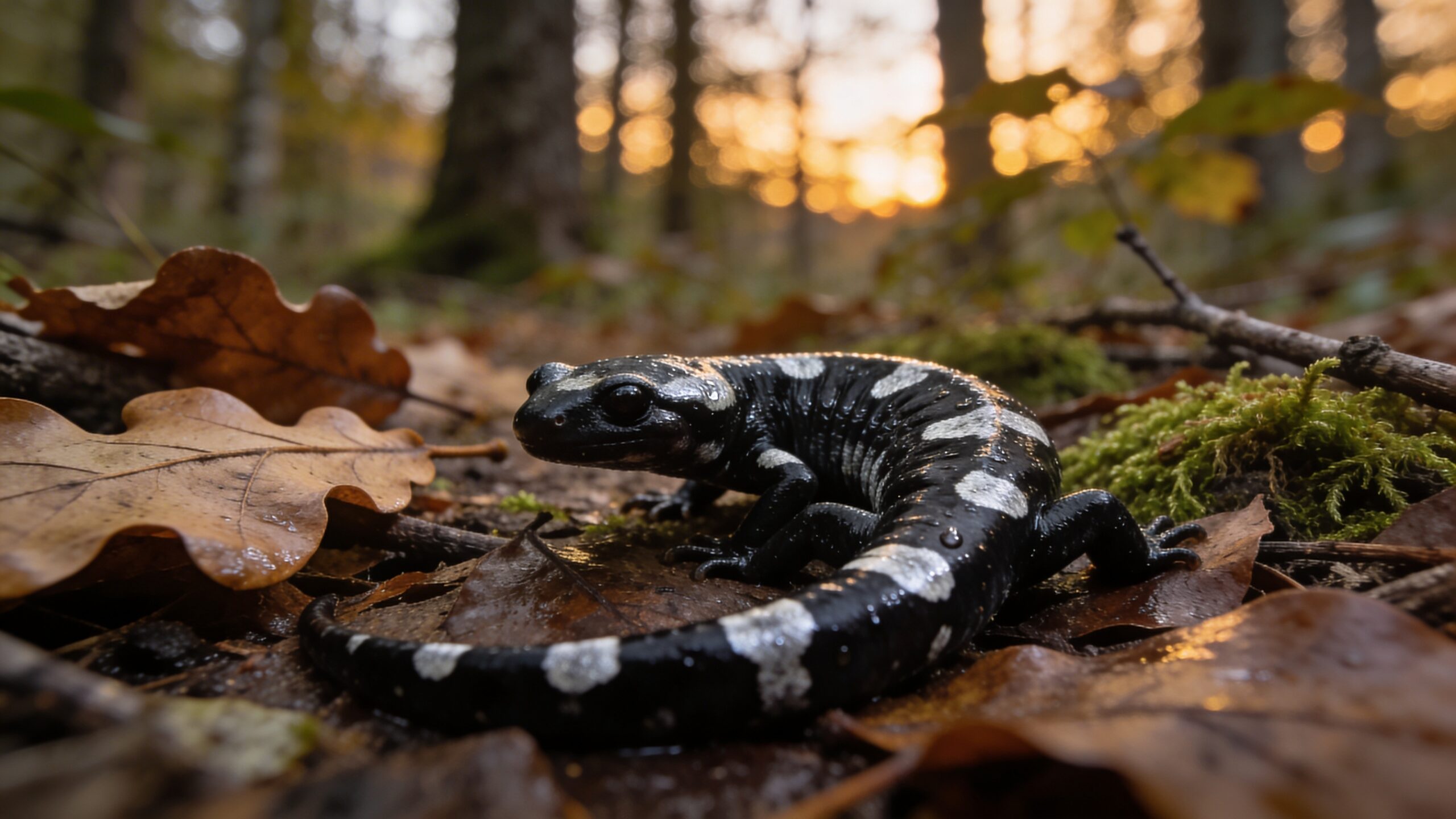
A Hidden Jewel of the Forest Floor
The marbled salamander, scientifically known as Ambystoma opacum, is one of North America’s most visually striking amphibians, yet it remains largely unseen by most people. Its bold black body crossed with silver or white bands gives it an almost polished, ornamental appearance, like a living piece of forest artistry. Despite its beauty, this species thrives in secrecy, spending much of its life hidden beneath logs, leaf litter, and underground retreats. Found primarily in the eastern United States, the marbled salamander plays an important role in woodland ecosystems, quietly shaping the balance of life beneath the forest canopy. Unlike many amphibians that depend heavily on aquatic environments year-round, the marbled salamander has adapted to a more terrestrial lifestyle. It ventures to water mainly for reproduction, making its life cycle particularly fascinating. This combination of land-based living and seasonal aquatic activity sets it apart from many other salamander species. For general readers, the marbled salamander offers a compelling glimpse into the hidden complexity of forest ecosystems and the remarkable diversity of amphibian life.
A: Start with body shape and habitat, then use color, markings, size, and behavior as confirmation.
A: Because Marbled Salamander has its own mix of structure, habitat, feeding, and comparison clues.
A: Compare it with the nearest parent, child, or lookalike pages before treating one trait as final.
A: No. Age, season, lighting, region, and posture can all change the first impression.
A: Look for the setting that explains the animal: water, cover, vegetation, substrate, altitude, reef, burrow, branch, or open ground.
A: The exact diet depends on the animal, but mouth shape, movement, and habitat usually reveal the feeding strategy.
A: Many animals change size, color, pattern, diet, risk, or habitat between young and adult stages.
A: Use the photo to check eye position, body outline, limbs or fins, texture, posture, and surrounding habitat.
A: Yes. Every animal affects food webs, habitat structure, competition, nutrient movement, or predator-prey balance in some way.
A: It should connect the animal's visible traits to how it survives, moves, feeds, and fits the taxonomy.
Nature’s Living Mosaic: Appearance and Identification
The marbled salamander is easily recognized by its distinctive patterning, which resembles a series of crossbands stretching across a dark background. In males, these bands are typically bright white, while females display a more subdued silver or gray coloration. This contrast gives each individual a unique, almost handcrafted look, making it one of the most visually appealing salamanders in North America. Adults typically range from three to five inches in length, with a stout body and relatively short limbs that reflect their burrowing tendencies.
Beyond coloration, the marbled salamander’s smooth, moist skin is a defining feature, essential for respiration and hydration. Its tail is thick and often makes up a significant portion of its total body length, aiding in balance and movement through leaf litter. Unlike some amphibians that rely on vibrant colors as warning signals, the marbled salamander’s pattern may serve more as camouflage among dappled light and shadow. This subtle blending helps it avoid predators while navigating its woodland habitat.
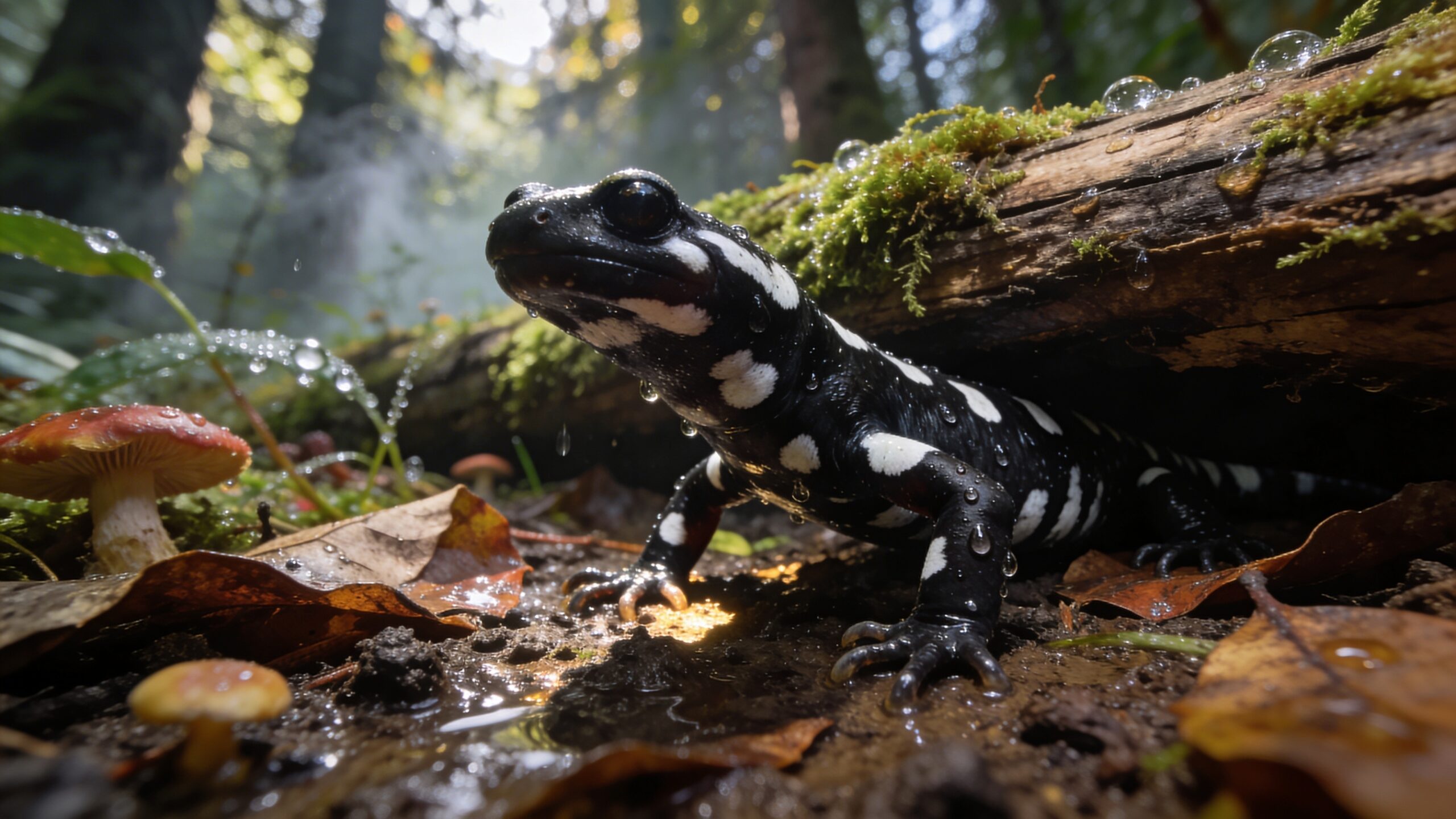
Where Forest and Water Meet: Habitat and Range
The marbled salamander is most commonly found in deciduous forests across the eastern United States, from New England down to Florida and westward into parts of Texas and Oklahoma. It favors environments where moist soils, abundant leaf litter, and nearby seasonal wetlands coexist. These habitats provide the perfect balance of shelter, food, and breeding opportunities, allowing the species to thrive in a variety of woodland settings. One of the key features of its habitat is the presence of ephemeral or vernal pools, which fill with water during certain times of the year and then dry up. These temporary bodies of water are critical for reproduction, as they typically lack fish that would otherwise prey on eggs and larvae. Outside of the breeding season, marbled salamanders are rarely seen, as they remain hidden underground or beneath natural debris. This dual reliance on both terrestrial and aquatic environments highlights the importance of preserving diverse forest landscapes.
Life Beneath the Leaves: Daily Behavior and Movement
The marbled salamander leads a largely nocturnal and secretive existence, emerging primarily during damp nights to forage for food. Its movements are deliberate and quiet, allowing it to navigate the forest floor with minimal detection. During the day, it retreats to cool, moist refuges such as under logs, stones, or within burrows. This behavior helps it maintain the moisture levels necessary for survival, as amphibians are highly sensitive to drying out.
Seasonal changes play a major role in its activity patterns. In warmer months, it may remain relatively inactive during dry periods, conserving energy until conditions improve. When rain arrives, the forest comes alive with movement, and the marbled salamander takes advantage of the increased availability of prey. These rhythms are closely tied to environmental conditions, making the species an excellent indicator of ecosystem health.
A Unique Reproductive Strategy in the Amphibian World
One of the most fascinating aspects of the marbled salamander is its unusual breeding behavior. Unlike many amphibians that breed in spring, this species typically reproduces in the fall. Females lay their eggs in dry or nearly dry depressions that will later become filled with water during seasonal rains. This strategy ensures that the eggs are already in place when conditions become suitable for larval development. Even more remarkable is the level of parental care exhibited by females. After laying eggs, the female often remains nearby to guard them, protecting them from predators and environmental threats. Once rains fill the pool, the eggs hatch, and larvae begin their aquatic phase. This early start can give marbled salamander larvae a competitive advantage over other species that breed later, allowing them to grow quickly before conditions change.
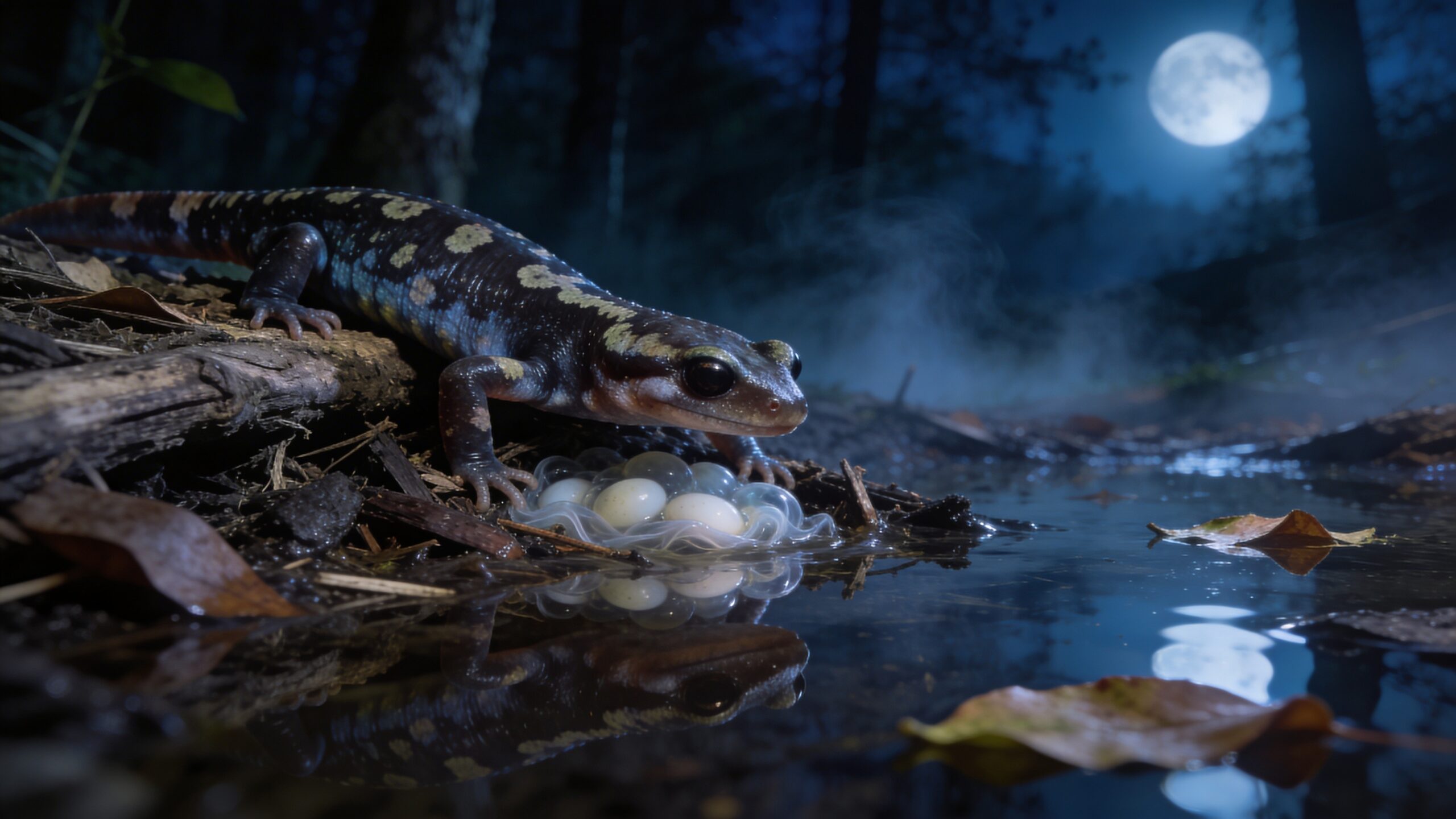
From Water to Woodland: Growth and Development
The life cycle of the marbled salamander involves a dramatic transformation from aquatic larva to terrestrial adult. After hatching, the larvae possess external gills and rely on water for survival. They feed on small aquatic organisms, growing rapidly as they prepare for metamorphosis. This stage can last several months, depending on environmental conditions such as temperature and water availability.
As metamorphosis approaches, the larvae undergo significant physical changes, including the loss of gills and the development of lungs suited for life on land. Once fully transformed, the young salamanders leave the water and begin their terrestrial lives. This transition marks a critical point in their development, as they must adapt to a new set of challenges and opportunities within the forest ecosystem.
The Quiet Hunter: Diet and Feeding Habits
The marbled salamander is a carnivorous predator that feeds primarily on small invertebrates found on the forest floor. Its diet includes insects, worms, spiders, slugs, and other tiny creatures that inhabit moist woodland environments. Using its keen sense of smell and quick reflexes, it captures prey with surprising efficiency. Despite its modest size, it plays a significant role in controlling invertebrate populations. Feeding typically occurs during nighttime hours when humidity is higher and prey is more active. The salamander’s ability to remain still and blend into its surroundings gives it an advantage when ambushing unsuspecting prey. This quiet, methodical hunting style reflects its overall lifestyle, which is defined by patience and subtlety rather than speed or aggression.
Survival in the Shadows: Predators and Defense
Like many small amphibians, the marbled salamander faces a variety of predators, including birds, snakes, small mammals, and larger amphibians. Its primary defense lies in its ability to remain hidden and avoid detection altogether. The forest floor provides numerous hiding places, and its coloration helps it blend into the environment.
When threatened, the marbled salamander may exhibit defensive behaviors such as arching its body or secreting mild toxins from its skin. While these toxins are not dangerous to humans, they can deter some predators. The combination of camouflage, secretive habits, and chemical defenses allows this species to survive in a world filled with potential threats.
Subtle Signals of a Healthy Forest
The presence of marbled salamanders in a forest often indicates a well-functioning ecosystem. Because they rely on both terrestrial and aquatic habitats, they are sensitive to changes in environmental conditions. Factors such as pollution, habitat fragmentation, and climate shifts can all impact their populations. As a result, they are sometimes used as bioindicators to assess the health of woodland environments. While conservation concerns exist, the marbled salamander is not currently among the most threatened amphibians. However, maintaining healthy forests and preserving vernal pools is essential for its continued success. By protecting these habitats, we also support countless other species that depend on the same ecosystems.
A Seasonal Rhythm Tied to Rain and Time
The life of a marbled salamander is deeply connected to the rhythms of nature, particularly rainfall and seasonal change. Its movements, breeding cycles, and feeding habits all respond to shifts in temperature and moisture. This close relationship with the environment highlights the delicate balance required for its survival.
For those fortunate enough to encounter one, the marbled salamander offers a glimpse into a hidden world that operates largely out of sight. Its quiet presence beneath the leaves serves as a reminder of the complexity and beauty of forest ecosystems. By understanding and appreciating species like this, we gain a deeper connection to the natural world and the intricate systems that sustain it.
Animal Product Reviews
Dive into Animal Streets’ Animal Product Reviews — your guide to the best gear, gifts, books, and gadgets inspired by the animal kingdom. From land-roaming lions to ocean-gliding whales, from household pets to prehistoric giants, we explore top-rated products for enthusiasts, educators, and animal lovers alike. Whether you’re shopping for toys, decor, field gear, or fun collectibles, we’ve sniffed out the best so you can discover it all in one wild place!