
A Bold Amphibian with a Secretive Life
The tiger salamander, commonly associated with the scientific name Ambystoma tigrinum, is one of the largest and most recognizable terrestrial salamanders in North America. With its striking pattern of yellow or olive blotches, stripes, or spots against a dark background, it resembles a living piece of abstract art hidden beneath the forest floor. Despite its bold appearance, it remains largely unseen, spending much of its life underground and emerging only during specific environmental conditions. This contrast between vivid coloration and secretive behavior gives the tiger salamander a mysterious presence in the ecosystems it inhabits. What makes the tiger salamander especially fascinating is its adaptability across a wide range of habitats, from forests and grasslands to deserts and agricultural fields. Unlike many amphibians that require consistently moist environments, this species has developed strategies that allow it to survive in more variable conditions. Its life cycle, feeding behavior, and reproductive patterns reflect a species that has mastered the art of persistence. For general readers and nature enthusiasts alike, the tiger salamander offers a compelling story of survival, transformation, and quiet ecological importance.
A: Start with body shape and habitat, then use color, markings, size, and behavior as confirmation.
A: Because Tiger Salamander has its own mix of structure, habitat, feeding, and comparison clues.
A: Compare it with the nearest parent, child, or lookalike pages before treating one trait as final.
A: No. Age, season, lighting, region, and posture can all change the first impression.
A: Look for the setting that explains the animal: water, cover, vegetation, substrate, altitude, reef, burrow, branch, or open ground.
A: The exact diet depends on the animal, but mouth shape, movement, and habitat usually reveal the feeding strategy.
A: Many animals change size, color, pattern, diet, risk, or habitat between young and adult stages.
A: Use the photo to check eye position, body outline, limbs or fins, texture, posture, and surrounding habitat.
A: Yes. Every animal affects food webs, habitat structure, competition, nutrient movement, or predator-prey balance in some way.
A: It should connect the animal's visible traits to how it survives, moves, feeds, and fits the taxonomy.
Patterns, Colors, and Physical Design
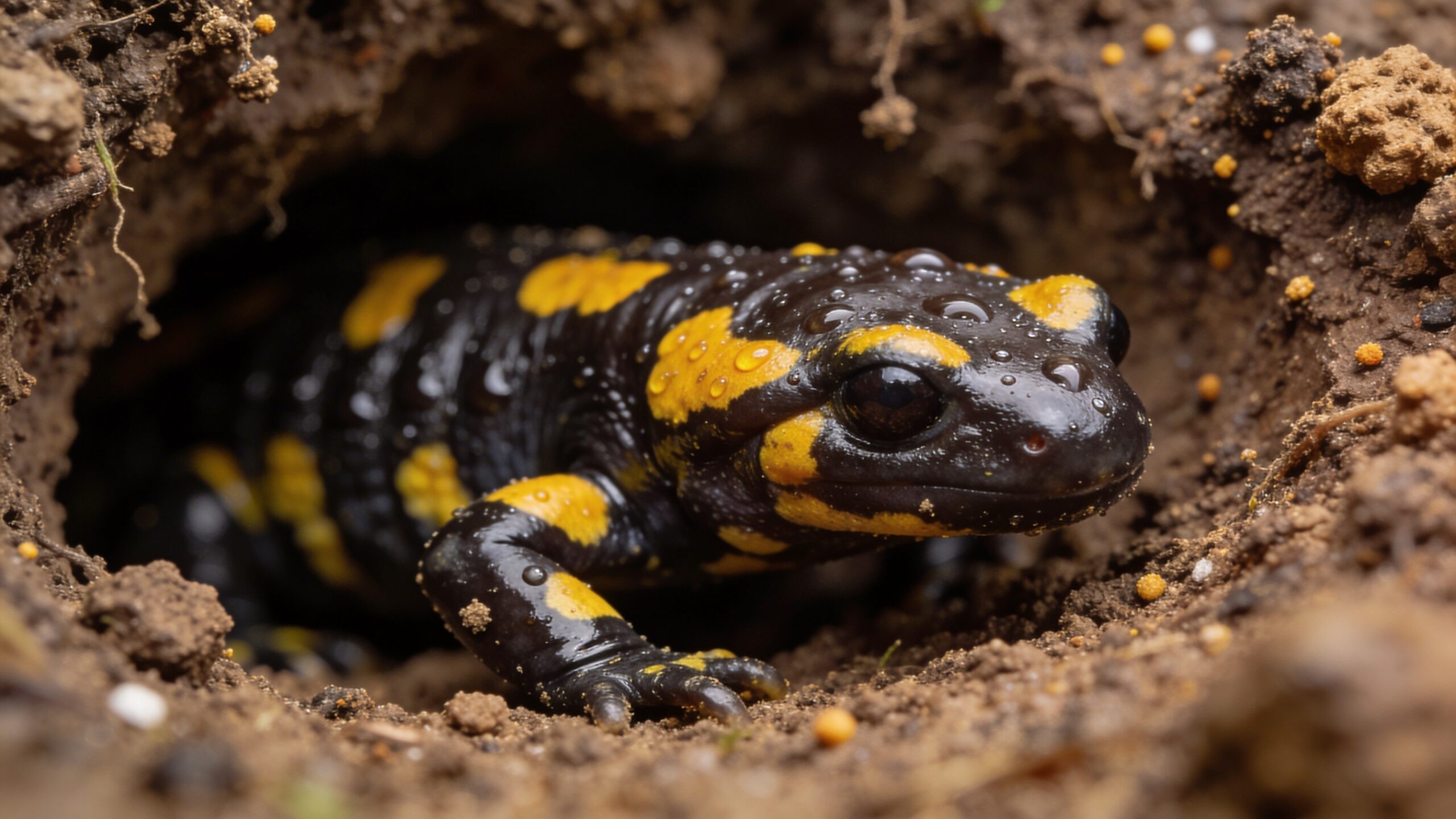
Tiger salamanders are known for their robust bodies and distinctive coloration, which can vary significantly depending on the region and subspecies. Most individuals display bold yellow or olive markings against a dark brown or black body, though some may appear more striped while others show irregular spots or blotches. This variation has led to the name “tiger,” as their patterns can resemble the stripes of the iconic big cat. Adults typically grow between seven and fourteen inches in length, making them among the largest terrestrial salamanders in North America.
Their physical structure is built for a burrowing lifestyle, with strong limbs and a broad head that helps them navigate through soil and loose substrates. Their skin is smooth and moist, playing a crucial role in respiration and hydration. Like other amphibians, they absorb water and oxygen through their skin, which makes them highly dependent on environmental moisture. This combination of strength and sensitivity allows them to thrive in hidden environments where few predators or competitors can easily reach them.
A Range That Spans Diverse Landscapes
Tiger salamanders are widely distributed across North America, with populations found from southern Canada through much of the United States and into parts of Mexico. Their ability to occupy a variety of habitats is one of their defining characteristics, allowing them to live in forests, prairies, wetlands, and even semi-arid regions. This adaptability is supported by their burrowing behavior, which helps them maintain moisture and avoid extreme temperatures. Despite their wide range, tiger salamanders are closely tied to specific breeding sites, often returning to the same ponds or pools year after year. These breeding habitats are typically fish-free bodies of water, such as temporary ponds or isolated wetlands. The surrounding land provides the shelter and food resources they need for most of the year. This dual reliance on both terrestrial and aquatic environments highlights the importance of habitat connectivity for their survival.
Life Beneath the Surface
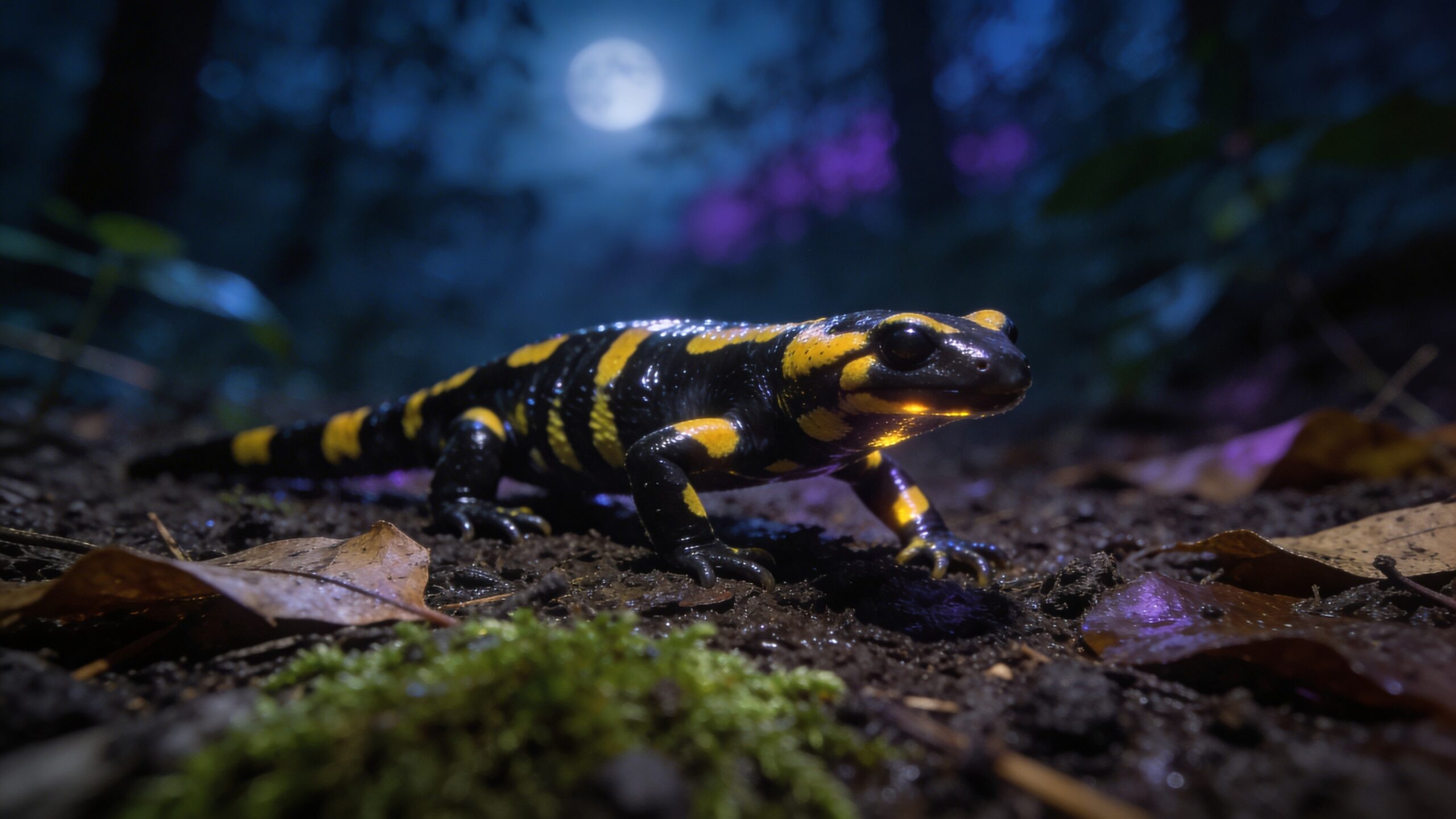
For much of their lives, tiger salamanders remain hidden underground, occupying burrows that they either dig themselves or inherit from other animals. These subterranean retreats provide protection from predators, temperature fluctuations, and dry conditions. By staying below the surface, they conserve moisture and maintain a stable environment that supports their sensitive physiology.
Their underground lifestyle also shapes their behavior, making them primarily nocturnal and rarely seen during daylight hours. When they do emerge, it is usually under the cover of darkness or during rainy conditions that reduce the risk of dehydration. This hidden existence can make them seem rare, even in areas where they are relatively common. It is a reminder that some of the most abundant creatures in an ecosystem can remain largely invisible to human observers.
The Seasonal Pulse of Movement
Tiger salamanders are known for their seasonal migrations, which are triggered by environmental cues such as temperature and rainfall. As winter gives way to spring, these amphibians emerge from their burrows and travel to breeding sites, often during warm, rainy nights. This movement can involve hundreds or even thousands of individuals converging on the same body of water. The migration is both a vulnerable and essential phase of their life cycle, exposing them to predators and environmental hazards. However, the timing and scale of these movements increase the chances of successful reproduction. By synchronizing their arrival at breeding sites, tiger salamanders create a brief but intense period of activity that ensures the continuation of their species. Observing such an event offers a rare glimpse into the rhythms of the natural world.
Breeding and Egg Development
Once at the breeding site, tiger salamanders engage in a reproductive process that is both efficient and fascinating. Males deposit spermatophores on the substrate, which females then collect to fertilize their eggs internally. The females lay clusters of eggs in the water, attaching them to vegetation or debris to keep them anchored.
These egg masses develop over several weeks, with embryos growing inside protective gelatinous layers. The aquatic environment provides both safety and resources for development, although conditions such as temperature and water quality can influence survival rates. As the embryos mature, they prepare for the next stage of life, transitioning from stationary eggs to active, swimming larvae. This early phase sets the foundation for their future survival on land.
The Aquatic Youth Stage
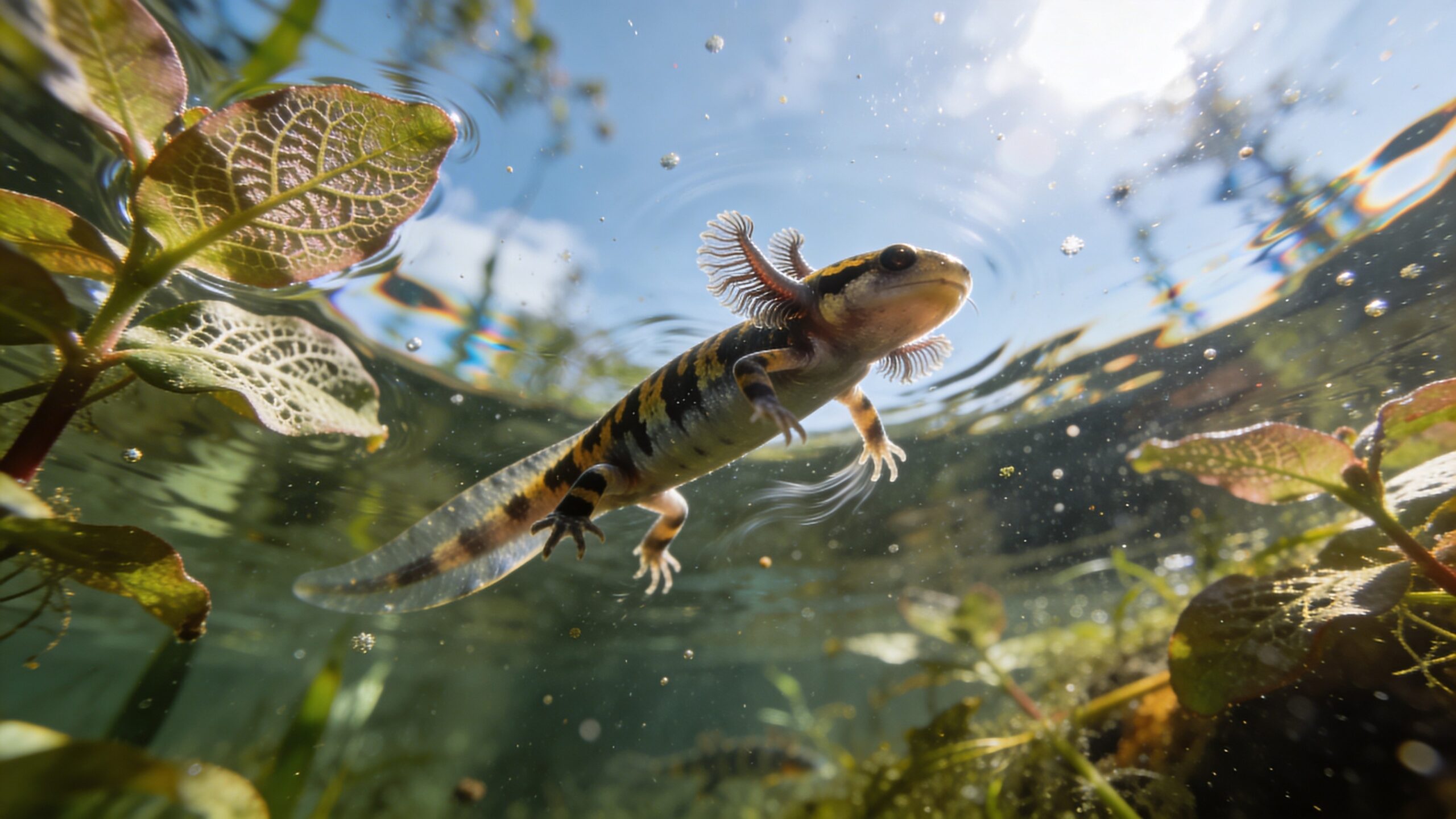
After hatching, tiger salamander larvae enter an aquatic stage characterized by external gills and a fish-like appearance. These larvae are active predators, feeding on small aquatic organisms such as insect larvae, crustaceans, and even smaller amphibians. Their rapid growth during this stage is essential, as it prepares them for the transition to life on land. In some cases, tiger salamanders exhibit a phenomenon known as paedomorphism, where individuals retain their larval features into adulthood and remain aquatic. These “water dogs” can reproduce without undergoing full metamorphosis, showcasing the species’ remarkable flexibility. For most individuals, however, the larval stage ends with metamorphosis, during which they lose their gills and develop lungs. This transformation marks a significant shift in lifestyle and habitat.
Diet and Hunting Behavior
Tiger salamanders are opportunistic carnivores, consuming a wide range of prey depending on their size and environment. On land, they feed on insects, worms, spiders, and small vertebrates, using their keen sense of smell and quick reflexes to locate and capture food. Their feeding strategy relies on ambush rather than pursuit, allowing them to conserve energy while remaining effective predators.
In aquatic environments, larvae are equally formidable hunters, preying on smaller organisms and sometimes even their own species. This adaptability in diet helps tiger salamanders thrive in diverse habitats, as they can take advantage of whatever food sources are available. Their role as predators contributes to the balance of ecosystems, controlling populations of smaller organisms and maintaining ecological stability.
Defense and Survival Tactics
Tiger salamanders rely on a combination of physical and behavioral defenses to survive in the wild. Their coloration provides camouflage, helping them blend into the forest floor or muddy environments. When threatened, they can secrete a sticky, toxic substance from glands in their skin, deterring predators from attacking. In addition to these defenses, their burrowing behavior offers a safe refuge from danger. By retreating underground, they can avoid many of the threats that surface-dwelling animals face. Their ability to regenerate lost limbs further enhances their resilience, allowing them to recover from injuries that might be fatal to other species. These survival strategies reflect a species that is well-equipped to handle the challenges of its environment.
A Subtle Role in the Ecosystem
Tiger salamanders play an important but often overlooked role in their ecosystems. As predators, they help regulate populations of insects and other small animals, contributing to the overall balance of their habitats. Their burrowing activities also influence soil structure, promoting aeration and nutrient cycling.
They also serve as prey for a variety of larger animals, including birds, mammals, and reptiles. This position in the food web makes them an integral part of the ecological community. Although they may not be as visible as larger animals, their impact is significant and far-reaching. Understanding their role helps highlight the interconnected nature of ecosystems.
Quiet Challenges in a Changing Landscape
While tiger salamanders are relatively widespread, they face challenges related to habitat loss, pollution, and environmental change. Urban development, agriculture, and road construction can disrupt their migration routes and breeding sites. Changes in water availability and quality can also affect their reproductive success. Despite these pressures, many populations remain stable, thanks in part to their adaptability and resilience. Efforts to protect wetlands and maintain natural habitats can help support their continued survival. By maintaining a balanced perspective, it is possible to appreciate both their strengths and the challenges they face. This approach encourages a thoughtful understanding of conservation without overstating urgency.
A Living Connection to Ancient Worlds
Tiger salamanders belong to a lineage of amphibians that dates back millions of years, offering a glimpse into ancient ecosystems. Their life cycle, which bridges water and land, reflects evolutionary strategies that have persisted through countless environmental changes. Observing these animals today provides a connection to a distant past, where similar creatures once thrived in prehistoric landscapes.
Their continued presence serves as a reminder of the resilience of life and the importance of preserving natural habitats. By learning about the tiger salamander, we gain insight into the broader story of amphibians and their role in the history of life on Earth. This perspective adds depth to our understanding of the natural world and our place within it.
Animal Product Reviews
Dive into Animal Streets’ Animal Product Reviews — your guide to the best gear, gifts, books, and gadgets inspired by the animal kingdom. From land-roaming lions to ocean-gliding whales, from household pets to prehistoric giants, we explore top-rated products for enthusiasts, educators, and animal lovers alike. Whether you’re shopping for toys, decor, field gear, or fun collectibles, we’ve sniffed out the best so you can discover it all in one wild place!