
Built Like a Tank for Life on the Savanna
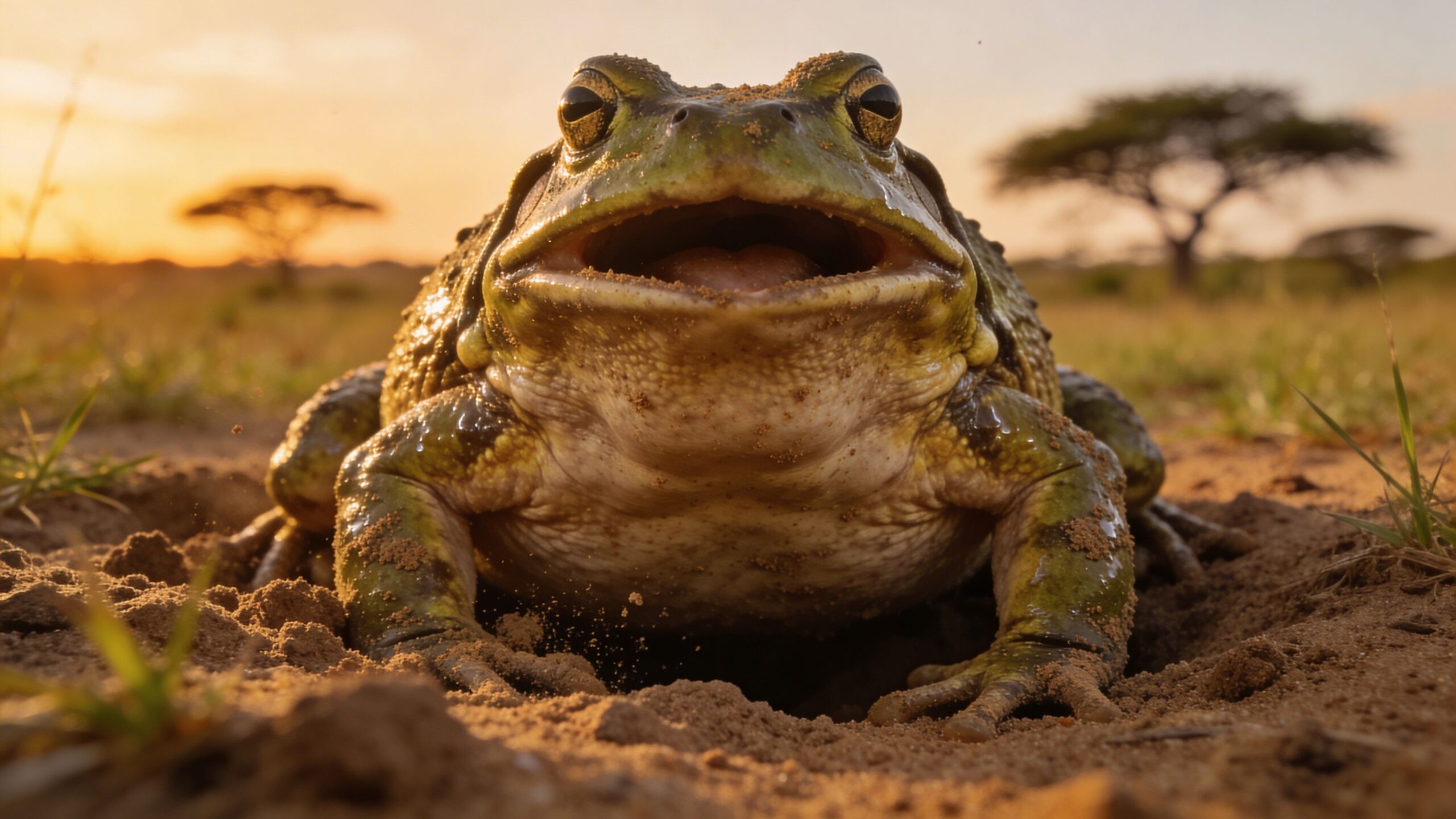
One reason the African Bullfrog stands out so strongly is its body shape. It has a broad head, a deep chest, thick limbs, and a compact, muscular frame that gives it an almost armored look. Mature males are much larger than females, which is unusual in frogs because in many amphibian species females are the larger sex. In this frog, the male’s extra size helps in territorial competition, breeding success, and the hard work of defending tadpoles. The head is especially wide, and the lower jaw carries sharp bony projections that contribute to its formidable bite.
Its coloration also reflects its lifestyle. Adults are usually olive green, brownish green, or muddy tan above, with paler undersides that can appear cream to yellowish. Juveniles often look brighter, sometimes showing fresher green tones and a pale stripe along the back, but they darken as they mature. This earthy color palette helps the frog blend into grassland soils, muddy pools, and damp burrow entrances. Although it is large and conspicuous up close, in its natural setting it often matches the landscape surprisingly well.
Home Range Across Southern African Landscapes
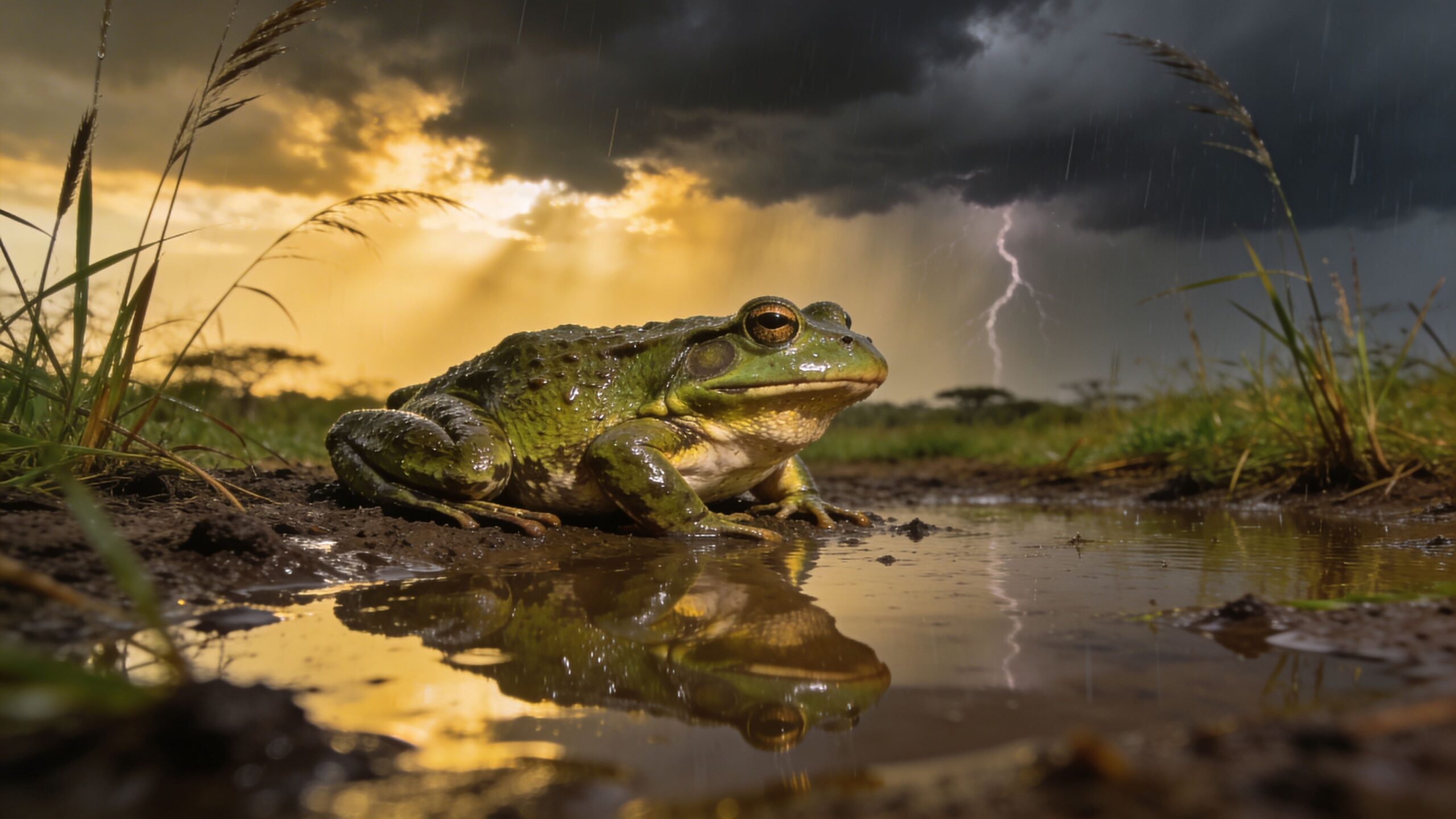
The African Bullfrog occurs mainly in southern and parts of eastern Africa, with records from countries including South Africa, Namibia, Botswana, Zambia, Zimbabwe, Mozambique, Angola, Malawi, Tanzania, Uganda, and Kenya, though its exact range can overlap with related species in some regions. It inhabits savannas, grasslands, shrublands, seasonal wetlands, shallow pans, marshy depressions, and even some farmland and drainage areas. What ties these places together is not permanent deep water, but a seasonal pattern of rain followed by drying. This frog is built for landscapes that swing between abundance and scarcity. It thrives where temporary pools appear after rainstorms and then gradually vanish under the sun. That kind of habitat may sound unstable, but for the African Bullfrog it is full of opportunity. Temporary waters often contain fewer long-term aquatic predators than permanent ponds, which can give eggs and tadpoles a short but valuable window to develop. The frog’s life cycle is timed to this rhythm of rain and evaporation. Adults may spend long stretches of the year hidden beneath the ground, then emerge rapidly when conditions change. In many ways, the species belongs not just to a place, but to a season.
The Master of Waiting Out Drought
Perhaps the African Bullfrog’s most impressive survival skill is its ability to endure long dry periods. When seasonal rains disappear and surface water dries up, the frog can burrow into the soil and enter a dormant state known as estivation. While underground, it may form a cocoon-like layer that reduces water loss and protects the body from dehydration. This allows the frog to survive months of heat and dryness in a sealed underground refuge. It is a powerful reminder that survival in harsh climates often depends more on patience than on movement.
When heavy rains finally arrive, the transformation is dramatic. Water softens the protective covering, the frog emerges, and the breeding season can begin almost immediately. This rapid response is essential because suitable breeding pools may last only a limited time before drying again. The African Bullfrog does not waste the opportunity. It feeds, calls, mates, and breeds during a narrow ecological window, turning temporary water into a stage for one of the most energetic periods in its life cycle.
A Powerful Appetite and a Bold Hunting Style
The African Bullfrog is a carnivore with a famously broad diet. It eats insects and other invertebrates, but it also takes vertebrate prey when possible, including small reptiles, fish, other amphibians, rodents, and young birds. This is not a selective little insect hunter in the usual frog sense. It is an opportunistic predator that will attempt to swallow nearly anything it can overpower and fit into its mouth. Large jaws, a strong bite, and a wide gape all support this aggressive feeding strategy. This species hunts with the classic frog combination of stillness and explosive speed. It may remain motionless for long periods, blending into mud or vegetation, and then strike suddenly when prey comes close. Its body mass helps give it presence, but its success depends on timing. Even juveniles are voracious, and cannibalism is part of the story in this species, especially among tadpoles and young frogs under crowded or resource-limited conditions. In a habitat where the good season is brief, feeding aggressively makes evolutionary sense.
Thunderstorm Breeding and Fierce Competition
The African Bullfrog’s breeding season is closely tied to major rainfall events. Males gather at shallow temporary pools and begin calling, producing a low, distinctive vocalization that helps draw females to the site. These breeding groups can become intense social arenas, especially because larger males often claim the best central positions within the breeding area. Smaller males may be pushed to the edges or displaced entirely. The result is a competitive system in which size, stamina, and assertiveness matter a great deal.
Females choose mates within these breeding gatherings, and a single female may lay thousands of eggs, commonly around 3,000 to 4,000 in one event. The eggs are typically placed in shallow water where warmth can speed development. This strategy is risky because temporary pools may shrink quickly, but it is also efficient because warm, shallow water can help the young develop fast. For a species racing against drought, speed is part of success. From the moment the eggs are laid, the clock is already running.
One of the Best Amphibian Fathers in Nature
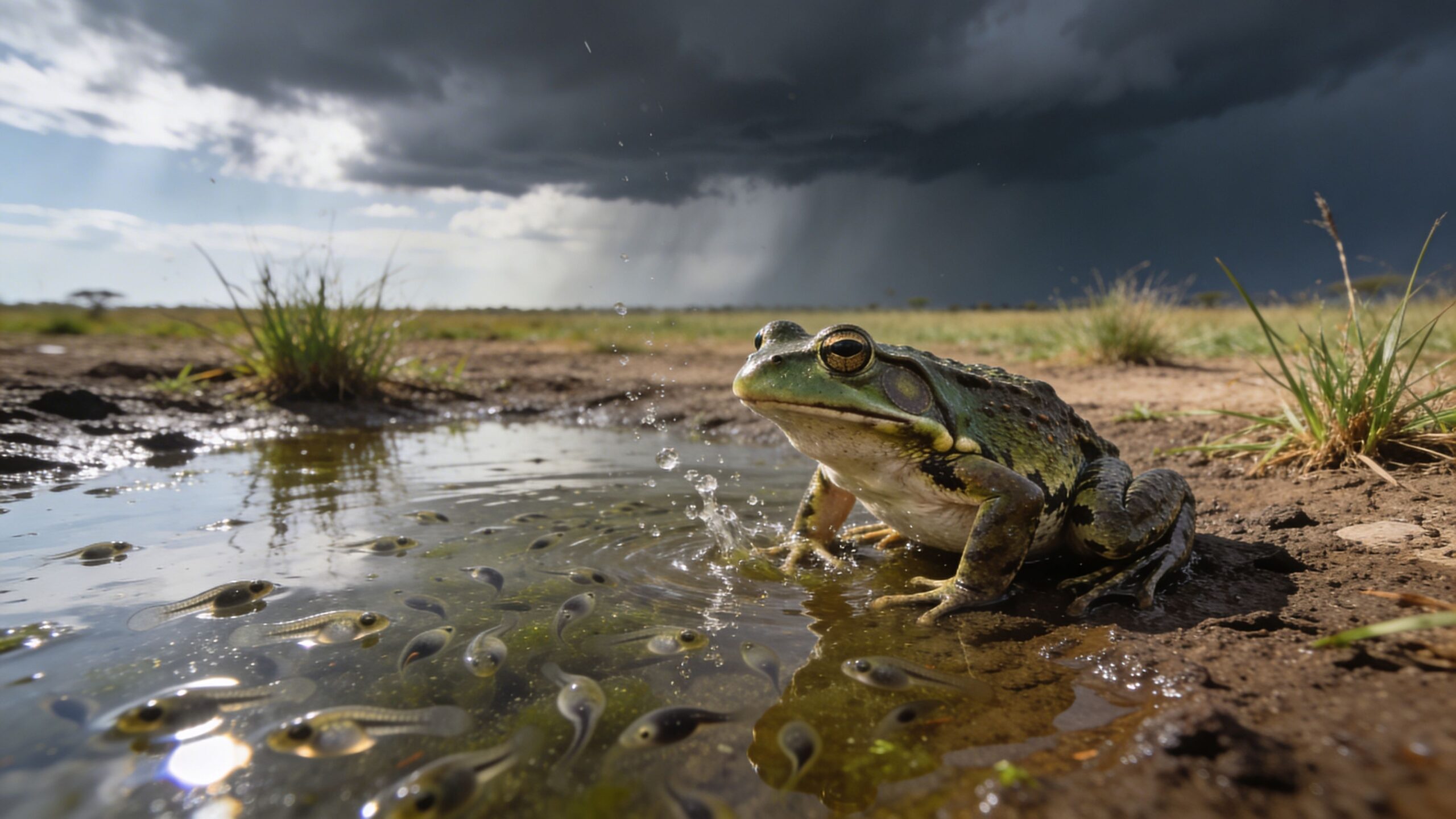
Among the most remarkable facts about the African Bullfrog is its parental care. After breeding, males may remain with the eggs and later guard the tadpoles, defending them against threats and monitoring the shrinking pool. This level of paternal care is unusual in frogs and has made the species especially interesting to scientists studying amphibian behavior. The guarding male is not passive. He can become highly aggressive, lunging at intruders and using his size and bite to drive them away. Even more astonishing is what may happen if the nursery pool begins to dry. Observations have shown males digging channels or pathways that connect the shrinking water body to a deeper section, allowing tadpoles access to safer water. That behavior gives the African Bullfrog one of the most dramatic parental reputations among amphibians. Of course, nature is complicated, and the same male that guards a brood may also eat some tadpoles under certain conditions. Even so, the overall picture remains extraordinary: this is a frog in which fatherhood can involve vigilance, combat, engineering, and hard ecological choices.
Tadpoles, Growth, and the Race Against Evaporation
Once hatched, African Bullfrog tadpoles enter a world defined by urgency. Temporary pools are productive but unstable, and young amphibians must grow before the water disappears. The tadpoles feed on a mix of available material that can include plant matter, invertebrates, small aquatic organisms, and sometimes each other. Fast development is crucial, and metamorphosis can occur in a matter of weeks under favorable conditions. That rapid pace is one more adaptation to an environment where time is limited.
After metamorphosis, young frogs face a different challenge. They are much smaller, more vulnerable, and more likely to be taken by predators or larger members of their own species. They also need to feed heavily to support growth while learning how to navigate an environment shaped by seasonal extremes. Bright juvenile coloration gradually gives way to the duller, earth-toned palette of adults. Over time, the survivors become the heavy-bodied, burrow-ready frogs that can endure the next dry cycle.
A Frog That Can Defend Itself
The African Bullfrog is not an animal that relies only on hiding. Although camouflage and burrowing matter, this species is also known for its defensive confidence. Large males in particular can bite, and the mouth is more than just a feeding tool. The lower jaw bears bony, tooth-like projections called odontoid structures, which help make the bite more effective. This is one reason the species has a reputation for being tough, bold, and not especially easy to intimidate. Its sheer size also acts as a deterrent. Many predators prefer easier meals, and a heavy frog with a wide head and strong jaws is not a casual target. Still, the species is not invincible. Birds, snakes, mammals, and larger reptiles may prey on individuals, especially young frogs. What makes the African Bullfrog impressive is that it meets danger with a combination of survival options: burrowing, camouflage, explosive movement, and outright aggression when necessary.
Why the African Bullfrog Matters in Nature
Like other amphibians, the African Bullfrog is part of a larger ecological web. As a predator, it helps regulate populations of insects and other small animals. As prey, especially when young, it feeds birds, reptiles, and mammals. Its dependence on seasonal pools also connects it to weather patterns, hydrology, and land condition. When amphibians are doing well, they often tell us something meaningful about the health of the surrounding environment.
This frog also matters because it challenges assumptions about amphibians. Many people imagine frogs as delicate, soft-voiced creatures living at the margins of ponds. The African Bullfrog offers a very different image: a large, territorial, drought-resistant, burrowing predator with strong parental instincts. It expands the public imagination of what a frog can be. That alone makes it one of the most compelling amphibians for general readers and wildlife enthusiasts alike.
A Measured Look at Conservation
At the global level, the African Bullfrog has been assessed as a species of least concern, which means it is not currently considered among the most threatened amphibians worldwide. Its broad range and ability to use a variety of seasonal habitats help support that status. Still, local pressures can matter. Habitat loss, wetland alteration, road development, and human disturbance can reduce breeding opportunities in some places, especially where temporary pools are drained or degraded. A toned-down conservation message fits this species well because its story is not one of immediate global collapse, but of habitat dependence and local vulnerability. Protecting seasonal wetlands, maintaining natural grassland systems, and respecting breeding sites can go a long way. The African Bullfrog is resilient, but it still needs functioning landscapes and the return of seasonal rains. Its future is tied to the health of the dynamic environments that shaped it. In that sense, conserving the African Bullfrog also means conserving the rhythms of the savanna itself.
Why This Giant Frog Keeps Capturing Attention
There are many frogs in the world, but few leave an impression quite like the African Bullfrog. Its size, its behavior, its survival strategy, and its intense parenting all feel larger than life. It is the kind of species that can attract a child’s curiosity, hold a naturalist’s interest, and reward close scientific study all at once. It belongs to that rare group of animals that seem almost designed to surprise people.
For general readers, the African Bullfrog is a perfect reminder that nature does not run out of bold ideas. In one animal, we find drought endurance, explosive breeding, carnivorous opportunism, territorial drama, and paternal care. That combination makes Pyxicephalus adspersus more than just a large frog. It makes it one of the standout amphibians of Africa and one of the most engaging species to explore in any wildlife reference article.