
A Hidden Jewel of the Forest Floor
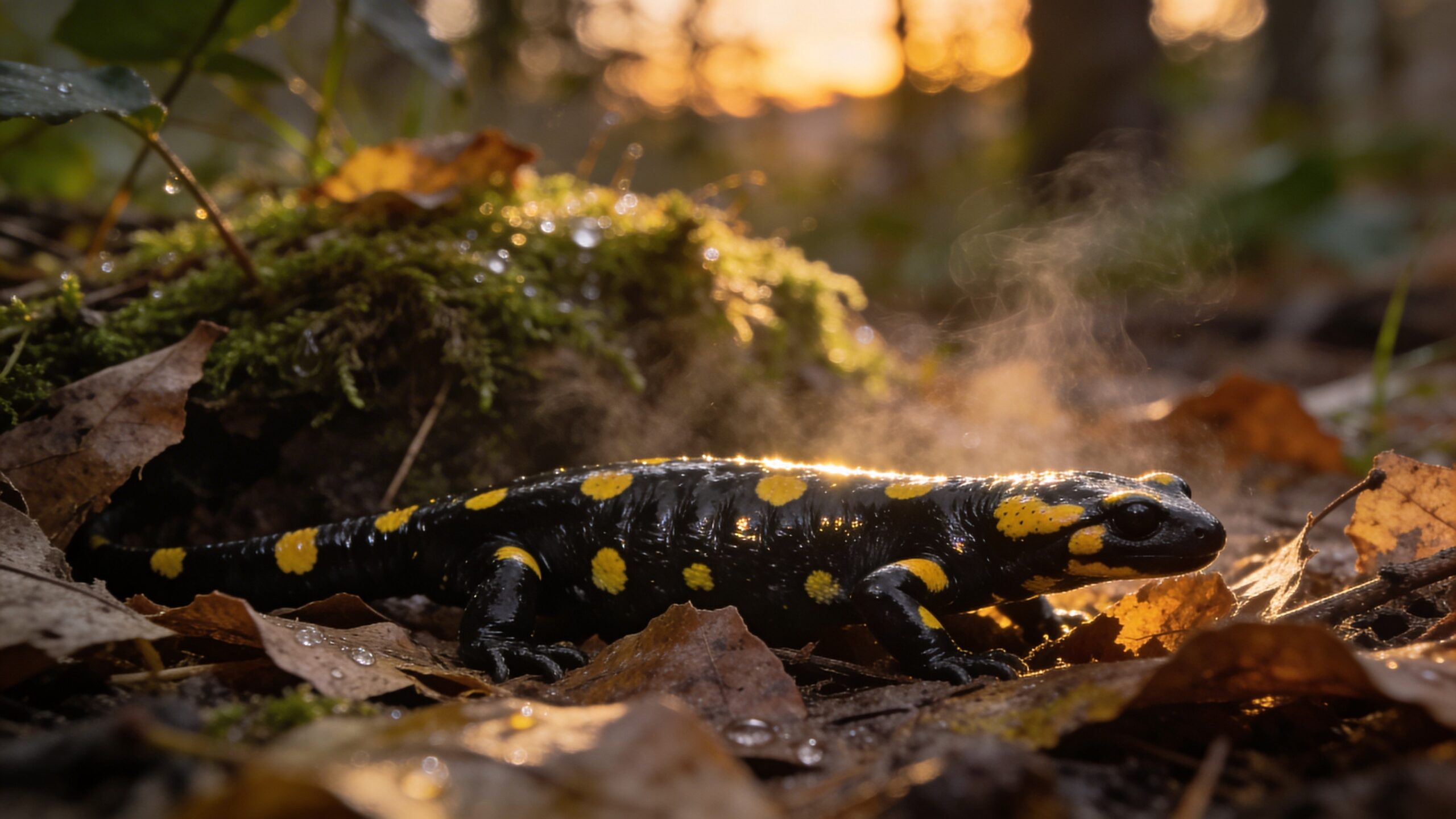
The spotted salamander, scientifically known as Ambystoma maculatum, is one of North America’s most fascinating amphibians, quietly living its life beneath leaves, logs, and soil for most of the year. With its jet-black body scattered with bright yellow or orange spots, it looks almost like a creature painted by hand rather than shaped by evolution. Despite its striking appearance, it remains elusive, rarely seen except during specific moments in early spring. For many nature enthusiasts, catching a glimpse of one feels like discovering a secret hidden in plain sight. What makes the spotted salamander especially compelling is not just its appearance, but its remarkable life cycle and unusual biological partnerships. It spends much of its life underground, emerging only during rainy nights to breed in temporary woodland pools. These brief appearances offer a rare window into a complex and ancient survival strategy that has remained largely unchanged for millions of years. The more scientists study this species, the more it reveals surprising details about adaptation, symbiosis, and resilience.
A: Start with body shape and habitat, then use color, markings, size, and behavior as confirmation.
A: Because Spotted Salamander has its own mix of structure, habitat, feeding, and comparison clues.
A: Compare it with the nearest parent, child, or lookalike pages before treating one trait as final.
A: No. Age, season, lighting, region, and posture can all change the first impression.
A: Look for the setting that explains the animal: water, cover, vegetation, substrate, altitude, reef, burrow, branch, or open ground.
A: The exact diet depends on the animal, but mouth shape, movement, and habitat usually reveal the feeding strategy.
A: Many animals change size, color, pattern, diet, risk, or habitat between young and adult stages.
A: Use the photo to check eye position, body outline, limbs or fins, texture, posture, and surrounding habitat.
A: Yes. Every animal affects food webs, habitat structure, competition, nutrient movement, or predator-prey balance in some way.
A: It should connect the animal's visible traits to how it survives, moves, feeds, and fits the taxonomy.
Built for the Shadows
The spotted salamander has a sturdy, smooth body that typically measures between six and ten inches long, making it one of the larger salamander species in its range. Its glossy black or dark gray skin is marked with two irregular rows of yellow or orange spots that run from head to tail, though patterns can vary slightly between individuals. These bright markings are not just decorative; they may serve as a warning to predators that the salamander produces mild toxins in its skin.
Unlike many animals that rely on speed or aggression, the spotted salamander is built for a life of concealment. Its strong limbs allow it to burrow effectively, while its moist skin requires a consistently damp environment to function properly. Because amphibians absorb water and oxygen through their skin, they are highly sensitive to environmental changes, making their physical design closely tied to their habitat. Every feature of the spotted salamander supports a quiet, hidden existence beneath the forest floor.
Where Forests and Water Meet
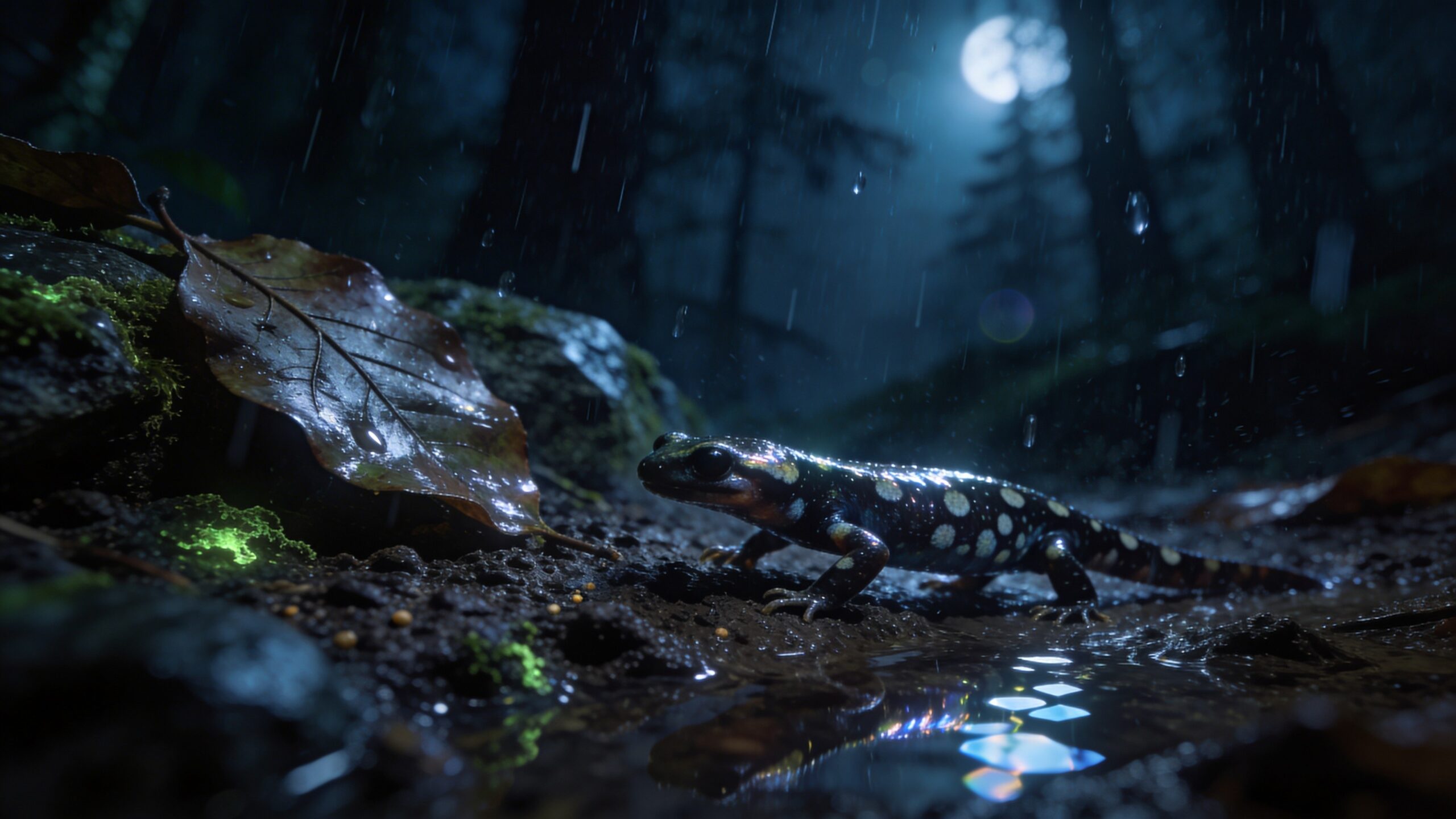
Spotted salamanders are primarily found in the eastern United States and parts of Canada, thriving in deciduous forests where seasonal rainfall creates temporary pools. These habitats, often called vernal pools, are critical to their survival because they provide a predator-free environment for breeding. Unlike permanent ponds, these temporary bodies of water typically lack fish, which would otherwise prey on salamander eggs and larvae. The surrounding forest is just as important as the pools themselves, offering shelter, moisture, and a steady supply of invertebrates to eat. Fallen logs, leaf litter, and underground burrows create a network of microhabitats that protect the salamanders from drying out and from predators. This close connection between land and water highlights the delicate balance these animals depend on, as even small changes in their environment can disrupt their life cycle.
A Secret Life Underground
For most of the year, spotted salamanders live almost entirely out of sight, spending their days hidden beneath logs, rocks, or in self-dug burrows. They are primarily nocturnal, emerging at night to hunt for insects, worms, and other small invertebrates. This secretive lifestyle helps them avoid predators such as birds, snakes, and small mammals, while also conserving moisture in their sensitive skin.
During dry or cold periods, they retreat even deeper underground, entering a state of reduced activity that allows them to survive unfavorable conditions. This ability to remain hidden for long stretches of time is one of the reasons they are rarely seen, even in areas where they are relatively common. Their underground existence is not just a preference, but a necessary adaptation to a world that can quickly become inhospitable for amphibians.
The Great Spring Migration
One of the most remarkable events in the life of a spotted salamander is its annual migration to breeding pools. As winter fades and temperatures rise, warm rains trigger thousands of salamanders to emerge simultaneously from their underground homes. Under the cover of darkness, they travel across the forest floor toward the same pools where they were born, sometimes covering surprising distances. This synchronized movement is both a survival strategy and a spectacle of nature. By migrating in large numbers, the salamanders reduce the risk of predation, overwhelming predators with sheer abundance. For those lucky enough to witness it, the sight of these animals moving quietly through the rain-soaked forest is unforgettable. It is a reminder of how even the most hidden creatures can participate in dramatic natural events.
A Unique Underwater Nursery
Once they reach the breeding pools, spotted salamanders engage in a fascinating reproductive process. Males deposit small packets of sperm called spermatophores on the pond floor, which females then pick up to fertilize their eggs internally. The females lay clusters of gelatinous eggs, attaching them to submerged vegetation or sticks in the water.
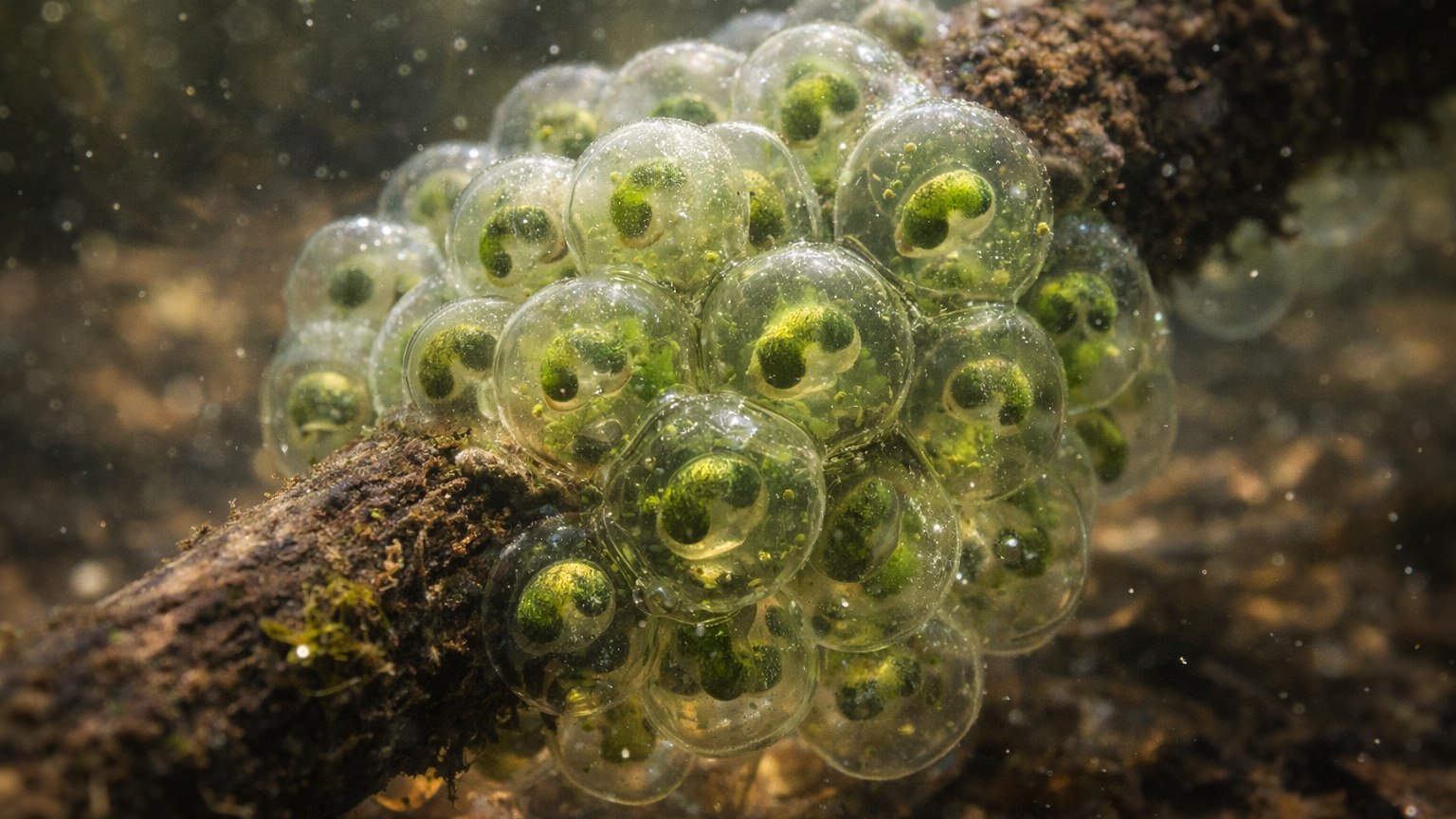
These egg masses are unlike anything else in the animal world, often appearing as clear or milky blobs floating just beneath the surface. Over time, they may take on a greenish tint due to the presence of algae living inside them. This unusual partnership between the salamander embryos and the algae is one of the most intriguing aspects of their biology, offering benefits to both organisms as the embryos develop.
The Glow Within: A Rare Symbiosis
The relationship between spotted salamander eggs and green algae is a rare example of symbiosis occurring within a vertebrate’s cells. The algae, which live inside the gelatinous egg masses and even within the embryos themselves, perform photosynthesis and produce oxygen. This oxygen helps the developing salamanders survive in the low-oxygen environment of the water. In return, the algae benefit from access to waste products like carbon dioxide and nitrogen, which the embryos produce. This exchange creates a mutually beneficial system that enhances the survival chances of both partners. Scientists continue to study this phenomenon, as it represents a unique biological relationship that could have broader implications for understanding symbiosis and evolution.
From Larva to Land Dweller
After several weeks, the eggs hatch into aquatic larvae that resemble tiny, gilled versions of adult salamanders. These larvae spend their early lives swimming in the pool, feeding on small aquatic organisms and growing rapidly. As they develop, they gradually lose their external gills and begin to take on the form of adult salamanders.
By late spring or early summer, the young salamanders leave the water and begin their terrestrial lives. This transition marks a critical stage in their development, as they must quickly adapt to life on land while avoiding predators and finding suitable shelter. The journey from egg to adult is fraught with challenges, but those that survive will eventually return to the same pools to continue the cycle.
What’s on the Menu
Spotted salamanders are opportunistic predators, feeding on a wide variety of small invertebrates found in their forest habitat. Their diet includes insects, spiders, worms, slugs, and even small amphibians on occasion. Using their keen sense of smell and quick tongue, they are able to capture prey efficiently in the dark. Their feeding habits play an important role in the ecosystem, helping to control populations of insects and other small creatures. By maintaining this balance, they contribute to the overall health of the forest environment. Although they may seem insignificant at first glance, their role as predators makes them an integral part of the ecological web.
Survival Strategies in a Changing World
Spotted salamanders rely on a combination of camouflage, toxins, and behavior to avoid predators. Their dark coloration helps them blend into the forest floor, while their bright spots may serve as a warning signal. When threatened, they can secrete a milky substance from glands near their tail, deterring would-be attackers.
In addition to these defenses, their secretive lifestyle and timing of activity reduce their exposure to danger. However, like many amphibians, they are sensitive to environmental changes such as habitat loss, pollution, and climate shifts. While they are still relatively common in many areas, their dependence on both forest and wetland habitats means they can be affected by disruptions to either environment.
Why They Matter More Than You Think
Spotted salamanders are more than just an interesting species; they are indicators of environmental health. Because they are sensitive to changes in moisture, temperature, and water quality, their presence can signal a healthy ecosystem. Conversely, declines in their populations can serve as early warnings of environmental problems. Their unique biology, including their symbiotic relationship with algae, also makes them valuable subjects for scientific research. By studying these animals, researchers gain insights into broader ecological and evolutionary processes. In this way, the spotted salamander contributes not only to its ecosystem but also to our understanding of the natural world.
A Quiet Symbol of the Forest
There is something almost poetic about the spotted salamander’s life, hidden for most of the year and revealed only during brief, rain-soaked nights. It embodies the quiet complexity of forest ecosystems, where countless interactions occur out of sight. For those who take the time to look, it offers a glimpse into a world that is both delicate and resilient.
In a fast-paced world, the spotted salamander serves as a reminder of the importance of slowing down and paying attention to the details of nature. Its story is one of adaptation, cooperation, and survival, unfolding quietly beneath our feet. By understanding and appreciating this remarkable amphibian, we gain a deeper connection to the environments we share and the intricate lives they support.
Animal Product Reviews
Dive into Animal Streets’ Animal Product Reviews — your guide to the best gear, gifts, books, and gadgets inspired by the animal kingdom. From land-roaming lions to ocean-gliding whales, from household pets to prehistoric giants, we explore top-rated products for enthusiasts, educators, and animal lovers alike. Whether you’re shopping for toys, decor, field gear, or fun collectibles, we’ve sniffed out the best so you can discover it all in one wild place!