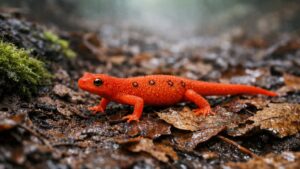
What Defines True Salamanders and Newts
True salamanders and newts belong to a distinct group of amphibians characterized by their elongated bodies, long tails, and smooth or slightly textured skin. Unlike frogs and toads, they retain their tails throughout life, and many exhibit a graceful, almost reptilian movement. Their physiology is finely tuned for both aquatic and terrestrial living, with some species spending most of their lives in water while others venture onto land for extended periods.
A defining feature of these amphibians is their ability to regenerate lost body parts, including limbs, tails, and even portions of vital organs. This regenerative capacity has fascinated scientists for decades and continues to inspire research into human medicine. Additionally, many species possess skin toxins that serve as defense mechanisms against predators, often paired with vivid coloration that acts as a warning signal. These traits make true salamanders and newts not only biologically unique but also visually striking in their natural habitats.
Terrestrial Salamanders: Guardians of the Forest Floor
Among the most iconic members of this group are terrestrial salamanders, which spend the majority of their lives on land. These species are often found beneath logs, stones, and layers of damp leaf litter, where humidity remains high and temperatures are stable. Their secretive nature allows them to avoid predators while hunting for insects, worms, and other small invertebrates. The fire salamander, with its bold black body adorned with bright yellow markings, stands as a symbol of this group. Its striking appearance is not merely decorative but serves as a warning to potential predators about its toxic skin secretions. Terrestrial salamanders play a crucial role in forest ecosystems by controlling insect populations and contributing to nutrient cycling. Their presence often signals a healthy, undisturbed environment, making them valuable indicators for conservation efforts.
Aquatic Newts: Life Beneath the Surface
In contrast to their land-dwelling relatives, aquatic newts embrace life in water, particularly during their breeding seasons. These amphibians are often seen gliding through ponds, lakes, and slow-moving streams, their bodies perfectly adapted for swimming. With flattened tails and streamlined forms, they move with a quiet elegance that belies their predatory efficiency.
Newts undergo complex life cycles that may include both aquatic and terrestrial phases. During breeding periods, males often develop elaborate physical traits, such as crests or vibrant coloration, to attract females. Courtship rituals can be intricate, involving displays of movement and chemical signaling. Once eggs are laid, larvae emerge with gills, gradually transforming into adult forms capable of surviving on land. This dual existence highlights the adaptability and resilience of newts in ever-changing environments.
Alpine and Mountain Salamanders: Masters of Extremes
High in mountainous regions, where conditions can be harsh and unpredictable, alpine and mountain salamanders carve out a niche of their own. These species are uniquely adapted to cooler temperatures and often inhabit rocky terrains, forested slopes, and alpine meadows. Their dark coloration helps them absorb heat, while their behavior is finely tuned to avoid desiccation and temperature extremes. One of the most remarkable adaptations found in this group is live birth. Unlike many amphibians that lay eggs in water, certain alpine salamanders give birth to fully developed young, bypassing the vulnerable larval stage altogether. This reproductive strategy allows them to thrive in environments where standing water may be scarce or seasonal. Their existence challenges traditional assumptions about amphibian life cycles and underscores the diversity within the Salamandridae family.
Semi-Aquatic Species: Living Between Worlds
Some salamanders and newts occupy a middle ground, moving fluidly between land and water throughout their lives. These semi-aquatic species often inhabit areas near streams, ponds, or wetlands, taking advantage of both environments for feeding, breeding, and shelter. Their behavior reflects a delicate balance, shifting in response to seasonal changes and environmental conditions.
These amphibians demonstrate remarkable flexibility in their physiology and habits. They may forage on land during cooler, wetter periods and retreat to water when conditions become dry or during breeding seasons. This adaptability allows them to exploit a wide range of ecological niches, contributing to their success across diverse habitats. Their presence often highlights the interconnectedness of terrestrial and aquatic ecosystems.
Behavior and Survival Strategies
True salamanders and newts exhibit a variety of behaviors that enhance their survival in complex environments. Many are nocturnal, emerging under the cover of darkness to hunt and explore while avoiding predators. Their diet primarily consists of small invertebrates, which they capture using quick, precise movements. Defense mechanisms are equally sophisticated. In addition to toxic skin secretions, some species employ camouflage, blending seamlessly into their surroundings. Others use startling displays of color or posture to deter threats. The ability to regenerate lost body parts provides a final line of defense, allowing individuals to escape predation even after sustaining injuries. These strategies collectively illustrate the resilience and ingenuity of these amphibians.
Ecological Importance and Environmental Indicators
Beyond their individual survival, salamanders and newts play critical roles in maintaining ecological balance. As predators, they help regulate populations of insects and other small organisms, preventing imbalances that could disrupt ecosystems. As prey, they support a range of animals, from birds to mammals, forming an integral part of food webs.
Perhaps most importantly, they serve as sensitive indicators of environmental health. Their permeable skin makes them highly susceptible to pollution, habitat loss, and climate change. Declines in salamander populations often signal broader ecological issues, prompting conservationists to investigate and address underlying causes. Protecting these amphibians, therefore, contributes to the preservation of entire ecosystems.
The Evolutionary Story of Salamandridae
The evolutionary history of true salamanders and newts is a testament to their resilience and adaptability. Emerging millions of years ago, they have survived dramatic shifts in climate, geography, and biodiversity. Fossil records reveal ancestors that share many traits with modern species, highlighting a remarkable continuity in their design. Over time, these amphibians have diversified into a wide array of forms, each adapted to specific environments and ecological roles. This diversification reflects the dynamic nature of evolution, where small changes accumulate to produce significant variation. Studying their evolutionary pathways provides valuable insights into the mechanisms that drive biodiversity and the factors that sustain it.
Conservation Challenges and the Path Forward
Despite their resilience, true salamanders and newts face significant challenges in the modern world. Habitat destruction, pollution, invasive species, and climate change all threaten their survival. Wetlands are drained, forests are fragmented, and water quality declines, reducing the habitats these amphibians depend on.
Conservation efforts focus on protecting habitats, restoring ecosystems, and raising awareness about the importance of these creatures. Research into their biology and behavior continues to inform strategies for their preservation. By understanding their needs and vulnerabilities, humans can take meaningful steps to ensure that salamanders and newts remain a part of the natural world for generations to come.
A World Worth Exploring
The world of true salamanders and newts is one of quiet wonder and hidden complexity. These amphibians, often overlooked, offer a window into the delicate balance of life on Earth. Their stories are woven into the fabric of ecosystems, connecting water and land, predator and prey, past and future. Exploring this category opens the door to a deeper appreciation of biodiversity and the intricate relationships that sustain it. Each species, each behavior, and each habitat tells a story waiting to be discovered. As curiosity leads the way, the journey into the realm of salamanders and newts becomes not just an exploration of animals, but an invitation to understand the natural world more profoundly.