
A Body Designed for Camouflage and Aquatic Living
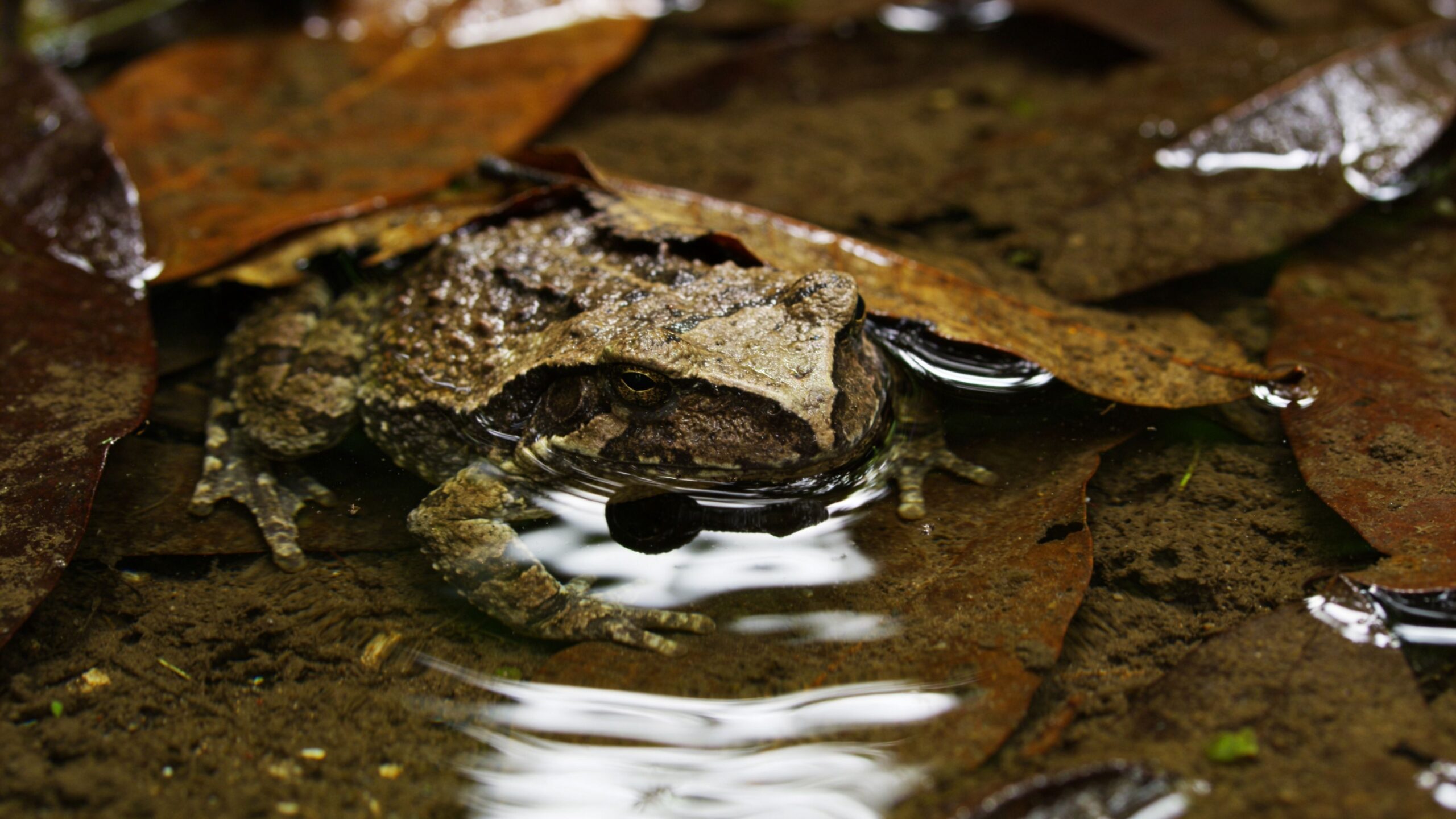
The Surinam Toad’s appearance is unlike that of most frogs. Its body is extremely flat and wide, giving it a shape that resembles a fallen leaf resting on the bottom of a pond. This flattened form helps it remain hidden among the debris of submerged vegetation and mud. Its color usually ranges from brown to dark olive, with rough, mottled skin that closely matches the colors of decaying leaves and sediment.
Its head is triangular and merges almost seamlessly with the body, making it difficult to distinguish where the head ends and the torso begins. The eyes are tiny and positioned on top of the head, allowing the toad to remain mostly buried in the substrate while still scanning for movement above. Unlike many frogs, the Surinam Toad does not have a visible tongue or teeth, which contributes to its unique feeding strategy. Another striking feature is the toad’s fingers. The front toes end in small star-shaped sensory organs that look almost like tiny aquatic fans. These specialized fingertips help the animal detect vibrations and locate food hidden in muddy water. Combined with broad webbed hind feet, these adaptations allow the Surinam Toad to move gracefully through aquatic environments where other frogs might struggle.
Life Beneath the Water’s Surface
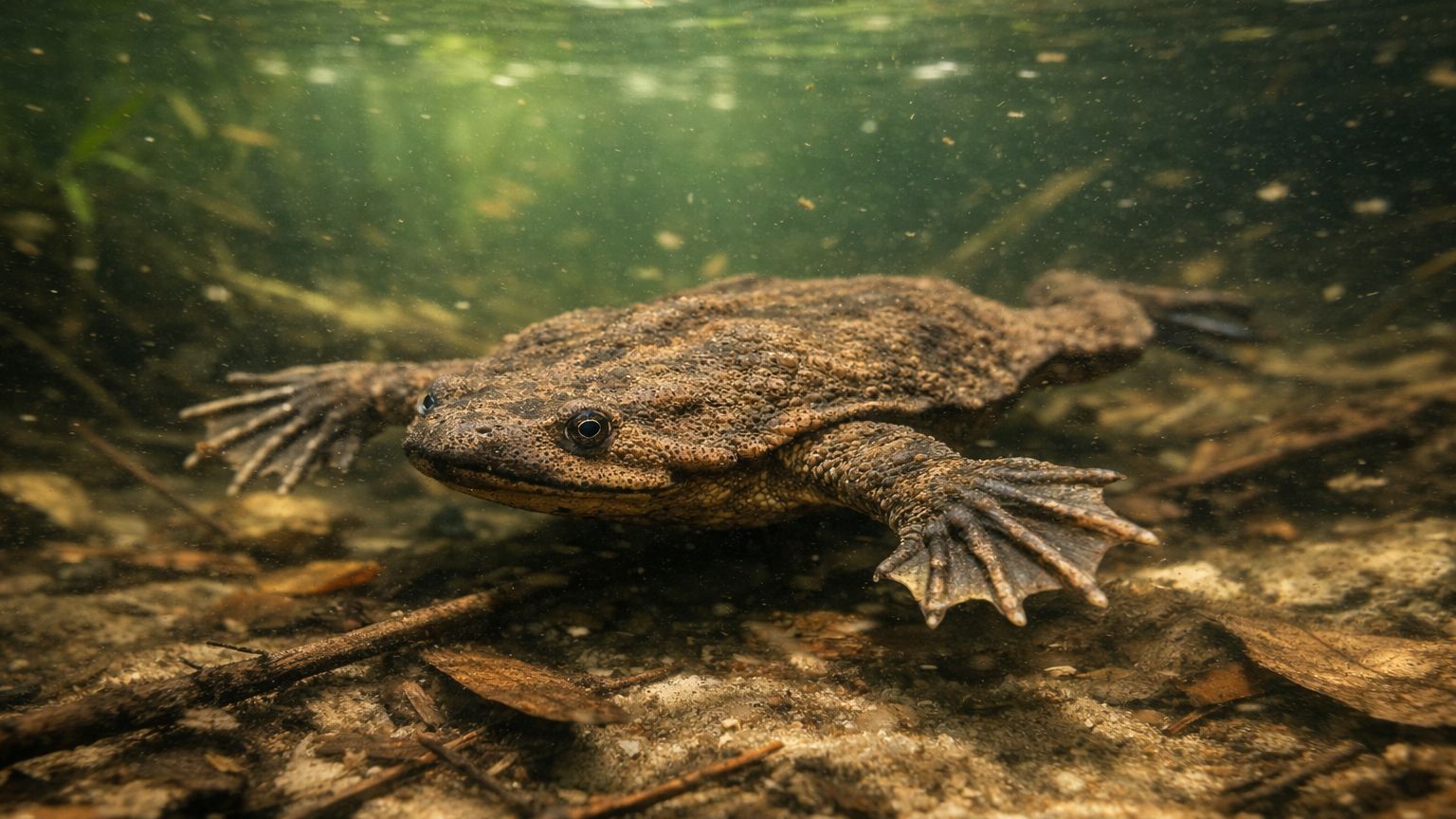
Unlike many amphibians that divide their time between land and water, the Surinam Toad is almost entirely aquatic. It lives in slow-moving freshwater habitats such as swamps, ponds, oxbow lakes, and flooded forest areas. These environments are often filled with leaf litter, submerged branches, and muddy sediments that provide the perfect camouflage for this unusual amphibian.
The water in these habitats is often dark and rich with tannins from decomposing plant material. This creates a murky environment where visibility is limited, which works to the toad’s advantage. Its flat body and leaf-like coloration allow it to blend into the bottom so effectively that predators and prey alike may overlook it entirely. Remaining motionless is one of the toad’s most effective survival strategies.
Because it is adapted to aquatic life, the Surinam Toad rarely ventures onto land. Its limbs and body shape are far better suited to swimming and crawling along the riverbed than to hopping across land surfaces. This specialization allows it to occupy a niche that few other amphibians exploit so completely.
Hunting with Stealth and Suction
The Surinam Toad uses a fascinating feeding method that differs from the tongue-based hunting used by many frogs. Instead of flicking out a sticky tongue to catch insects, it relies on suction feeding. When the toad detects prey nearby, it suddenly opens its wide mouth and rapidly expands its throat. This movement creates a vacuum that pulls water and prey directly into its mouth.
Its star-shaped fingers also play an important role in feeding. The toad uses these sensory fingertips to stir through leaf litter and muddy sediment on the river bottom. By probing the substrate, it can locate small invertebrates hiding beneath the debris. This tactile hunting method is particularly useful in murky waters where visibility is poor. The Surinam Toad feeds on a variety of small aquatic animals. Its diet often includes insect larvae, small fish, worms, and tiny crustaceans. Because it swallows prey whole, it does not need specialized chewing structures. This opportunistic feeding strategy helps the toad survive in environments where food availability can fluctuate throughout the year.
The Most Extraordinary Amphibian Reproductive Strategy
Perhaps the most famous aspect of the Surinam Toad is its astonishing method of reproduction. Unlike most frogs that lay eggs in water or attach them to plants, this species carries its developing young embedded in the skin of the female’s back. This unusual adaptation has fascinated biologists for generations and remains one of the most remarkable reproductive strategies in the amphibian world.
During mating, the male and female perform a complex underwater acrobatic dance. As the female releases eggs, the male fertilizes them and carefully presses them onto her back. Over time, the skin on the female’s back swells and grows around the eggs, forming small pockets where each embryo develops. These chambers protect the eggs from predators and environmental hazards.
Weeks later, fully formed miniature toads emerge directly from these skin pockets. Instead of hatching as tadpoles, they skip the free-swimming larval stage entirely. Watching dozens of tiny toads crawl out from the female’s back is one of the most unusual sights in the amphibian world and has contributed greatly to the species’ reputation as one of nature’s strangest animals.
Movement and Behavior in the Water
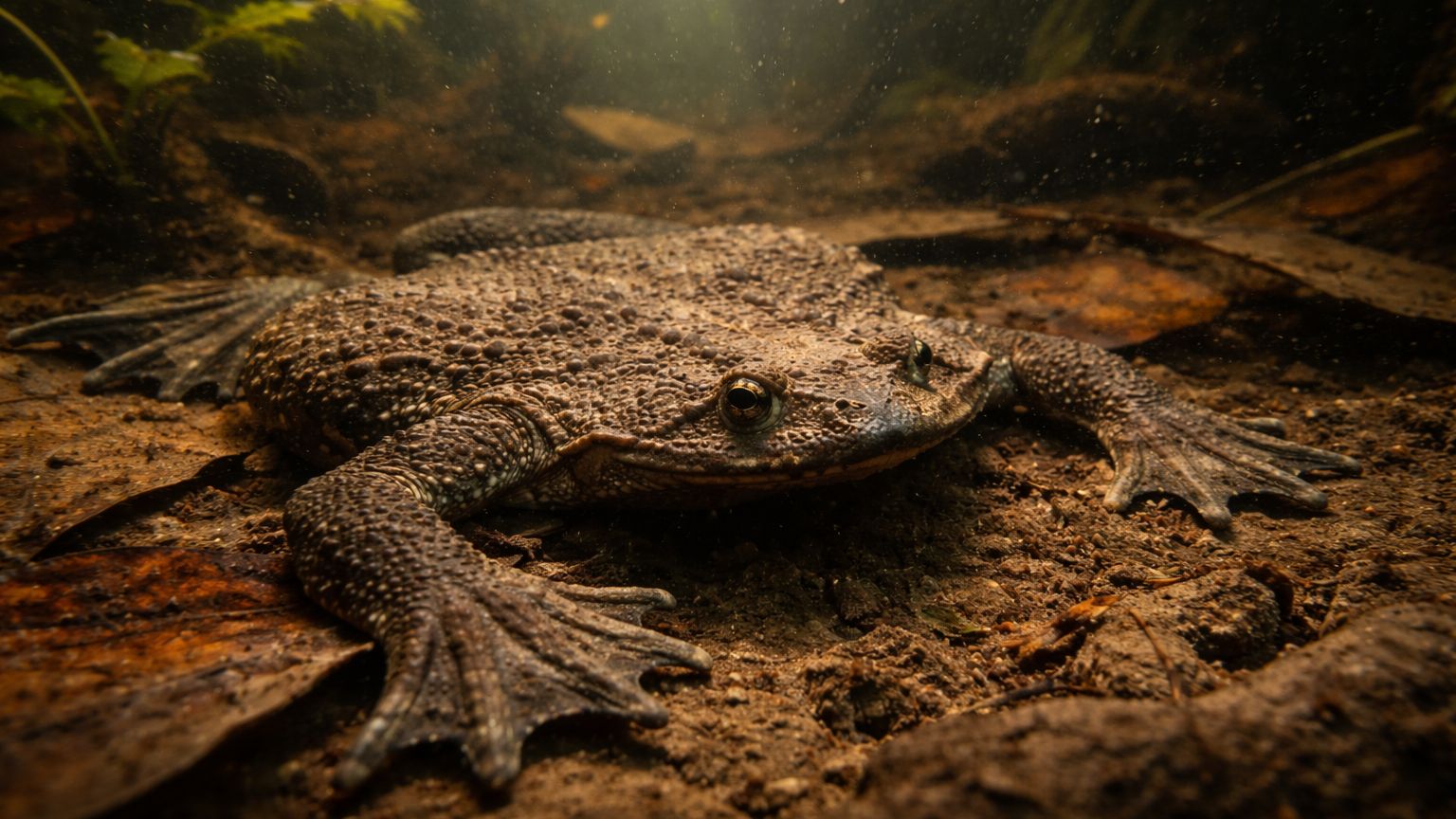
The Surinam Toad is not a fast-moving creature, but it is well adapted to life in still or slow-moving water. Instead of hopping like many frogs, it often glides slowly across the riverbed or gently paddles through the water. Its broad body and webbed feet make it an efficient swimmer, allowing it to move quietly without disturbing surrounding sediment.
Most of the time, the toad remains motionless among leaves and mud. This stillness serves two purposes: it conserves energy and enhances its camouflage. Remaining hidden helps the toad avoid predators such as fish, birds, and aquatic snakes that might otherwise notice movement in the water. Although it appears sluggish, the Surinam Toad can react quickly when necessary. If startled, it may rapidly swim away using powerful kicks from its hind legs. However, its primary defense is invisibility. By blending into its surroundings, it reduces the chances of being noticed at all.
Predators and Survival Strategies
Despite its camouflage, the Surinam Toad still faces a variety of predators within its watery habitat. Large fish, aquatic snakes, and wading birds are among the animals that may attempt to prey on it. The toad’s flattened body helps it press tightly against the riverbed, making it difficult for predators to detect or grab.
Its coloration also plays a major role in survival. The mottled browns and grays on its skin mimic the appearance of decaying leaves and mud. When lying still among debris, the toad can be almost impossible to distinguish from its surroundings. This natural disguise is one of the species’ most effective defenses.
In addition to camouflage, the toad’s sedentary lifestyle helps reduce encounters with predators. By moving slowly and remaining hidden most of the time, it avoids attracting attention. These strategies illustrate how survival in nature often depends on subtle adaptations rather than speed or strength.
A Quiet Role in Tropical Ecosystems
Although it may not be as well known as brightly colored poison dart frogs, the Surinam Toad plays an important role in freshwater ecosystems. By feeding on insect larvae and other small aquatic animals, it helps regulate populations within its habitat. This contributes to the balance of food webs in tropical wetlands and floodplain forests.
At the same time, the toad itself serves as prey for larger animals, forming an important link in the ecosystem. Its presence reflects the health of freshwater environments where amphibians often act as biological indicators. Clean water and intact habitats are essential for their survival. Researchers continue to study the Surinam Toad to better understand amphibian biology and evolution. Its unusual reproductive strategy offers insights into how animals adapt to environmental pressures. The species demonstrates the incredible diversity of life that can evolve within the same group of animals.
Conservation and the Future of the Surinam Toad
The Surinam Toad is currently found across a broad region of northern South America, including areas of Brazil, Suriname, Guyana, French Guiana, Venezuela, and parts of the Amazon Basin. Because of this wide distribution, it remains relatively stable in many locations. However, like many amphibians, it still depends heavily on healthy aquatic habitats.
Wetland drainage, pollution, and habitat alteration can affect the quiet waterways where these toads live. Changes in water quality or sediment levels may impact their ability to hunt, reproduce, or hide from predators. Fortunately, many of the forests and wetlands that support these animals remain extensive across large parts of the Amazon region.
Protecting freshwater ecosystems helps ensure that species like the Surinam Toad continue to thrive. Even subtle conservation measures such as maintaining forest cover around waterways can make a significant difference. In this way, the future of the Surinam Toad is closely tied to the health of the remarkable tropical landscapes it inhabits.