
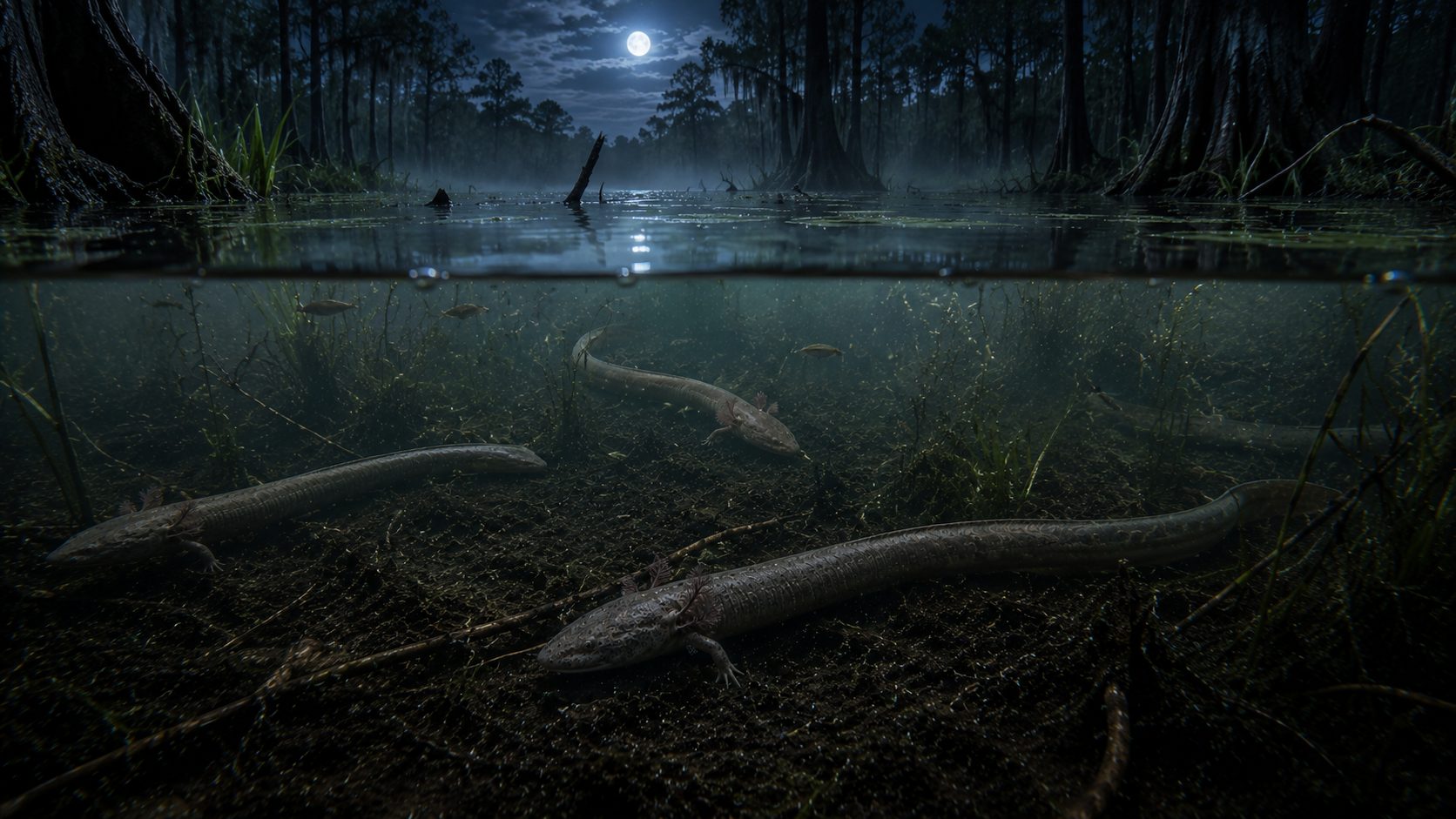
Hidden beneath the still waters of marshes and swamps across the southeastern United States lives one of North America’s strangest amphibians. The Lesser Siren, scientifically known as Siren intermedia, is an eel-like aquatic salamander that spends nearly its entire life underwater among thick vegetation, muddy bottoms, and dark freshwater habitats. With its feathery external gills, elongated body, and mysterious nocturnal behavior, the Lesser Siren looks more like a prehistoric creature than a modern amphibian. Despite being widespread in certain regions, it remains largely unknown to the general public because of its secretive lifestyle and hidden wetland habitat. The Lesser Siren belongs to the family Sirenidae, a unique group of salamanders that never fully transform into land-dwelling adults. Instead, they retain juvenile characteristics throughout life, including their external gills and fully aquatic bodies. This evolutionary strategy allows them to thrive in environments where shallow water, muddy substrates, and dense vegetation dominate the landscape. For scientists, nature enthusiasts, and wildlife photographers, the Lesser Siren represents one of the most fascinating amphibians in North America.
A: Start with body shape and habitat, then use color, markings, size, and behavior as confirmation.
A: Because Lesser Siren has its own mix of structure, habitat, feeding, and comparison clues.
A: Compare it with the nearest parent, child, or lookalike pages before treating one trait as final.
A: No. Age, season, lighting, region, and posture can all change the first impression.
A: Look for the setting that explains the animal: water, cover, vegetation, substrate, altitude, reef, burrow, branch, or open ground.
A: The exact diet depends on the animal, but mouth shape, movement, and habitat usually reveal the feeding strategy.
A: Many animals change size, color, pattern, diet, risk, or habitat between young and adult stages.
A: Use the photo to check eye position, body outline, limbs or fins, texture, posture, and surrounding habitat.
A: Yes. Every animal affects food webs, habitat structure, competition, nutrient movement, or predator-prey balance in some way.
A: It should connect the animal's visible traits to how it survives, moves, feeds, and fits the taxonomy.
An Amphibian Unlike Any Other
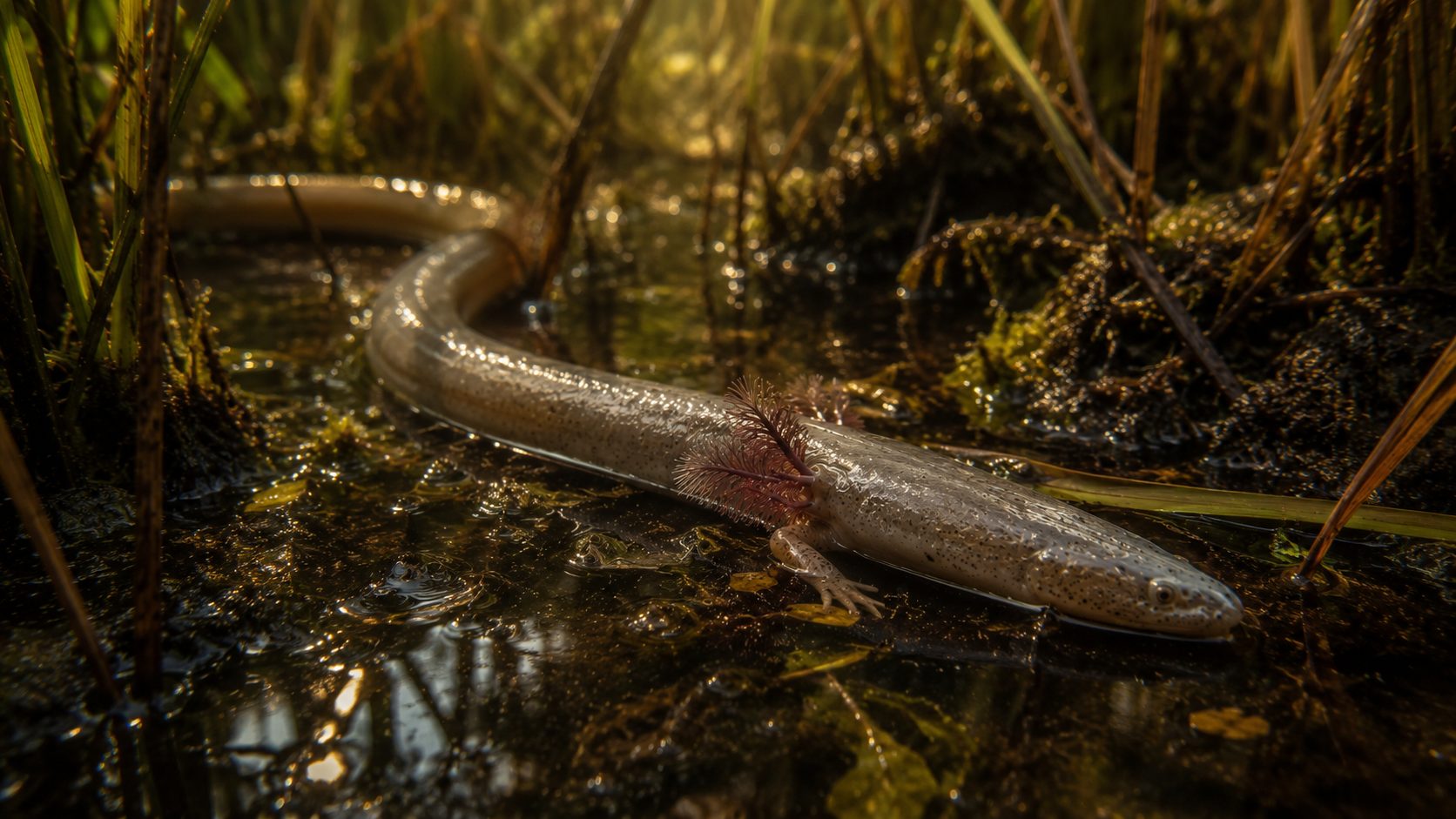
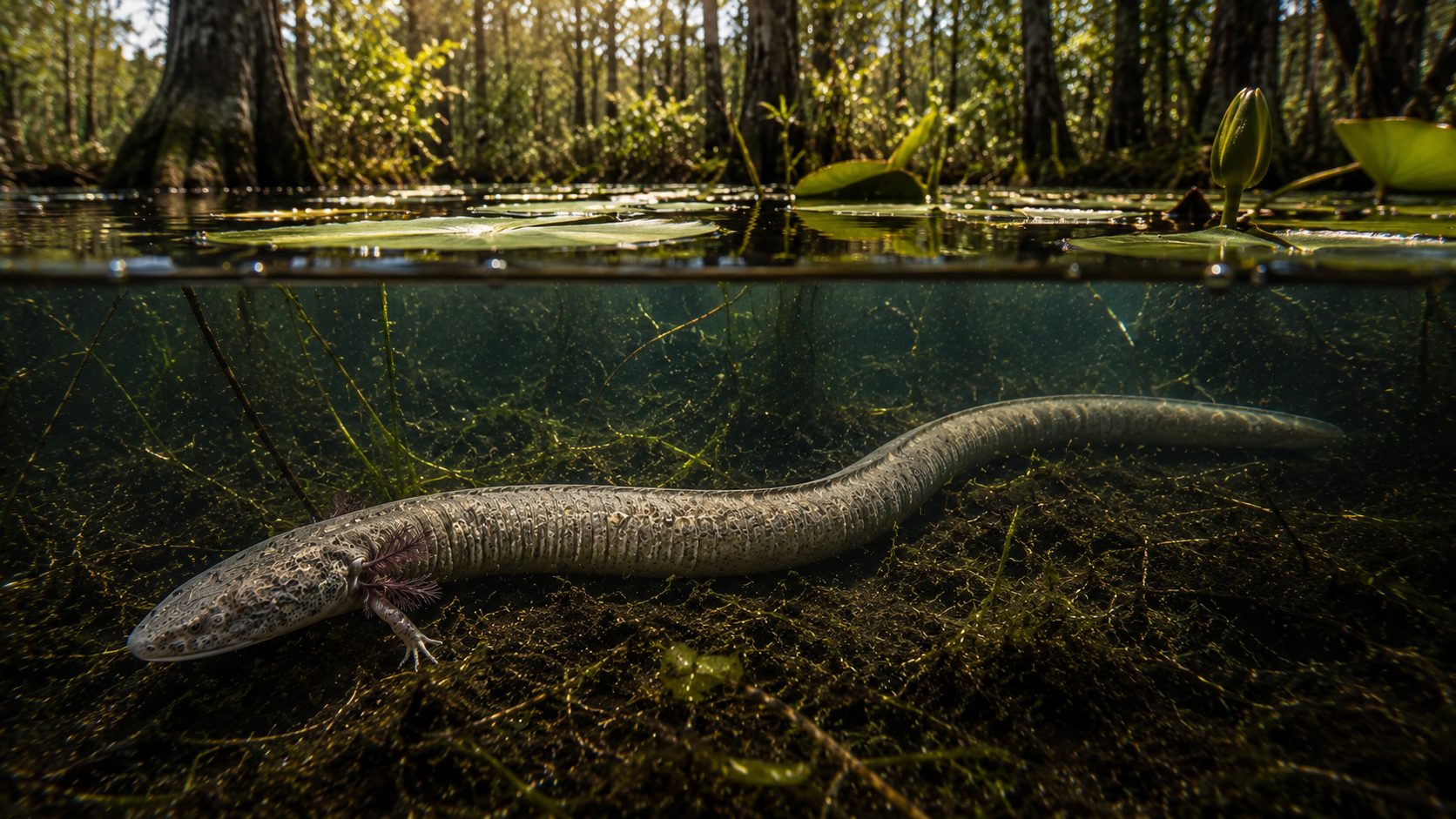
At first glance, the Lesser Siren hardly resembles a typical salamander. Its long cylindrical body, smooth skin, and snake-like swimming movements often cause people to mistake it for an eel. Unlike most salamanders, the Lesser Siren has only two small front limbs and completely lacks hind legs. These reduced limbs help it navigate along muddy bottoms and through aquatic plants while maintaining a streamlined shape for underwater movement. Its body coloration usually ranges from grayish-brown to olive or dark black, helping it blend into murky wetlands filled with organic debris and shadows.
Perhaps the most striking feature of the Lesser Siren is its bright feathery gills extending from each side of the head. These external gills allow the animal to absorb oxygen directly from the water while also giving it an almost mythical appearance. Interestingly, Lesser Sirens also possess lungs and regularly rise to the surface to gulp air. This dual breathing system makes them highly adaptable in oxygen-poor wetlands where many aquatic animals would struggle to survive. Their unusual anatomy reflects millions of years of specialization for life in shallow freshwater ecosystems.
The Wetland World of the Lesser Siren
Lesser Sirens inhabit a wide variety of freshwater habitats including swamps, marshes, ponds, floodplain pools, ditches, canals, and slow-moving streams. They are especially common in areas with thick aquatic vegetation and muddy substrates where they can remain hidden during the day. Across the southeastern United States and parts of the Midwest and Mexico, these salamanders quietly move through wetlands that many people rarely explore. Because they spend most of their time concealed beneath vegetation or buried in sediment, they are often present even when humans never notice them. Wetlands provide everything the Lesser Siren needs to survive. Dense aquatic plants offer shelter from predators while also supporting populations of insects, worms, snails, and crustaceans that sirens feed upon. The muddy bottom gives them protection during periods of drought, and slow-moving water helps maintain stable conditions for hunting and reproduction. These habitats are among the most productive ecosystems on Earth, supporting enormous biodiversity while also filtering water and reducing flooding. The Lesser Siren is just one of countless species that depend on healthy wetlands for survival.
Built for Life Underwater
The body of the Lesser Siren is perfectly adapted for aquatic movement and survival. Its flexible spine and elongated muscles allow it to glide smoothly through water using side-to-side motions similar to those of an eel. This movement style helps the salamander navigate narrow spaces between roots, reeds, and submerged debris. Because it lacks hind legs, its body experiences less drag while swimming through dense vegetation and muddy environments.
Its skin is coated in mucus that helps reduce friction underwater while also protecting against infections and dehydration. The Lesser Siren’s sensory systems are equally specialized for murky aquatic habitats where visibility is limited. Instead of relying heavily on sight, it uses chemical cues, vibrations, and touch to locate prey and avoid danger. These adaptations allow it to hunt efficiently even in dark swamp water filled with suspended sediment and decaying plant material.
A Nocturnal Hunter Beneath the Surface
The Lesser Siren is primarily nocturnal, becoming most active after sunset when wetland temperatures cool and darkness provides protection from predators. During nighttime hours, it slowly searches the bottom of ponds and marshes for food. Its diet includes aquatic insects, insect larvae, worms, snails, crustaceans, tadpoles, and small fish. As an opportunistic predator, it consumes whatever prey is abundant within its habitat. Unlike fast-moving fish or aggressive aquatic predators, the Lesser Siren hunts with patience and stealth. It carefully explores submerged vegetation and muddy crevices while using sensitive chemical detection to locate hidden prey. Once food is found, it captures prey with quick snapping motions of the jaws. This feeding strategy allows it to thrive in nutrient-rich wetlands where small aquatic organisms are plentiful year-round.
The Mystery of Permanent Youth
One of the most fascinating aspects of the Lesser Siren is its unusual developmental biology. Most amphibians undergo metamorphosis as they mature, transforming from aquatic larvae into land-dwelling adults. Frogs lose their tails and develop legs, while many salamanders lose their external gills and begin living partly on land. The Lesser Siren follows a different path entirely.
Scientists describe this condition as neoteny, meaning the animal retains juvenile traits throughout adulthood. Instead of completing metamorphosis, the Lesser Siren remains fully aquatic and keeps its feathery gills for life. This evolutionary strategy proved highly successful in wetland habitats where aquatic conditions remain favorable year-round. By maintaining its larval features, the Lesser Siren became highly specialized for underwater survival while avoiding many of the risks associated with terrestrial life.
Surviving Droughts and Harsh Conditions
Wetlands can be unpredictable environments. Water levels rise and fall, temperatures fluctuate, and droughts sometimes dry entire ponds or marsh systems. The Lesser Siren possesses extraordinary survival adaptations that allow it to endure these challenging conditions. During drought periods, it can burrow deep into mud and enter a dormant state known as estivation. While estivating, the salamander secretes a protective mucus cocoon around its body and dramatically slows its metabolism. In this inactive state, it may survive for extended periods until rain returns and wetlands refill with water. This ability makes the Lesser Siren one of the most resilient amphibians in North America. Few aquatic vertebrates can tolerate such dramatic environmental changes while remaining capable of quickly returning to active life once conditions improve.
Reproduction in the Hidden Marshes
The reproductive behavior of the Lesser Siren remains somewhat mysterious because observing these animals in the wild is extremely difficult. Scientists believe breeding often occurs during wetter periods when aquatic habitats expand and environmental conditions improve. Males may defend territories or nesting sites hidden among vegetation or submerged debris.
Females deposit eggs in protected underwater locations where developing embryos remain concealed from predators. Young sirens hatch as fully aquatic larvae already equipped with external gills and elongated bodies. From an early age, they resemble miniature adults and begin hunting small aquatic prey within the wetland ecosystem. Their hidden reproductive habits continue to intrigue researchers studying amphibian behavior and ecology.
Ancient Relatives in Modern Waters
The evolutionary history of sirens stretches back millions of years. Salamanders themselves are among the oldest amphibian groups on Earth, and the family Sirenidae represents a highly specialized branch of this ancient lineage. The Lesser Siren’s primitive body structure and aquatic lifestyle provide scientists with clues about amphibian evolution and adaptation through deep time. Although modern wetlands may seem ordinary at first glance, animals like the Lesser Siren reveal how ancient survival strategies continue functioning in present-day ecosystems. Their biology reflects countless generations of adaptation to muddy, oxygen-poor, and fluctuating aquatic environments. Studying these salamanders helps researchers better understand vertebrate evolution, environmental resilience, and the remarkable diversity of amphibian life.
Predators and Ecological Relationships
Despite its secretive nature, the Lesser Siren plays an important role within freshwater food webs. As a predator, it helps regulate populations of aquatic insects, worms, and small vertebrates. By feeding on a wide variety of organisms, it contributes to nutrient cycling and ecological balance within wetland ecosystems.
At the same time, the Lesser Siren serves as prey for larger animals including wading birds, snakes, turtles, alligators, and predatory fish. Its camouflage and nocturnal habits reduce the risk of predation, but it remains part of a complex network of interactions within the swamp ecosystem. These relationships highlight the interconnected nature of wetlands where even hidden amphibians contribute to overall ecosystem health.
Encounters With Humans
Most people living within the range of the Lesser Siren never realize these animals exist nearby. Because they are nocturnal and highly secretive, encounters are relatively rare. Occasionally, sirens appear during wetland surveys, fishing trips, or after heavy rains when rising water levels increase movement between habitats. When discovered, Lesser Sirens often surprise observers with their unusual appearance and smooth eel-like movements. Some people initially mistake them for snakes or fish, while others become fascinated by their external gills and amphibian characteristics. Wildlife educators increasingly use species like the Lesser Siren to encourage appreciation for overlooked wetland biodiversity and the hidden life found within freshwater ecosystems.
Wetland Conservation and the Lesser Siren
Although the Lesser Siren is not among the most endangered amphibians, it still depends heavily on healthy wetland habitats. Wetland drainage, pollution, urban expansion, and agricultural runoff can reduce suitable habitat and impact water quality. Because amphibians possess sensitive skin and aquatic life stages, they are often affected by environmental changes more quickly than many other vertebrates.
Fortunately, many wetlands supporting Lesser Sirens remain widespread across parts of the southeastern United States. Conservation efforts aimed at preserving marshes, swamps, floodplains, and freshwater ponds indirectly benefit sirens along with countless other species. Maintaining clean water and connected wetland habitats helps ensure these remarkable salamanders continue thriving beneath the surface of America’s wetlands.
Why the Lesser Siren Continues Fascinating Scientists
Scientists remain deeply interested in the Lesser Siren because of its unusual anatomy, physiology, and environmental adaptations. Its ability to survive low oxygen conditions, retain larval traits throughout life, and endure drought through estivation makes it an important subject for biological research. Researchers study sirens to better understand developmental biology, amphibian evolution, and ecological adaptation. The Lesser Siren also reminds scientists how much remains undiscovered even within familiar environments. Wetlands near towns, roads, and farms may still contain hidden species behaving in ways humans rarely witness. Every new observation contributes to a deeper understanding of amphibian diversity and the complexity of freshwater ecosystems.
The Hidden Beauty of the Lesser Siren
The Lesser Siren may not possess the bright colors of tropical frogs or the size of giant reptiles, but its beauty lies in its mystery and specialization. It represents a world hidden beneath swamp water where evolution shaped extraordinary animals perfectly suited for survival in darkness, mud, and tangled vegetation. Its feathery gills, smooth movements, and ancient appearance make it one of North America’s most unusual amphibians.
For general readers and wildlife enthusiasts, learning about the Lesser Siren opens a window into the hidden biodiversity of freshwater wetlands. These secretive salamanders reveal that some of nature’s most remarkable creatures live quietly in overlooked habitats just beyond human attention. The more people discover about species like the Lesser Siren, the greater the appreciation becomes for the wetlands and ecosystems that sustain them.
Animal Product Reviews
Dive into Animal Streets’ Animal Product Reviews — your guide to the best gear, gifts, books, and gadgets inspired by the animal kingdom. From land-roaming lions to ocean-gliding whales, from household pets to prehistoric giants, we explore top-rated products for enthusiasts, educators, and animal lovers alike. Whether you’re shopping for toys, decor, field gear, or fun collectibles, we’ve sniffed out the best so you can discover it all in one wild place!