
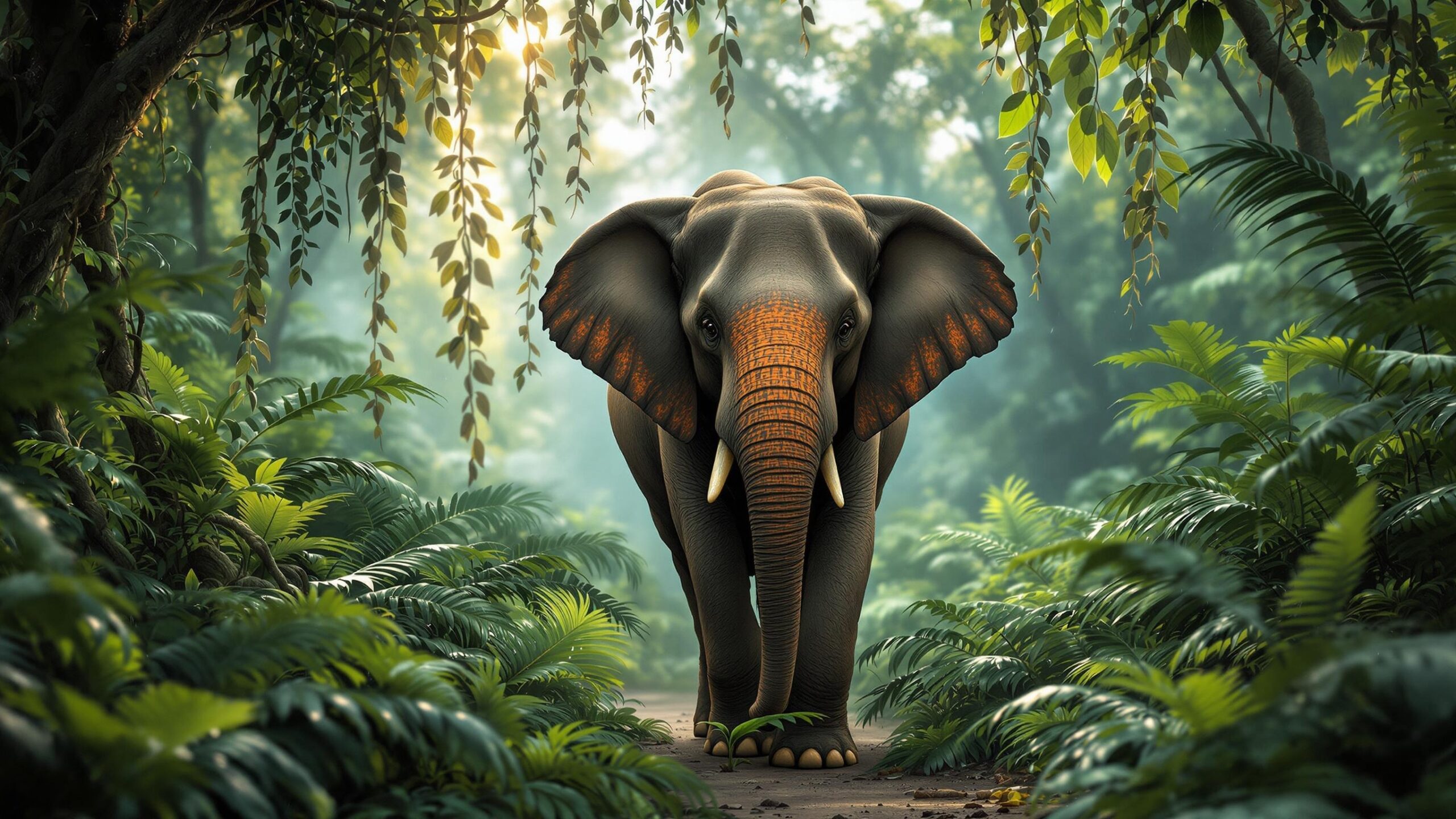
Sumatran Elephant (Elephas maximus sumatranus): The Vanishing Forest Titan
Deep in the lush, emerald rainforests of Indonesia’s largest island, a gentle giant moves silently through the undergrowth. With thick gray skin, a sensitive trunk, and soulful eyes, the Sumatran elephant (Elephas maximus sumatranus) stands as both a symbol of the wild beauty of Sumatra and a poignant reminder of the fragile balance between nature and modern development. As one of three recognized subspecies of the Asian elephant, the Sumatran elephant is the smallest in size, yet its ecological and cultural importance looms large over the future of Indonesia’s rainforests. Revered by local communities, celebrated in ancient lore, and crucial to the ecosystems they inhabit, Sumatran elephants are vital to maintaining the health and diversity of their environment. But they are also among the most critically endangered elephant populations in the world. Threatened by deforestation, habitat fragmentation, and conflict with humans, these elephants are now caught between a vanishing wilderness and an expanding human footprint. Their story is one of ancient resilience and modern urgency.
A Unique Subspecies of Asia’s Great Elephant
The Sumatran elephant is a subspecies of the Asian elephant (Elephas maximus), which is native to a wide stretch of southern and southeastern Asia. While closely related to the Indian and Sri Lankan elephants, the Sumatran variety has several distinctive characteristics. It is noticeably smaller in size, with adult males standing up to 8.5 feet tall at the shoulder and weighing between 4,000 and 6,600 pounds. Females are smaller still, and like other Asian elephants, most females are tuskless. Their skin is grayish and may appear lighter due to mud bathing, with subtle depigmented areas on the ears and trunk. The Sumatran elephant’s head has a twin-domed shape, and its trunk tip is equipped with a single finger-like projection (unlike the two found in African elephants). These adaptations serve a variety of purposes, from grasping small vegetation to making delicate social gestures. These elephants are supremely adapted to life in the tropical lowland forests of Sumatra, where they serve as critical seed dispersers and habitat engineers. They are constantly on the move, shaping the structure of the forest as they feed, dig, and trample vegetation, clearing paths used by other wildlife species and keeping dense plant growth in check.
A: Start with body shape and habitat, then use color, markings, size, and behavior as confirmation.
A: Because Sumatran Elephant has its own mix of structure, habitat, feeding, and comparison clues.
A: Compare it with the nearest parent, child, or lookalike pages before treating one trait as final.
A: No. Age, season, lighting, region, and posture can all change the first impression.
A: Look for the setting that explains the animal: water, cover, vegetation, substrate, altitude, reef, burrow, branch, or open ground.
A: The exact diet depends on the animal, but mouth shape, movement, and habitat usually reveal the feeding strategy.
A: Many animals change size, color, pattern, diet, risk, or habitat between young and adult stages.
A: Use the photo to check eye position, body outline, limbs or fins, texture, posture, and surrounding habitat.
A: Yes. Every animal affects food webs, habitat structure, competition, nutrient movement, or predator-prey balance in some way.
A: It should connect the animal's visible traits to how it survives, moves, feeds, and fits the taxonomy.
Life in the Rainforest
Sumatra, the sixth-largest island in the world, is home to an extraordinary range of habitats—from mangroves and peat swamps to mountainous rainforests. The Sumatran elephant traditionally inhabited most of the island, ranging across lowland forests and river valleys. However, due to decades of deforestation, palm oil plantations, and human settlement, their range has dramatically diminished. Today, they are mostly found in a handful of protected areas and forest patches scattered across Aceh, Riau, Lampung, Bengkulu, and South Sumatra.
Sumatran elephants require large territories to thrive. A single herd may range across hundreds of square miles, depending on resource availability. They travel long distances in search of food and water, feeding on grasses, fruits, tree bark, roots, and cultivated crops when they come too close to farmland. Their diet can include over 100 plant species, making them vital to forest ecology. Their social structure is matriarchal, with herds consisting of related females and their calves, led by the eldest female. Males, once they reach adolescence, tend to leave the herd and either live alone or in small bachelor groups. Herd cohesion is strong, and individuals are known to display deep social bonds, mourning lost members and helping care for calves within the group.
Intelligence and Emotion in the Wild
Like all elephants, Sumatran elephants possess remarkable intelligence. Their brains are highly developed, and they exhibit behaviors that reflect problem-solving abilities, empathy, memory, and emotional depth. Observations in the wild and in conservation centers reveal elephants that learn quickly, adapt to changing circumstances, and communicate using a complex range of vocalizations, body language, and low-frequency sounds known as infrasound.
Calves play an important role in the social life of a herd. They are born after a long gestation period of nearly 22 months, weighing around 200 pounds at birth. For years, they remain close to their mothers, learning how to find food, use their trunks, and interpret the social cues of other elephants. Aunts and older siblings often assist in their care, creating a nurturing environment that fosters social learning. Elephants have been observed celebrating reunions, cooperating in problem-solving, and displaying signs of grief. Such complex behaviors offer insight into the minds of one of nature’s most sophisticated mammals and highlight the importance of preserving not just individuals, but family units and social groups as a whole.
Cultural Reverence and Local Wisdom
In Indonesian tradition, elephants have long been seen as noble creatures. Historical records from the Acehnese sultanates and other kingdoms reference the use of elephants in royal processions, warfare, and ceremonial events. The people of Sumatra, particularly in regions like Lampung, have historically regarded elephants as symbols of wisdom, loyalty, and strength. Even today, cultural respect for elephants persists among many communities, especially where traditional beliefs still shape interactions with the natural world. Folktales and oral histories often cast elephants as protectors or wise advisors to human protagonists. In some villages, stories passed from generation to generation describe elephants leading lost travelers to safety or warning people of impending floods. This cultural bond, however, is being tested by increasing conflict over land and resources. As elephants venture into human settlements in search of food or movement corridors, their presence can lead to crop damage, property destruction, and—tragically—fatal encounters for both humans and elephants.
Human-Elephant Conflict: A Growing Challenge
Few issues are more urgent in the conservation of Sumatran elephants than the challenge of human-elephant conflict. As forests shrink and corridors disappear, elephants are forced to move through agricultural fields and villages. Here, they find crops like bananas, sugarcane, and rice—all of which are irresistible and more nutritionally dense than wild forage. Such raids can devastate the livelihoods of local farmers. In retaliation or desperation, some communities turn to lethal methods such as poisoned bait, electric fencing, or organized culling. Elephants may also become victims of land mines or traps intended for other animals. To reduce conflict, conservationists are working with local governments and communities to develop more effective, non-lethal solutions. These include installing beehive fences (which elephants naturally avoid), setting up buffer zones, and promoting the use of early-warning systems. Education programs have also proven effective in helping people understand elephant behavior and view coexistence as a viable long-term goal.
The Road to Protection: Conservation in Action
The Sumatran elephant is classified as Critically Endangered by the International Union for Conservation of Nature (IUCN). Fewer than 2,800 individuals are estimated to remain in the wild, and the population is declining. One of the biggest threats to their survival is habitat loss due to palm oil plantations, illegal logging, and infrastructure development. Protected areas such as Way Kambas National Park, Gunung Leuser National Park, and Bukit Barisan Selatan National Park serve as refuges for some of the last viable elephant populations. These areas are not only important for elephants but also serve as biodiversity hotspots home to tigers, rhinos, and countless other species.
Conservation organizations such as WWF-Indonesia, Yayasan Konservasi Gajah Indonesia (YEKGI), and others are working to secure elephant habitat, reduce conflict, and support elephant response teams. These mobile units respond to conflict situations, relocate stranded or injured elephants, and build trust with local communities. One of the promising conservation tools is the creation of Elephant Conservation Centers and Elephant Flying Squads—trained teams of elephants and handlers that help manage wild herds and prevent them from straying into human settlements. These efforts emphasize coexistence over confrontation and are built around community engagement and science-based management.
Captivity and the Question of Welfare
A small number of Sumatran elephants live in captivity, either in zoos, conservation centers, or semi-wild facilities. While some of these elephants are cared for responsibly, others have faced conditions that raise serious animal welfare concerns. Captive elephants are often used for tourism, performances, or even labor, and improper handling can lead to long-term psychological and physical harm.
The future of captive elephants depends on a shift toward ethical standards. That includes larger, enriched enclosures, social interaction with other elephants, and the elimination of harmful training practices. Ideally, conservationists hope to reduce the number of elephants taken from the wild and instead focus on protecting existing populations in their natural habitat. There is growing international support for ethical tourism, where visitors are encouraged to observe elephants behaving naturally in protected areas rather than participating in elephant rides or shows. This shift represents a broader trend toward conservation that prioritizes dignity, health, and ecological integrity.
Elephants as Ecosystem Engineers
Beyond their charismatic presence, Sumatran elephants play a critical ecological role as ecosystem engineers. Their foraging habits influence vegetation patterns, open pathways in dense forest, and create space for smaller species to thrive. By consuming a wide range of plant material and excreting seeds across large areas, they are also key seed dispersers for many tropical tree species.
This ecological role means that the loss of elephants would affect more than just their immediate species—it would lead to cascading effects throughout the ecosystem. Trees that depend on elephants for seed dispersal would decline, forest structure would change, and many animals that rely on elephant-altered habitats would be impacted. Their presence, in short, maintains the integrity of the rainforest itself. Protecting elephants is not just about saving a single species—it’s about preserving an entire web of life.
A Future of Hope and Harmony
Despite the challenges, there is reason for cautious optimism. Elephant conservation is receiving increased attention both nationally and internationally. Government policies are beginning to emphasize forest protection, and community-based conservation initiatives are expanding. There is also a growing body of scientific research focused on elephant movement, behavior, and genetics, helping conservationists make better-informed decisions.
Perhaps the most hopeful sign is the resilience of the elephants themselves. Even in fragmented and pressured environments, Sumatran elephants have shown an extraordinary ability to adapt. They navigate human-dominated landscapes, teach their young to survive in shifting conditions, and maintain social bonds despite adversity. But long-term success requires more than just adaptation—it requires commitment. A commitment to preserving forests, supporting local communities, reducing conflict, and ensuring that elephants continue to have a place in the landscapes they’ve shaped for millennia.
The Soul of the Sumatran Wild
The Sumatran elephant is more than a biological marvel. It is the soul of the rainforest—a gentle, intelligent, and irreplaceable presence in one of the world’s most ecologically rich environments. From the canopy-filled valleys of Aceh to the wetlands of Lampung, these elephants carry the memory of ancient forests and the promise of ecological renewal.
Their future hangs in the balance, not because of natural limitations, but because of human decisions. Yet it is precisely because this story is still unfolding that it offers hope. Every tree saved, every conflict resolved, every calf born in the wild is a step toward a better balance between people and planet. In the Sumatran elephant, we find a living bridge between the natural and human worlds—one that asks us to walk gently, think deeply, and act wisely. If we answer that call, the forests of Sumatra may yet echo with the thunder of elephant footsteps for generations to come.
Animal Product Reviews
Dive into Animal Streets’ Animal Product Reviews — your guide to the best gear, gifts, books, and gadgets inspired by the animal kingdom. From land-roaming lions to ocean-gliding whales, from household pets to prehistoric giants, we explore top-rated products for enthusiasts, educators, and animal lovers alike. Whether you’re shopping for toys, decor, field gear, or fun collectibles, we’ve sniffed out the best so you can discover it all in one wild place!