
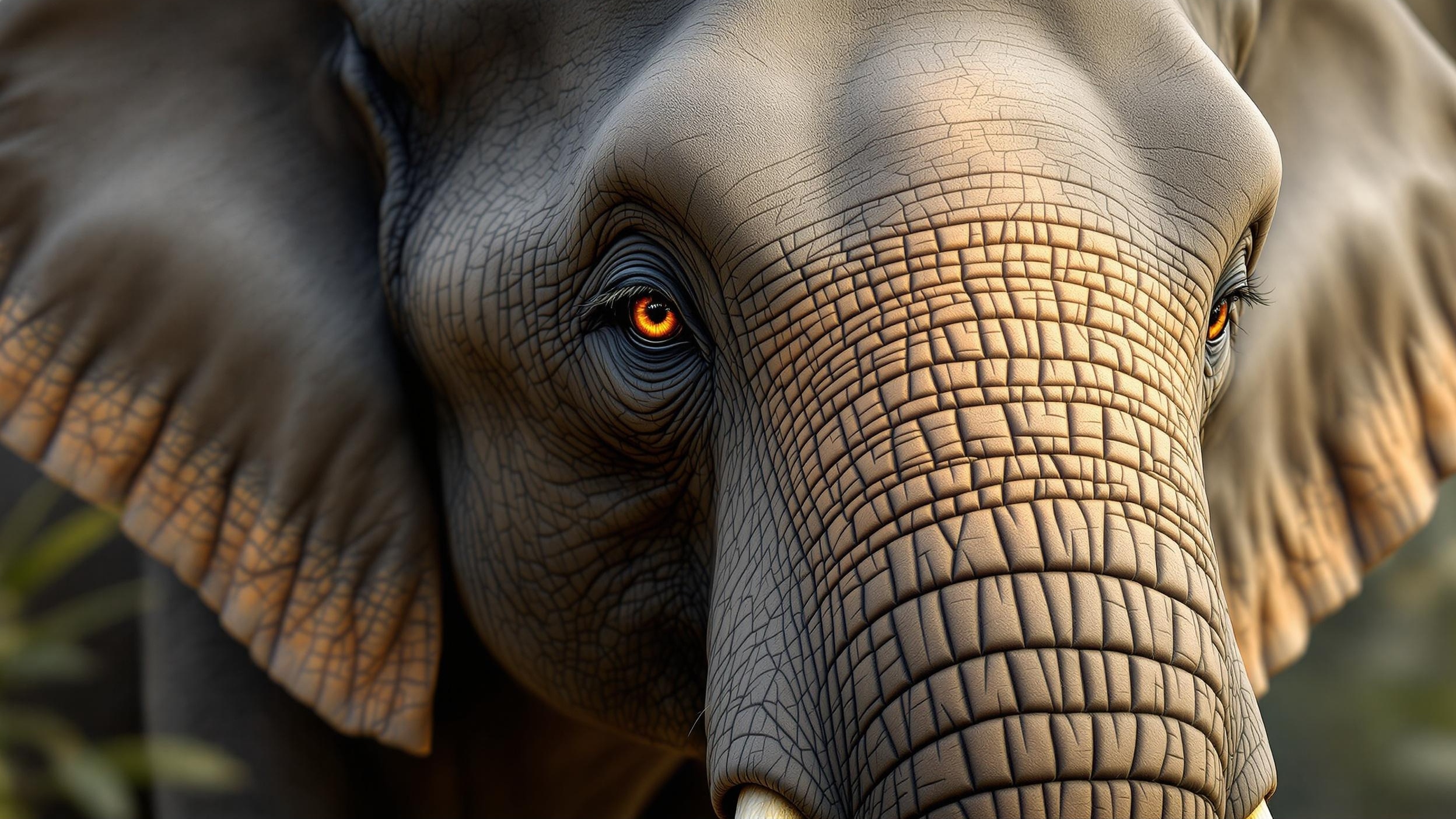
Indian Elephant (Elephas maximus indicus): The Gentle Giant of South Asia
From ancient temple carvings to modern conservation campaigns, the Indian elephant (Elephas maximus indicus) has long stood as a symbol of strength, wisdom, and cultural identity in South Asia. A subspecies of the Asian elephant, it roams the forests and grasslands of India and surrounding regions, playing a vital ecological role while also inhabiting deep mythological and spiritual significance. Revered for millennia yet increasingly threatened by human activity, the Indian elephant is one of the most captivating and complex wildlife species in the modern world. Despite their size and familiarity, Indian elephants remain mysterious in many ways. Their intelligence, social bonds, and emotional depth continue to surprise researchers, while their ability to navigate fragmented landscapes and interact with humans makes them a critical case study in coexistence and conservation. This is the story of one of Earth’s most iconic animals—its biology, its behaviors, and the challenges it faces in a rapidly changing world.
A Subspecies of Distinction
The Indian elephant is one of three recognized subspecies of the Asian elephant, alongside the Sri Lankan and Sumatran elephants. Scientifically named Elephas maximus indicus, it is the most widespread of the three and is native to mainland Asia, primarily across India but also extending into Nepal, Bhutan, Bangladesh, and parts of Southeast Asia. Physically, the Indian elephant is slightly smaller than its African cousin, Loxodonta africana, but it remains an impressive presence. Adult males can stand up to 9 feet tall at the shoulder and weigh between 4,000 and 11,000 pounds. Females are smaller and generally tuskless, although some develop small tusk-like structures called “tushes.” The elephant’s skin is typically gray and wrinkled, often with pinkish or depigmented patches around the ears, trunk, and forehead. Their large fan-like ears, though smaller than those of African elephants, help regulate body temperature in the often-sweltering tropical heat. The trunk, a fusion of the upper lip and nose, contains over 40,000 muscles and is one of the most versatile and sensitive appendages in the animal kingdom.
A: Start with body shape and habitat, then use color, markings, size, and behavior as confirmation.
A: Because Indian Elephant has its own mix of structure, habitat, feeding, and comparison clues.
A: Compare it with the nearest parent, child, or lookalike pages before treating one trait as final.
A: No. Age, season, lighting, region, and posture can all change the first impression.
A: Look for the setting that explains the animal: water, cover, vegetation, substrate, altitude, reef, burrow, branch, or open ground.
A: The exact diet depends on the animal, but mouth shape, movement, and habitat usually reveal the feeding strategy.
A: Many animals change size, color, pattern, diet, risk, or habitat between young and adult stages.
A: Use the photo to check eye position, body outline, limbs or fins, texture, posture, and surrounding habitat.
A: Yes. Every animal affects food webs, habitat structure, competition, nutrient movement, or predator-prey balance in some way.
A: It should connect the animal's visible traits to how it survives, moves, feeds, and fits the taxonomy.
Evolution and Adaptation
Elephants belong to a lineage that stretches back millions of years. The modern Indian elephant is the descendant of prehistoric proboscideans that once roamed the entire Eurasian continent. Over time, geographic isolation and environmental pressures gave rise to the Asian elephant species, which then diversified into regional subspecies like the Indian elephant.
Adapted for life in a variety of habitats, from dense tropical forests to dry grasslands and hilly terrains, Indian elephants are both browsers and grazers. They feed on an incredibly diverse range of vegetation, including grasses, bark, roots, fruits, and leaves. An adult elephant can consume up to 300 pounds of plant matter in a single day, driven by a slow digestive system that requires constant feeding to extract enough nutrients. Their feet are specially designed for quiet movement across forest floors. A unique cushion of fibrous tissue on the sole helps distribute weight and absorb impact, allowing these massive creatures to move with surprising grace and silence. Their keen sense of smell and excellent memory help them navigate vast territories in search of food, water, and shelter.
Intelligence and Social Structure
Among the most intelligent animals on Earth, elephants exhibit complex behaviors and deep social connections. Indian elephants live in matriarchal herds, typically composed of related females and their offspring. The herd is led by an older, experienced female who makes crucial decisions about migration routes, foraging grounds, and safety. Males leave the herd upon reaching adolescence and live either alone or in loose bachelor groups. Communication within the herd is sophisticated and includes vocalizations, body language, touch, and low-frequency infrasound calls that can travel over long distances. Elephants are known to express a wide range of emotions, including joy, empathy, grief, and even a sense of humor. They have been observed comforting distressed individuals, mourning dead companions, and recognizing themselves in mirrors—a sign of advanced self-awareness. Their long-term memory allows them to remember water sources or dangerous areas encountered decades earlier, an essential skill in regions where seasonal changes can mean life or death.
Cultural and Religious Significance
The Indian elephant holds a sacred place in South Asian cultures. In Hinduism, the elephant-headed deity Ganesha is one of the most revered gods, associated with wisdom, new beginnings, and the removal of obstacles. Elephants are frequently featured in temple processions, art, and literature, where they symbolize royalty, power, and moral virtue.
In historical India, elephants played a major role in warfare and diplomacy. Royal armies deployed trained war elephants in battle, where their size and strength could scatter opposing forces. At the same time, they were symbols of prestige in royal courts and were often given as diplomatic gifts between kingdoms. Even today, elephants are central to festivals and religious ceremonies, especially in southern India. However, this cultural admiration has a dual edge: while it reinforces respect for the species, it has also led to the capture and domestication of wild elephants for entertainment and religious purposes.
The Life Cycle of a Giant
The life of an Indian elephant follows a slow and steady path. Females give birth to a single calf after an extended gestation period of 18 to 22 months—the longest of any land mammal. At birth, calves weigh around 200 pounds and are immediately able to stand and walk, guided by their mothers and protected by the herd. Young elephants nurse for up to three years and remain close to their mothers for much longer. Learning through observation and interaction, calves pick up essential survival skills and social behaviors. Female calves often remain with the herd for life, while males depart during adolescence to begin a solitary phase. Reproduction occurs infrequently, and the long gap between births means that population recovery is slow—especially in the face of threats like poaching, habitat loss, and human conflict. An Indian elephant can live up to 60 or 70 years in the wild, though such longevity is increasingly rare under modern pressures.
Human–Elephant Interactions
Few wild animals interact with humans as frequently—or as dramatically—as the Indian elephant. As agricultural development and infrastructure expand into traditional elephant habitats, encounters have become more common and sometimes dangerous. Crop raiding, property damage, and occasional fatalities on both sides fuel tensions between rural communities and conservation authorities.
Elephants are highly intelligent and opportunistic, able to recognize patterns such as crop cycles, harvest schedules, or even the locations of unguarded food supplies. While this ingenuity testifies to their cognitive brilliance, it also brings them into direct conflict with human livelihoods. Efforts to mitigate conflict include building elephant-proof trenches, early-warning systems, and designated corridors to allow elephants to move safely between habitats. In some regions, community-based conservation models have shown promise by involving local populations in protecting and coexisting with elephants.
The Threat of Habitat Loss
The single greatest threat to Indian elephants is habitat fragmentation. Forests once connected across vast stretches of the subcontinent have been broken up by roads, farms, railways, and cities. Elephants require large, contiguous tracts of land to support their needs, and fragmentation forces them into smaller areas with fewer resources. As their natural corridors are disrupted, elephants are often pushed into agricultural zones or isolated forest patches, increasing the likelihood of starvation, dehydration, or conflict. Moreover, fragmented habitats limit genetic diversity, making populations more vulnerable to disease and reducing long-term viability. Protected areas and wildlife sanctuaries offer some refuge, but many are too small or poorly connected to support the full range of elephant behavior. Conservationists are advocating for landscape-level planning that incorporates elephant corridors and habitat restoration into broader development strategies.
Poaching and the Ivory Trade
Although Asian elephants are less targeted for ivory than their African counterparts—because only some males develop tusks—poaching remains a concern. In India, the illegal ivory trade has declined but not disappeared. Additionally, elephants are sometimes killed or injured for their skin, meat, or out of retaliation during conflict incidents.
Strict legal protections exist under India’s Wildlife Protection Act of 1972 and international agreements like CITES, which bans the commercial ivory trade. However, enforcement can be inconsistent, especially in remote areas where poaching networks may operate with impunity. More recently, the trafficking of captive elephants for entertainment or tourism has emerged as another threat. Captured wild elephants endure harsh training regimes and suffer from chronic stress, poor health, and shortened lifespans in captivity. Public awareness campaigns are beginning to shift attitudes toward ethical tourism and the importance of keeping elephants in the wild.
Conservation and Hope for the Future
Despite the many challenges, there is reason for cautious optimism. India is home to the largest population of Asian elephants in the world, and public support for their protection remains strong. National parks like Kaziranga, Bandipur, and Periyar serve as key habitats and research sites. Wildlife corridors and conflict mitigation projects are gaining traction in policy discussions, and new technology is improving monitoring and protection efforts. The Asian Elephant is listed as Endangered on the IUCN Red List, while the Indian subspecies receives national and international protection. Conservation organizations, researchers, and local communities are working collaboratively to secure elephant habitats, reduce conflict, and promote peaceful coexistence. Education plays a vital role in this process. By fostering respect and understanding of elephants, especially among younger generations, conservationists hope to build a future where these giants are no longer endangered symbols but thriving neighbors in shared ecosystems.
The Elephant in the Imagination
Beyond biology and conservation, the Indian elephant occupies a unique space in human imagination. It represents wisdom, patience, loyalty, and power. Its presence evokes awe, whether seen in the wild, captured in a painting, or honored in a festival. The very word “elephant” conjures feelings of majesty and endurance, and the Indian elephant exemplifies these traits more than most. In literature, folklore, and everyday life, it continues to inspire fascination and reverence. It reminds us of a deeper rhythm to life—one that moves slowly, observes quietly, and values community.
Giants Worth Protecting
The Indian elephant is more than just the largest land mammal in Asia—it is a keystone species, a cultural icon, and a living bridge between the ancient and modern worlds. Its intelligence, social complexity, and ecological importance make it one of nature’s most remarkable creations. Yet, like many of Earth’s great creatures, it stands at a crossroads. The choices we make in how we share space, resolve conflict, and value biodiversity will determine whether future generations inherit a world where Indian elephants still roam free. Their footsteps, both literal and symbolic, have shaped landscapes, stories, and civilizations. Now it’s our turn to ensure those footsteps continue echoing through the forests of South Asia—not as fading memories, but as vibrant, living presences in the natural world.
Animal Product Reviews
Dive into Animal Streets’ Animal Product Reviews — your guide to the best gear, gifts, books, and gadgets inspired by the animal kingdom. From land-roaming lions to ocean-gliding whales, from household pets to prehistoric giants, we explore top-rated products for enthusiasts, educators, and animal lovers alike. Whether you’re shopping for toys, decor, field gear, or fun collectibles, we’ve sniffed out the best so you can discover it all in one wild place!