
Habitat: Masters of the Forest Canopy
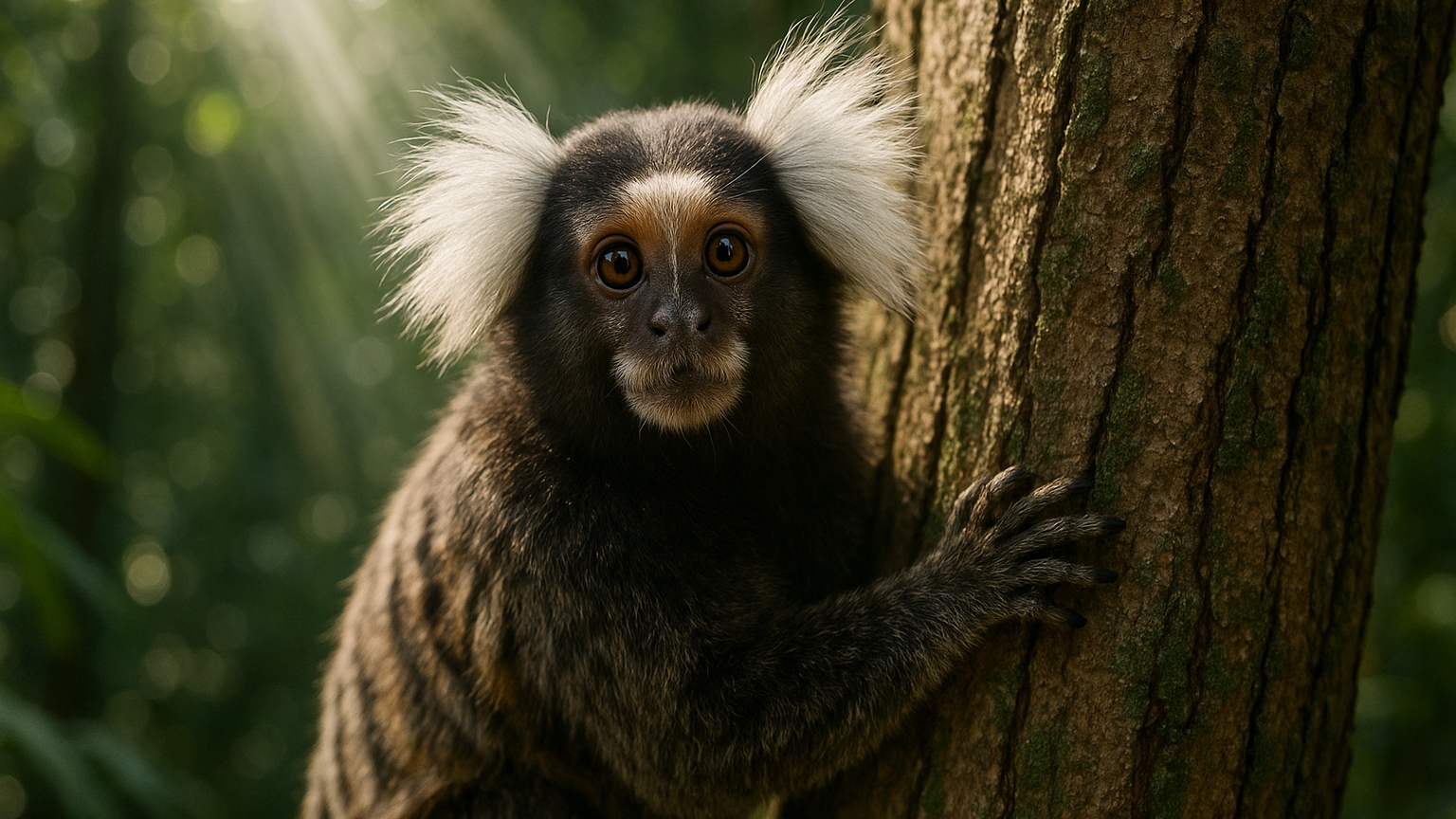
Marmosets are primarily arboreal, meaning they spend nearly all of their lives in trees. Their natural habitats range from lowland rainforests and secondary growth woodlands to savannah fringes and dry scrublands, depending on the species. They are most commonly found in Brazil but also inhabit parts of Bolivia, Ecuador, Colombia, and Peru. Some populations have even been introduced outside their native range, including urban and semi-urban parks in Brazil, where they have adapted with remarkable resilience.
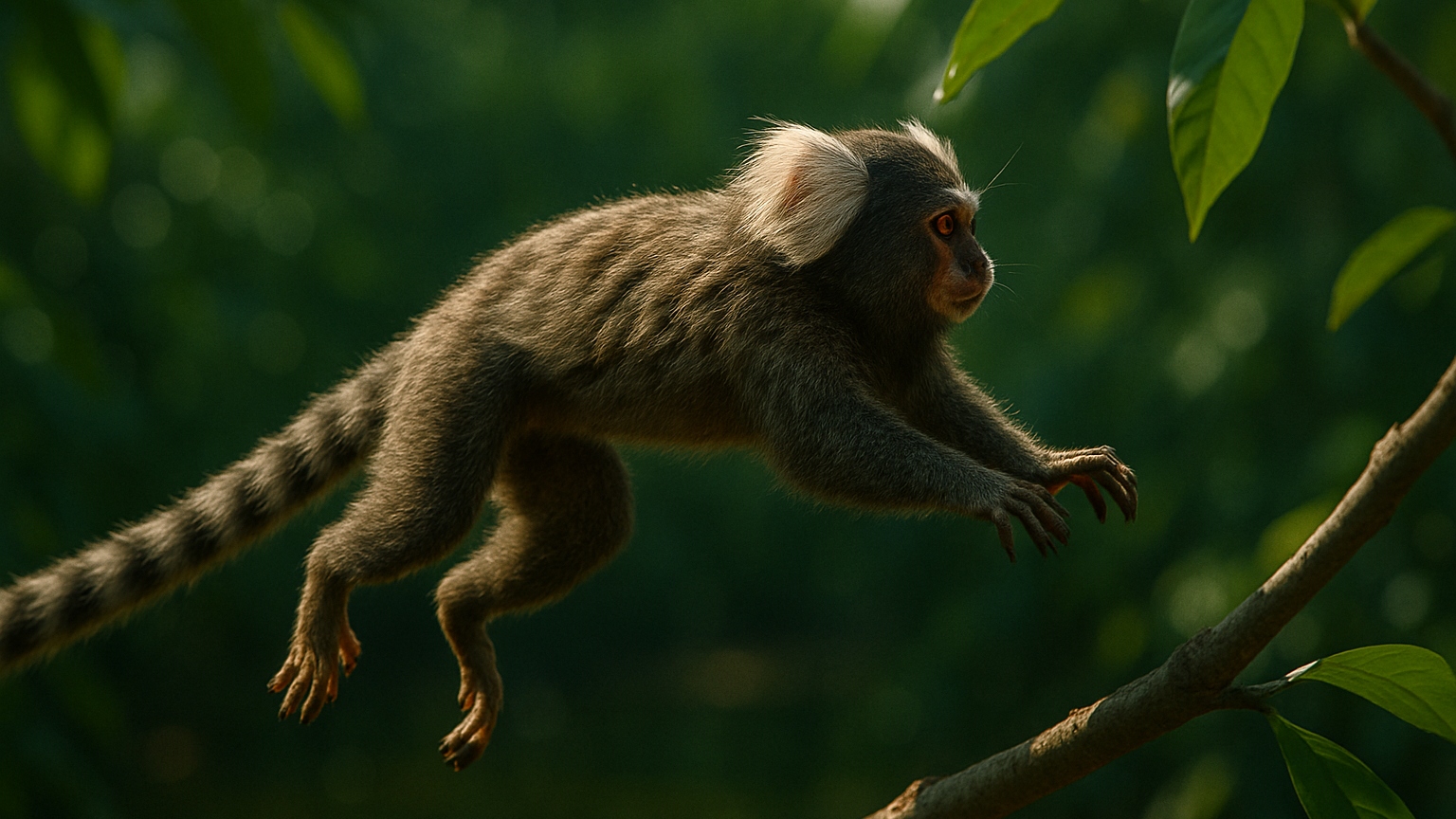
Their physical adaptations are perfect for this elevated lifestyle. Marmosets have claw-like nails—unusual among primates—that allow them to cling vertically to tree trunks. Their limbs are strong and agile, and their long tails help with balance rather than prehension. They move with a squirrel-like grace, leaping impressive distances between branches and darting through the understory in search of food and safety. Despite their ease in high places, marmosets are highly sensitive to changes in their environment. Deforestation, urban encroachment, and habitat fragmentation can isolate groups and limit their access to resources. This has led to increasing encounters between wild marmosets and human communities, with mixed consequences for both parties.
Diet: Sap-Sipping Specialists
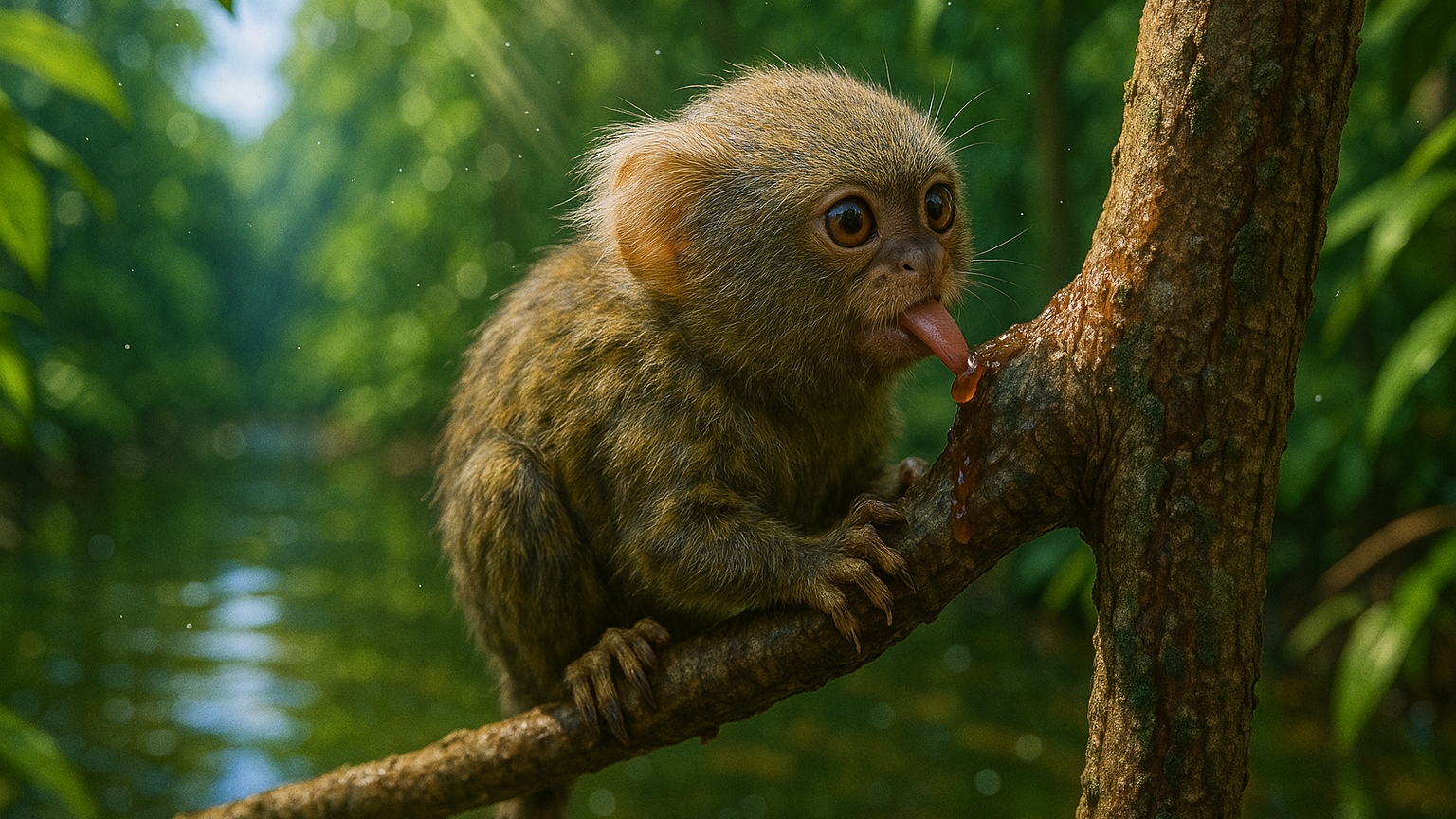
What marmosets eat is as intriguing as how they live. While most primates rely heavily on fruits and leaves, marmosets have developed a unique dietary specialization: tree sap. Using their specialized lower incisors, they gouge holes into tree bark to stimulate the flow of gum, sap, and other exudates. This behavior is not only fascinating to observe but critical to their survival, especially in seasons when fruit and insects are scarce.
In addition to sap, marmosets consume a wide range of foods, including insects, small lizards, fruits, nectar, and flowers. Their omnivorous diet allows them to exploit diverse ecological niches. They are also known to raid bird nests for eggs or even young chicks, displaying a surprisingly opportunistic streak for such tiny creatures. Their feeding behavior also has important ecological implications. As they forage, marmosets aid in seed dispersal and pollination, contributing to the health and diversity of their forest ecosystems. Their gouging activity may even influence tree growth and bark regeneration patterns, making them subtle but significant shapers of their environment.
Behavior and Social Structure: Tiny Bodies, Big Societies
Marmosets live in tightly knit family groups typically composed of 3 to 15 individuals. These groups usually consist of a dominant breeding pair and their offspring. What’s especially fascinating is that most individuals in the group forego breeding and instead help raise the young of the dominant pair. This cooperative breeding system is rare among primates but a hallmark of marmoset life. These helpers are often siblings or extended relatives, and they assist in carrying, grooming, feeding, and protecting the infants. The result is a remarkably high level of group cohesion and collective responsibility. Such altruistic behavior is thought to be reinforced by kin selection, ensuring that genes are passed along even by individuals who do not directly reproduce.
Communication in marmoset groups is rich and multifaceted. They use a sophisticated system of vocalizations, facial expressions, and body postures to convey information. Their vocal repertoire includes high-pitched whistles, clicks, and trills, many of which are outside the human hearing range. These calls help maintain contact in the dense forest canopy and convey alerts about food, danger, or social status. Territorial disputes are resolved through vocal displays, scent marking, and, occasionally, physical confrontations. Each group maintains a defined territory, which they defend vigorously from outsiders. Intruders are typically met with loud, repetitive calls and coordinated group displays.
Reproduction: Parenthood with a Village
Reproduction in marmosets is a family affair, both biologically and behaviorally. Most marmosets give birth to twins—a trait uncommon among primates but characteristic of callitrichids. Gestation lasts around 140 to 150 days, depending on the species. The mother gives birth to fully furred and alert young who cling to her back almost immediately after delivery. The workload of parenting is shared by the entire group. Fathers, siblings, and other relatives all participate in infant care, often taking turns carrying the babies and allowing the mother to rest and feed. This shared parenting strategy ensures higher survival rates for the infants and fosters strong social bonds within the group. Weaning typically occurs around two to three months of age, but the young continue to stay close to their family group for many months, learning social behaviors, feeding strategies, and vocalizations by observation and interaction. Sexual maturity is usually reached around 12 to 18 months, although opportunities to breed are often limited to the dominant pair in the group.
Intelligence and Cognition: Brains Behind the Whiskers
Despite their small size, marmosets have shown remarkable cognitive abilities. Their problem-solving skills, memory retention, and social intelligence have made them popular subjects in behavioral research. They have demonstrated the ability to learn from one another, form social hierarchies, and even understand basic cause-and-effect relationships. Marmosets also exhibit a form of proto-language, using combinations of calls to represent different situations or intentions. Recent studies have shown that they can take turns in conversation, a behavior once believed to be exclusive to humans. These abilities hint at complex neural development and emotional sophistication, even within such tiny brains. Tool use, while not commonly observed in wild marmosets, has been documented in captivity, where they manipulate objects and solve puzzles to access food. These findings provide a glimpse into the evolutionary roots of intelligence and communication in primates and make marmosets important models in comparative psychology and neuroscience.
Marmosets and Humans: A Tangled Relationship
Marmosets have an increasingly complicated relationship with humans. On one hand, they are admired for their cuteness and intelligence, often kept as pets in some countries, despite ethical and ecological concerns. On the other hand, they are studied extensively in scientific labs, particularly for their genetic similarity to humans and their utility in neurological and aging research.
However, the pet trade and laboratory use of marmosets raise serious concerns. Captive individuals often suffer from stress, malnutrition, and behavioral problems, especially when kept in isolation or without appropriate environmental enrichment. Removing them from the wild also disrupts local populations and can exacerbate conservation challenges. Ecotourism, when conducted responsibly, offers a more ethical and sustainable way to appreciate marmosets. In some parts of Brazil, wildlife reserves and forest lodges offer opportunities to observe these creatures in their natural habitats, promoting conservation through awareness and community involvement.
Conservation: Quiet Challenges in the Canopy
While marmosets are not currently among the most critically endangered primates, several species face mounting pressures from habitat destruction, illegal trade, and hybridization with introduced populations. The Atlantic Forest, a biodiversity hotspot and home to several marmoset species, has been reduced to a fraction of its original size, leaving many marmoset populations fragmented and vulnerable.
Hybridization is another emerging issue. In areas where different species overlap due to human introductions or habitat shifts, interbreeding can dilute unique genetic lineages. For example, the common marmoset has been introduced into areas where the buffy-tufted and buffy-headed marmosets live, leading to genetic mixing that may threaten the latter’s distinctiveness. Several conservation programs are working to mitigate these threats through habitat restoration, captive breeding, and public education. Research institutions and zoological organizations continue to monitor wild populations, develop sustainable management plans, and advocate for stronger protections. Although not in the conservation spotlight like gorillas or orangutans, marmosets are a critical part of the forest ecosystem and deserve attention to ensure their continued survival.
Tiny Guardians of a Vast Ecosystem
Marmosets may be small, but their role in the ecological and scientific worlds is outsized. From their extraordinary social systems to their unique dietary habits and cognitive abilities, they are a example of evolution’s creativity and adaptability. They remind us that intelligence and complexity are not always tied to size, and that even the tiniest of creatures can have a mighty impact on their environment. As we continue to explore the natural world and seek to balance human needs with ecological stewardship, the story of the marmoset offers both a cautionary tale and a source of wonder. Whether glimpsed darting through treetops in the Brazilian jungle or studied in the controlled setting of a research facility, marmosets spark curiosity, compassion, and a deeper understanding of what it means to be primate